
Paralegal outsourcing services let an immigration firm hand routine case work to remote paralegals. You skip the cost of full-time staff and pay for the help you use. In an immigration practice, that work is heavy. Form prep, document chasing, and intake screening fill most of a paralegal's day.
Outsourcing is one way to handle that load. Software can automate it too. This guide covers what these services do, what they cost, and the rules that apply. It also helps you choose between outsourcing the work, automating it, or both.
Key Takeaways
- Paralegal outsourcing services hand routine case work to remote paralegals. You pay for the help you use, and a lawyer still supervises it.
- For immigration firms, that work is mostly filling USCIS forms, collecting documents, and screening new leads.
- A licensed lawyer must supervise the work. The paralegal cannot give legal advice or practice law. Client data must stay private.
- For the most repetitive tasks, software is another option. It can fill forms and chase missing documents, with a lawyer checking every file.
- Many firms use both. People handle the work that needs judgment. Software handles the high-volume parts.
What Are Paralegal Outsourcing Services?
Paralegal outsourcing services are when a firm hands paralegal work to an outside provider instead of an in-house hire. The provider gives you trained paralegals who work from a distance, under your lawyers' direction.
These paralegals do real legal work: research, drafting, file management, and deadline tracking. In an immigration practice, that means preparing forms and putting filing packages together for review.
One difference matters before you hire. A paralegal does legal work under a lawyer's watch. A virtual legal assistant handles admin tasks like scheduling and billing. This guide is about the first group. So the next question is what that work involves.
What Immigration Paralegal Work Can You Hand Off?
You can outsource most paralegal work that is not legal advice. The tasks below take the most time and repeat on almost every case.
- Intake and screening. Get basic facts from new leads. Check whether they qualify for a visa.
- Document collection. Ask for passports, birth certificates, and financial records. Then chase clients for what is missing.
- Form preparation. Enter client data into USCIS forms. You can see the full set of official USCIS forms to gauge how detailed each one is.
- Supporting letters. Draft routine cover letters and notes for the lawyer to review.
- Case assembly. Put every form and document into one ordered package, ready to file.
- Deadline tracking. Watch response windows and case dates so nothing slips.
These are the same tasks that bog down in-house staff. Hand them off, and your lawyers get back the time for work only they can do.

Why Immigration Firms Outsource Paralegal Work
Firms outsource to turn a fixed cost into a flexible one. An in-house paralegal costs the same whether your caseload is full or slow.
Outsourcing changes that. You pay for the work you use. You skip payroll taxes and benefits. And you stop paying lawyer rates for tasks a paralegal can do. For comparison, the U.S. Bureau of Labor Statistics put the median paralegal wage at $61,010 in May 2024, before benefits and overhead.
There are two more upsides. Lower paralegal rates mean a lower bill, which you can pass on to clients. Outsourcing also opens a wider talent pool. You can match a paralegal with immigration experience to the case without a long search.
It also adds help when you need it. Immigration work spikes around filing deadlines and policy changes. A team sized for a normal week can fall behind. You can add support for the spike, then scale back when it ends. No layoffs. The hours your lawyers get back go to strategy and clients.
That flexibility raises a choice: which staffing model works best?
Paralegal Outsourcing vs. In-House and Temporary Staffing
Outsourcing differs from in-house and temp staffing in two ways: cost and commitment. The right model depends on how steady your caseload is.
An in-house paralegal makes sense when your volume is high and steady all year. The downside is a fixed cost. You pay salary, benefits, and office space even in slow weeks. And one hire can fall behind during a busy spell.
Temp or contract staff cover a short gap. But they often arrive new to your workflows. That means you onboard them again each time, with less consistency.
Outsourcing sits between the two. You get a steady, vetted team at a flexible cost. The provider handles the HR and employment rules. And you can scale support up or down as your caseload moves.
One related option is legal process outsourcing, or LPO. LPO hands a whole function to an outside provider, such as large document review. Paralegal outsourcing adds individual paralegals who work under your direction. If you want flexible help but still want control of your workflows, the paralegal model fits best.
Whichever model you pick, the same rules apply.
Supervision, Confidentiality, and Certification
A licensed lawyer must supervise the work. That duty does not pass to the provider. The lawyer stays responsible for everything an outsourced paralegal produces.
The American Bar Association's Model Rule 5.3 makes the lawyer responsible for the work of nonlawyer staff. Model Rule 5.5 means the paralegal cannot practice law. The ABA's Model Guidelines for the Utilization of Paralegal Services (revised 2021) add more in Guideline 3. A lawyer cannot let a paralegal start the client relationship, set the fee, or give a legal opinion. The lawyer assigns the work and signs off before anything is filed.
Certification rules vary by state. Some states require paralegal credentials. Others leave it to the firm. Many good paralegals are certified by NALA, the Paralegal Association, or the National Federation of Paralegal Associations (NFPA). Check your state's rules before you hire anyone.
Keeping client data private is your duty under Model Rule 1.6. It follows the file wherever the work happens. Before you share data, ask how a provider guards it. Look for encrypted channels, access limits, and signed privacy agreements. Hold any overseas provider to the same standard.
These duties carry over to automation. When software prepares a draft, a lawyer still reviews it before it goes out.
Outsourcing vs. Automating the Routine Work
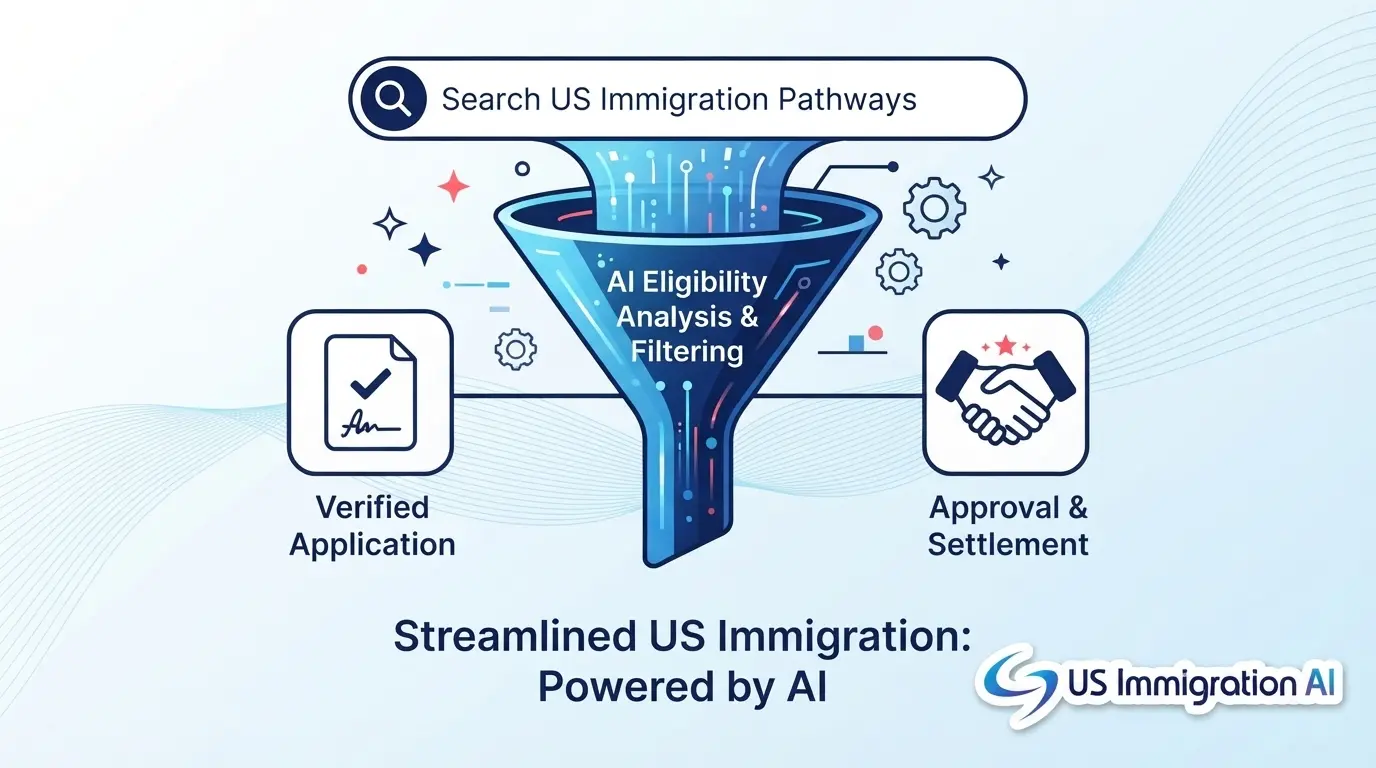
The most repetitive immigration tasks can now be automated instead of outsourced. Software reads intake data and fills the forms. It runs a client portal that flags missing documents. It puts the filing package together. A lawyer reviews every file.
Automation does not remove the lawyer. The software is a tool, not legal advice. It does not replace a lawyer's judgment or form a client relationship. A licensed lawyer reviews every file before it is filed. The ABA's Formal Opinion 512 (July 2024) confirms that lawyers stay responsible for checking AI output. The Executive Office for Immigration Review made the same point for immigration filings in Policy Memorandum PM 25-40, effective August 8, 2025. The memo tells lawyers to check AI-written content before filing.
The two paths suit different work. Here is how they compare.
You do not have to pick one. Many firms outsource the work that needs human judgment. They automate the high-volume parts, like filling forms and chasing documents.

How to Choose and Work With a Provider
If you bring on an outsourced paralegal, treat the choice like a key hire. Set the relationship up to run well. A few habits prevent most of the problems firms hit.
- Define the scope. List the tasks, the immigration experience you need, and the volume. A clear scope gets you a better match and a cleaner quote.
- Check experience and security. Ask for references and immigration-filing experience. Confirm encryption, access limits, and privacy agreements before you share a file.
- Set up communication. Agree on channels, response times, and check-ins up front. Overlapping hours and clear instructions prevent most mix-ups.
- Onboard to your process. Walk the paralegal through your workflows and tools. A remote worker will not pick up your way of working on their own.
- Start with a pilot. Run one case or task type first. A short trial shows you the quality before you commit your caseload.

Putting It Into Practice
Paralegal outsourcing services help an immigration firm do more without a bigger payroll. You add help in busy stretches, keep costs flexible when work slows, and give billable hours back to your lawyers.
Automation handles the same routine load from another angle. It takes on the high-volume tasks that repeat on every case. Whichever path you choose, keep a lawyer in the review seat. Confirm your security. Start small. Do that, and the routine work stops setting the pace of your firm.
Handle More Cases With US Immigration AI
US Immigration AI automates the routine paralegal work in an immigration practice, from intake to case assembly. Your lawyer reviews every file. Your team handles more cases without new hires. Schedule a demo to see how it fits your firm.
Frequently Asked Questions