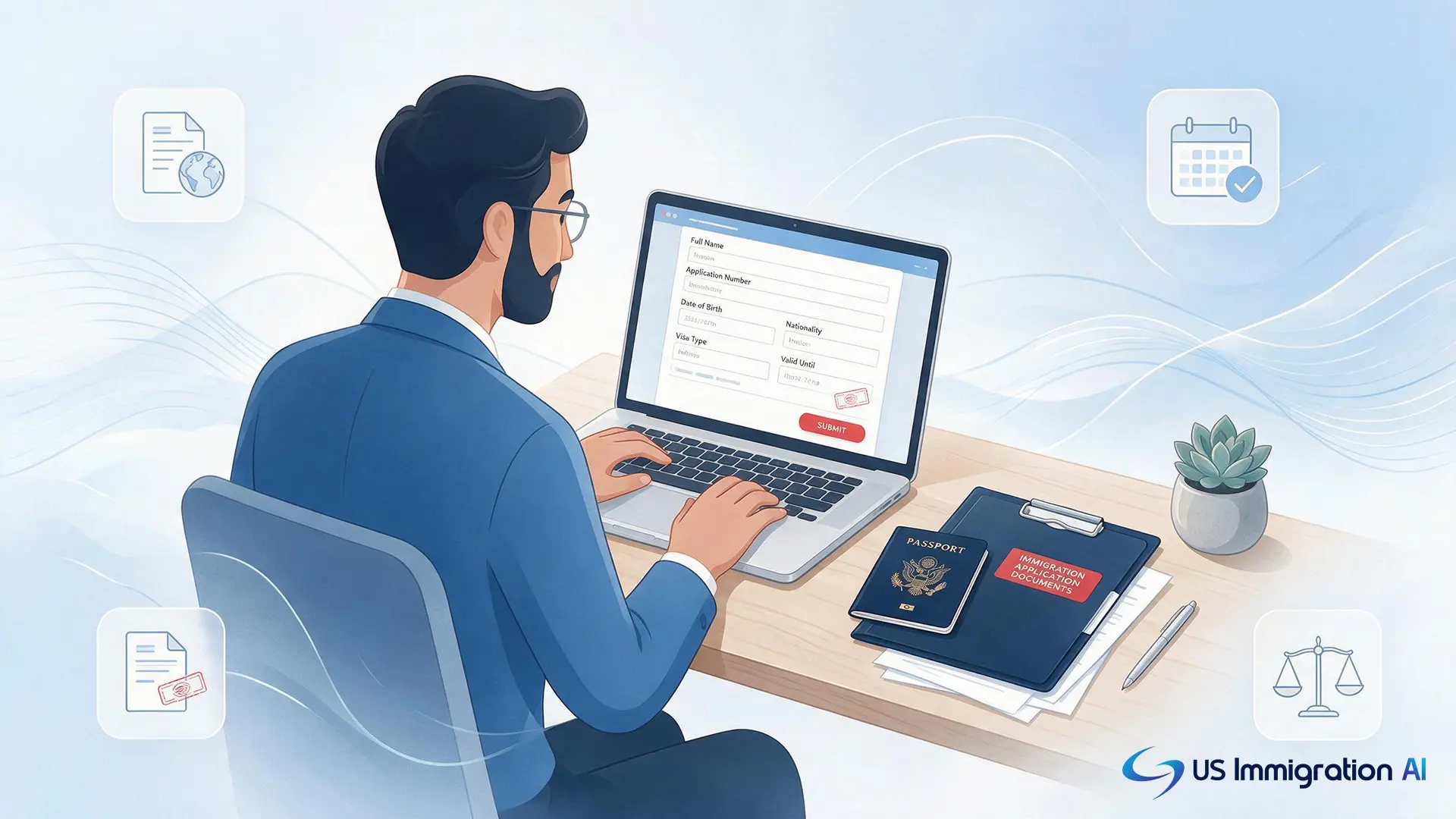

Filing Form DS-260 means completing the online application the National Visa Center requires before an immigrant visa interview abroad. It gathers biographic, family, and travel history so a consular officer can decide whether to issue the visa. Getting it right the first time matters more in 2026 than it used to, because a recent USCIS policy shift has pushed more cases through this exact process.
This guide walks through when to file, what it costs, and where cases most often go wrong, including a May 2026 policy change that is changing who ends up filing a DS-260 in the first place.
Key Takeaways
- Form DS-260 is the online application for anyone seeking an immigrant visa through consular processing outside the United States.
- A May 2026 USCIS policy memo narrows adjustment of status to extraordinary cases, sending more applicants toward consular processing and DS-260.
- Missing the one-year filing deadline under INA 203(g) can terminate a visa petition and erase the applicant's priority date.
- Government fees include $325 to $345 for the immigrant visa application, $120 for the Affidavit of Support when it applies, and a separate $220 USCIS Immigrant Fee paid after visa issuance.
- Small errors, like an omitted child or a mismatched address, are the most common reasons a case stalls or draws extra scrutiny.
What Is Form DS-260?
Form DS-260 is the electronic application the U.S. Department of State requires for immigrant visa applicants completing consular processing outside the United States. Consular processing is the path to a green card that runs through a U.S. embassy or consulate abroad, as opposed to adjustment of status, which is filed with USCIS from inside the country.
Form DS-260 is not the same as Form DS-160. DS-160 covers nonimmigrant visas, like tourist or student visas, while only DS-260 leads to a green card. That distinction matters more than usual this year, because a policy change now sends more applicants toward the DS-260 path than in past years.
Why More Cases Are Heading to Consular Processing in 2026
The volume of DS-260 filings is likely to grow in 2026 for a reason that has nothing to do with the form itself. On May 21, 2026, USCIS issued Policy Memorandum PM-602-0199, stating that adjustment of status is "a matter of discretion and administrative grace" and will be granted only in extraordinary circumstances, according to the USCIS newsroom announcement.
The memo directs officers to weigh an applicant's full circumstances before approving an in-country green card application and points most nonimmigrants toward completing their process at a consulate abroad instead. That same USCIS announcement confirms the agency has not stopped accepting new I-485 filings, since the memo is a policy directive, not a change to the underlying statute. In practice, it means firms should expect more eligible clients to route through the National Visa Center and Form DS-260 rather than adjustment of status.
Whatever brought a client to this point, the DS-260 itself still runs on a fixed sequence, and skipping a step in that sequence is what causes most delays. For firms building intake and screening workflows around this shift, AI Intake can flag likely case types, including consular-processing candidates, before a lead ever reaches an attorney.
When You Can File the DS-260
The process starts when a petitioner files an immigrant petition, most often Form I-130 for family cases or an I-140 for employment-based cases. Once USCIS approves the petition, the case moves to the National Visa Center for consular processing.
For categories with annual caps, like family preference and most employment preference visas, the case waits until the applicant's priority date is current on the monthly Visa Bulletin. Immediate relatives of U.S. citizens have no annual cap and move straight to the next step once USCIS approves the petition.
When a visa becomes available, the NVC sends a welcome letter with a case number and invoice ID. Before completing the DS-260, the applicant or attorney must file Form DS-261 to designate an address and agent, then pay the required fees through the Consular Electronic Application Center. Only after those steps clear can the applicant access and submit the DS-260 itself.
That sequence comes with a clock attached the moment the welcome letter goes out, and missing it carries real consequences.
The One-Year Deadline You Cannot Miss
An applicant has one year from the date of the NVC's visa-availability notice to take action, or the case can be terminated. This rule comes directly from 22 CFR § 42.83, which implements INA 203(g): if the applicant fails to apply for a visa within one year of notification, the registration is terminated.
Termination cancels the visa petition and erases the priority date, so the applicant would need to start over, including any wait for a new priority date to become current. The State Department's Foreign Affairs Manual, 9 FAM 504.13, allows reinstatement within two years of the notice if the applicant shows the delay was due to circumstances beyond their control, but that relief is not guaranteed.
The applicant does not necessarily need a completed DS-260 within the first year. Paying a fee, filing Form DS-261, or submitting an official NVC inquiry within that year can also count as a qualifying action. For firms managing dozens of open NVC cases at once, a missed one-year deadline is an easy detail to lose track of in a spreadsheet or shared inbox.
Filing Form DS-260 Step by Step
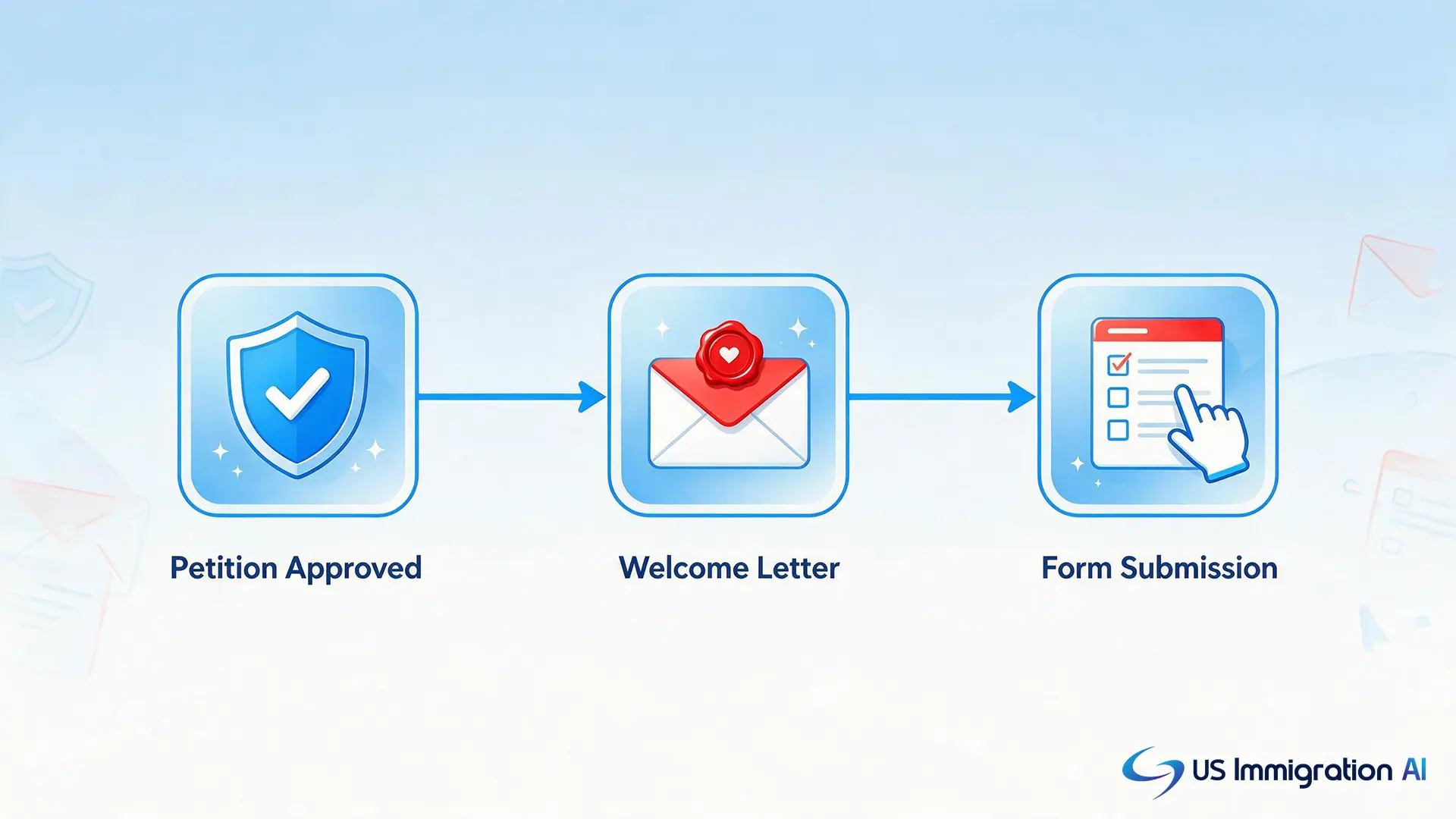
Once the welcome letter and fee confirmation clear that one-year clock, filing the DS-260 itself runs through five stages.
Step 1: Gather the Required Information
Collect passport details, address history since age 16, employment history, family member information, and any prior U.S. visa refusals or immigration violations before starting the form. The form also asks for social media handles used in the last five years for any platform where the applicant posts public content.
Step 2: Log In to CEAC
Go to the Consular Electronic Application Center and select the immigrant visa option, then enter the case number and invoice ID from the NVC welcome letter to open the DS-260.
Step 3: Complete Each Section Carefully
Every answer should match the applicant's official documents exactly, including names, dates, and addresses, since even small mismatches can trigger a request for clarification later.
Step 4: Upload Supporting Documents
Upload civil and financial documents in the file formats CEAC accepts, and check the consulate's posted instructions, since some posts have added requirements.
Step 5: Print the Confirmation Page
After submission, CEAC generates a barcoded confirmation page. Save and print it, since the applicant must bring it to the visa interview and cannot be scheduled without it.
Documents and Translations You Will Need
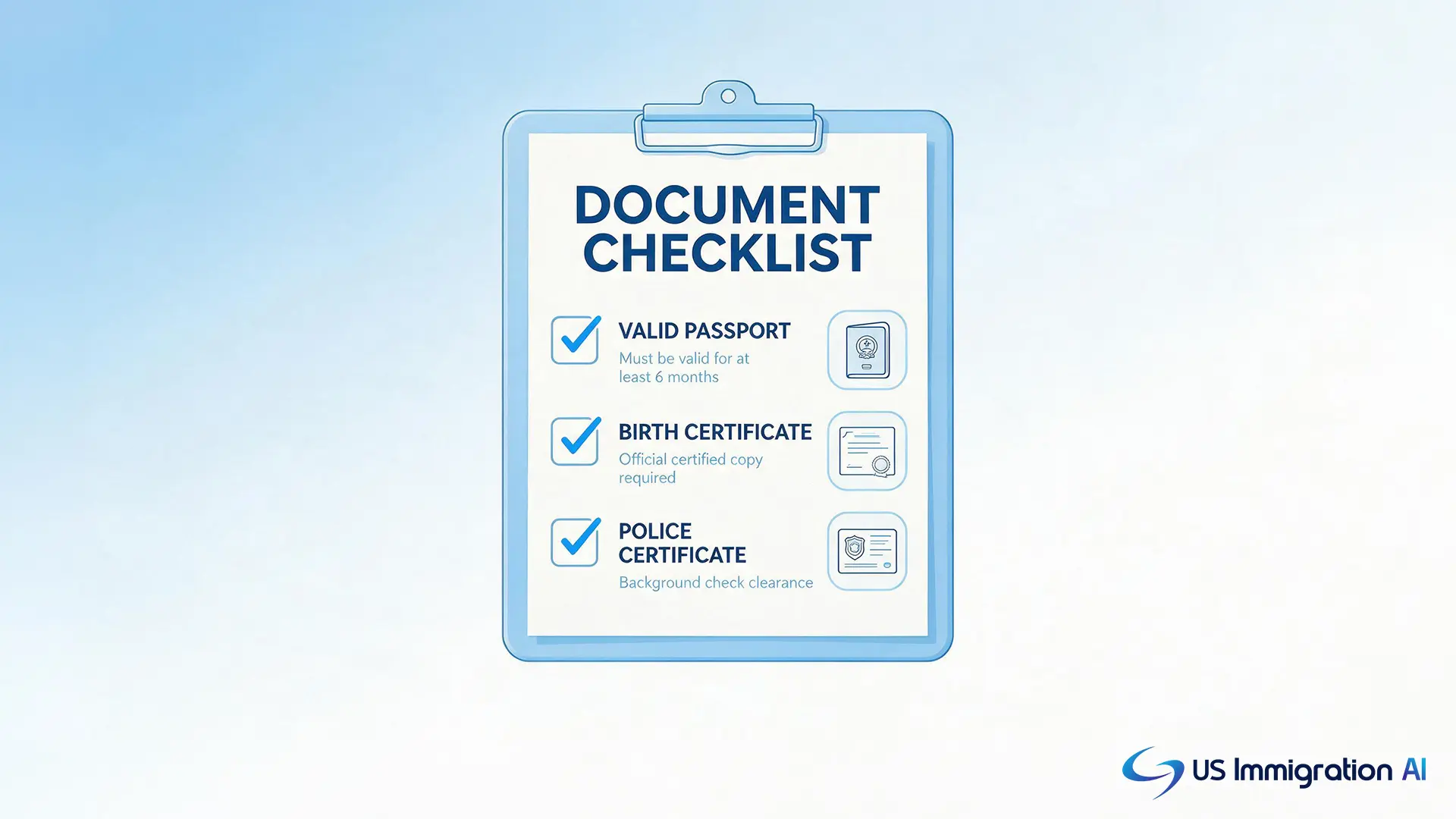
Step 1 covers the data fields on the form, but the physical documents behind those answers take longer to gather. Beyond the DS-260 itself, applicants typically need a valid passport, long-form birth certificate, marriage certificate if applicable, and police certificates from qualifying countries of residence.
Police certificates are required for any country where the applicant lived for six months or more since age 16, current residence, and nationality. The Department of State's Visa Reciprocity and Civil Documents tables list which certificates are available by country, and some countries are listed as unable to produce one. When that happens, the applicant submits a statement of non-availability instead, along with secondary evidence, and the consular officer decides whether it is sufficient.
Any document not in English needs a certified translation, and the translator must include a signed statement confirming fluency and accuracy. Gathering, tracking, and organizing this volume of documents across a caseload of open NVC cases is one of the more repetitive parts of the job. The Immigration Client Portal gives each client a secure place to upload files as they come in, flags what is still missing, and sends automated reminders instead of leaving that task to a paralegal's inbox.
DS-260 Fees in 2026
None of this proceeds without payment, and the fees involved come from two different agencies, which makes them easy to confuse.
Figures are current as of the Department of State's Fees for Visa Services page and USCIS's Immigrant Fee page. The Affidavit of Support fee applies mainly to family-based cases and only when the affidavit is reviewed domestically. Fee schedules change, so confirm current amounts before invoicing a client.
The DS-260 application fee itself must show as paid in CEAC before the form becomes accessible, so a delayed payment delays the whole filing.
How Long DS-260 Processing Takes
Once fees clear and the form is in, the next question most clients ask is how long the wait will be. The honest answer depends on the visa category, the consulate's workload, and whether the case involves any preference category subject to the Visa Bulletin. Family preference and employment preference categories cannot schedule an interview until the priority date is current, which can add months or years in backlogged categories. Immediate relative cases move without that constraint.
The Department of State's visa appointment wait times page publishes current, post-specific wait times, since these vary by embassy and change throughout the year. Checking that page for the applicant's specific consulate gives a more reliable estimate than any fixed national average.
If the Consulate Places Your Case in Administrative Processing
For most cases, that wait ends in a straightforward interview and a decision the same day. For some, it does not. A 221(g) notice at the interview means the visa is on hold, not denied. The Department of State's administrative processing information page explains that most cases needing extra review resolve within 60 days, though some take longer depending on what additional documentation or security checks are required.
The notice tells the applicant what is missing or under review. Once the applicant supplies what is requested, or the review completes, the consulate resumes the case toward a final decision. This is different from a final refusal, which closes the case outright.
Common DS-260 Mistakes That Delay Cases
Whether or not administrative processing gets involved, the surest way to add months to a case is a preventable error on the form itself. The most frequent mistakes include:
- Omitting a family member. Every child must be listed, even one who has aged out at 21 or is not immigrating with the applicant. Leaving one off can raise credibility questions and block that child's future eligibility.
- Mismatched details across documents. Names, dates, and addresses on the DS-260 should match the applicant's civil documents exactly, since discrepancies are a common trigger for extra review.
- Undisclosed prior refusals or arrests. Leaving out a past visa denial or arrest can be treated as a misrepresentation at the interview, even if the applicant believed it no longer mattered.
- Non-English answers. All responses must be in English, and answers in another language can be rejected and sent back for correction.
- Not printing the confirmation page. The applicant needs this page at the interview, and its absence can delay or reschedule the appointment.
Keeping a Growing Caseload of DS-260 Cases Organized
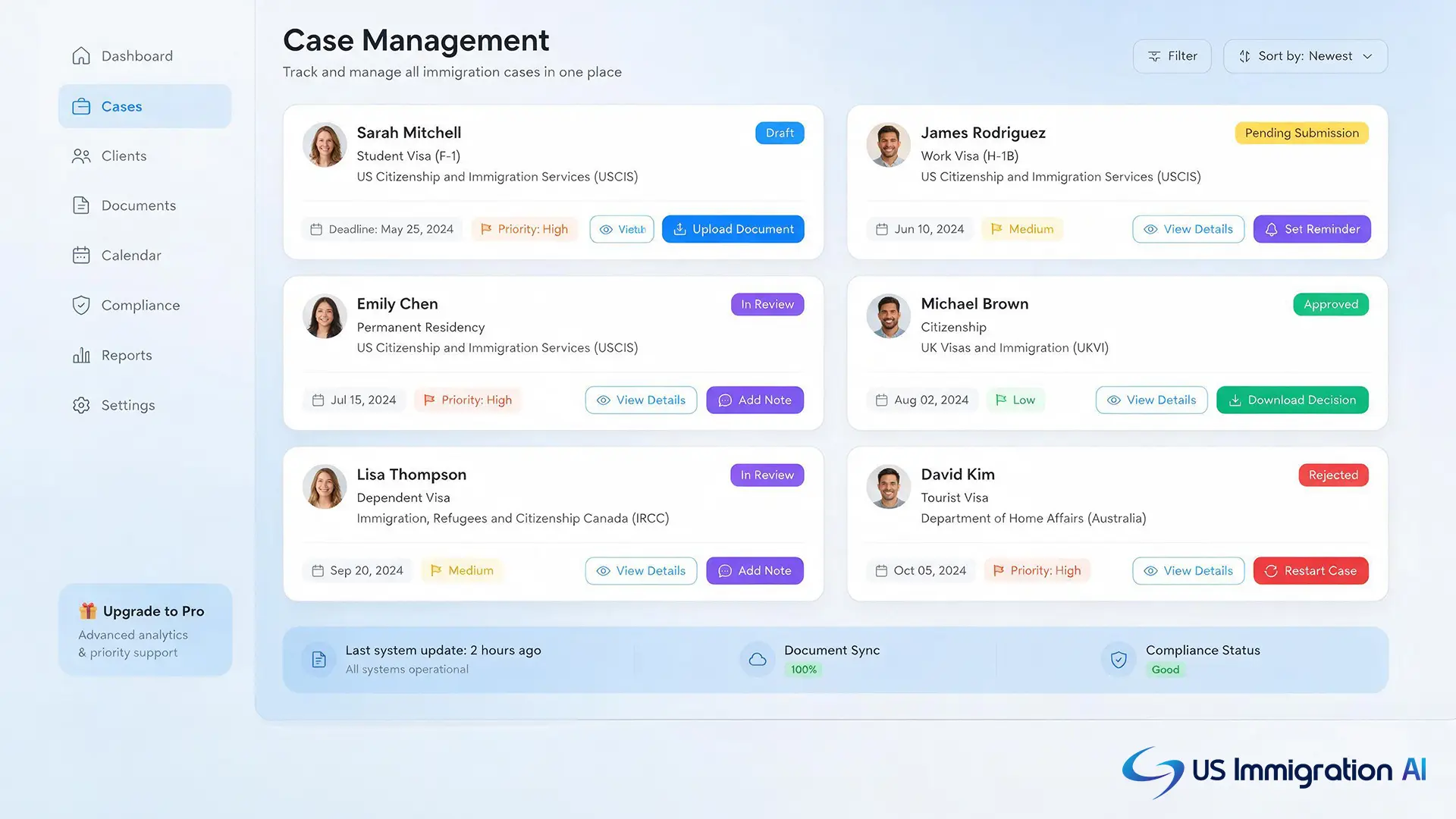
A single DS-260 case involves a welcome letter, fee payments, a document checklist, translations, and a one-year deadline to track. Multiply that across dozens of open NVC cases, and manual tracking becomes the bottleneck.
US Immigration AI is not a substitute for CEAC and does not submit forms to the Department of State on a firm's behalf. What it does handle is the work around the filing: the Immigration Client Portal collects and organizes civil documents and translations, AI Legal Document Drafting prepares supporting documents like Affidavits of Support and letters of explanation from the same intake data, and AI Case Assembly keeps the full case file organized from first contact through the interview. Payment tracking for retainers and government fees is handled through AI Payment Collection, currently in development.
Where This Leaves You
Form DS-260 is a short form with a long list of ways to get it wrong, and this year's policy shift means more firms will be filing it for clients who once would have adjusted status in-country. Sequencing the filing correctly, tracking the one-year deadline, and keeping documents organized across a growing caseload is what keeps these cases moving toward a scheduled interview instead of stalling at the NVC.
Grow Your Caseload With US Immigration AI
Managing DS-260 cases alongside everything else on a firm's docket gets harder as consular processing volume grows. Schedule a consultation to see how US Immigration AI keeps client documents, drafts, and case files organized from intake through filing, with an attorney reviewing every output.
Frequently Asked Questions