
Mid-sized firms run into a specific set of challenges with legal automation software, and most of them have nothing to do with the software's features. A firm buys a platform, runs a training session, and six months later half the staff is back to doing things the old way.
The pattern repeats often enough to name directly. Automation rollouts stall because of firm economics, compensation structures, and how much a platform demands from staff before it gives anything back.
This matters most for mid-sized immigration firms. They compete with larger firms for staff and technology budget, but they run leaner teams. A failed six-month implementation is a much harder hit to absorb than it is at a 200-lawyer firm.
Key Takeaways
- Legal automation rollouts usually stall for financial and structural reasons, not because the software is broken.
- Billing models built around the billable hour can make attorneys and partners wary of tools that cut hours off a task.
- Generic, horizontal platforms often need heavy configuration before they work for a specific practice area, which turns a purchase into a long internal project.
- Immigration-specific adoption lags the rest of the profession. A 2025 industry survey found immigration practitioners leading most other practice areas in personal AI use, yet immigration firms trailed nearly every other practice area in firm-wide adoption.
- Attorney-reviewed, purpose-built platforms sidestep several of the failure points that sink generic legal automation projects.
Why Automation Rollouts Stall in the First Place
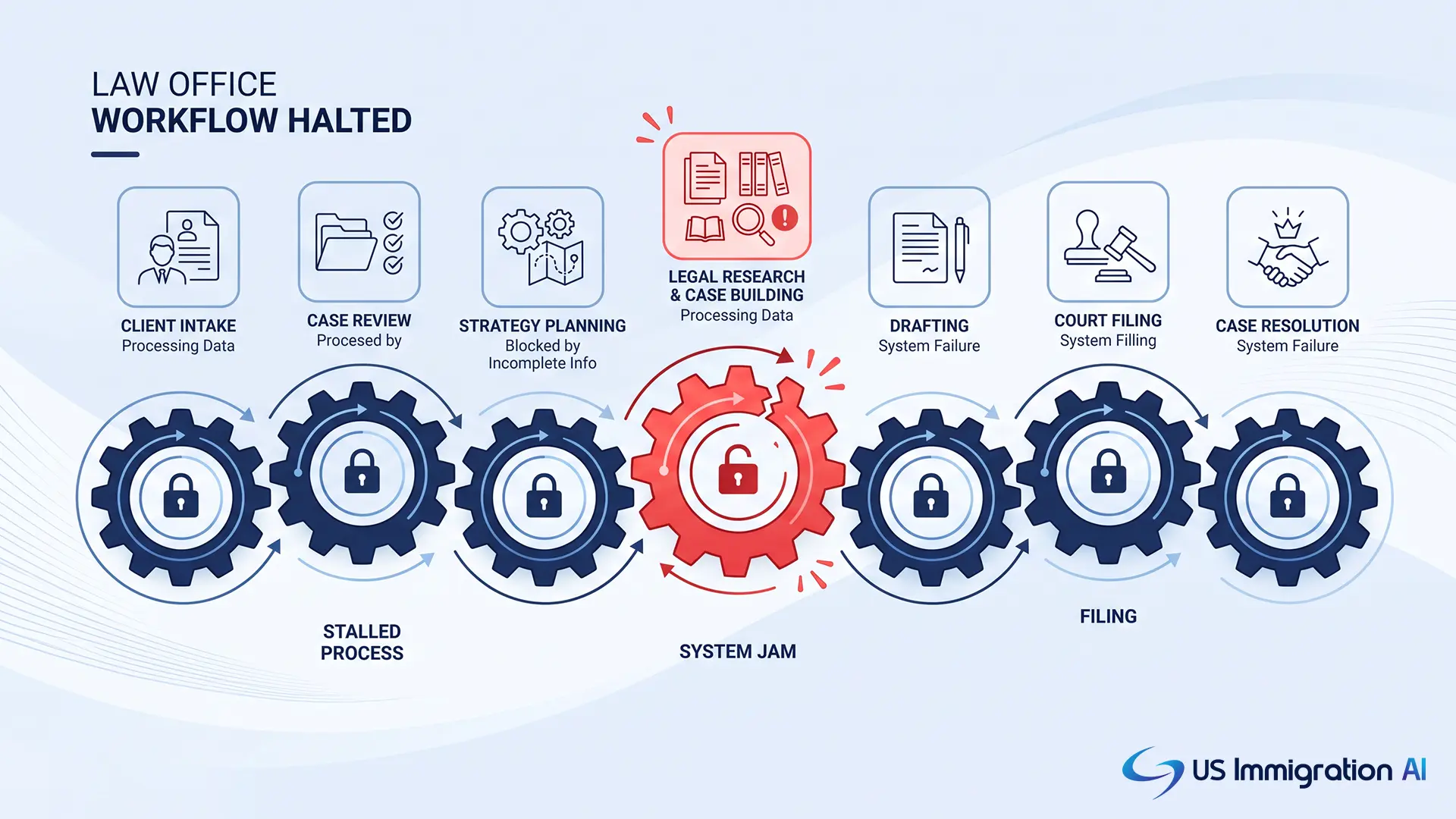
A stalled rollout rarely comes from one bad decision. It builds from several pressures at once. A firm's economics, how partners get paid, how many disconnected systems staff juggle, and how much configuration a new platform demands, all play a part.
The next few sections walk through each pressure point. Then they look at what changes when the software is built around immigration case types instead of adapted to fit them.
The Financial Squeeze Facing Mid-Sized Firms
Start with the money, since it shapes almost every other decision below. Mid-sized firms sit in a tight spot. They compete with larger firms for lawyers, technology, and clients, but they carry the overhead of a smaller practice without the pricing power of an Am Law firm.
That combination makes leadership treat new software as a cost to control rather than an investment to fund properly. A firm that funds a rollout halfway often ends up with a tool nobody finishes learning.
Mid-sized firms also tend to lack a dedicated IT department or legal-operations team. At a large firm, a rollout has a project manager, a training budget, and a person whose job is to keep templates current.
At a mid-sized immigration firm, that work usually lands on a paralegal or a managing partner already stretched across billing, staffing, and casework. When the rollout stalls, there is no one dedicated to un-sticking it.
The Billing Model Problem
Tight budgets are only half of the financial picture. The other half is how the firm actually gets paid for the work automation replaces.
The billable hour creates a direct conflict with automation. If a petition that used to take ten hours to draft now takes two, the firm has just cut eight hours of billable time. Under a straight hourly model, that is lost revenue, not a win, which gives partners a real reason to slow-walk adoption rather than champion it.
This tension has an ethical dimension too. ABA Formal Opinion 512 (July 29, 2024), "Generative Artificial Intelligence Tools," applies Model Rule 1.5's reasonable-fee requirement to work completed with generative AI. Billing a client the same fee for a task a tool finished in a fraction of the old time can raise a reasonableness problem.
The opinion also covers competence, communication, and confidentiality, among other duties under the ABA Model Rules of Professional Conduct. Firms that bill by the hour need a plan for this before automation reaches the fee line.
Compensation models built on individual production, common at mid-sized firms, add another layer. A partner who spends unpaid hours setting up templates has little personal incentive to finish that work. Those same templates end up shrinking the partner's own billable hours, even as they help the firm overall.
Disconnected Systems and Data That Does Not Match
Money and billing incentives explain why firms hesitate to buy. Fragmented systems explain why the software they do buy often underperforms once it arrives.
Most mid-sized firms did not set out to build a fragmented tech stack. It happened one purchase at a time: an intake form here, an e-signature tool there, a case management system that talks to neither one.
Staff end up manually re-typing the same client details into three or four places for a single case. Every manual re-entry is a chance for a typo, a missing field, or a mismatched date to slip into a filing.
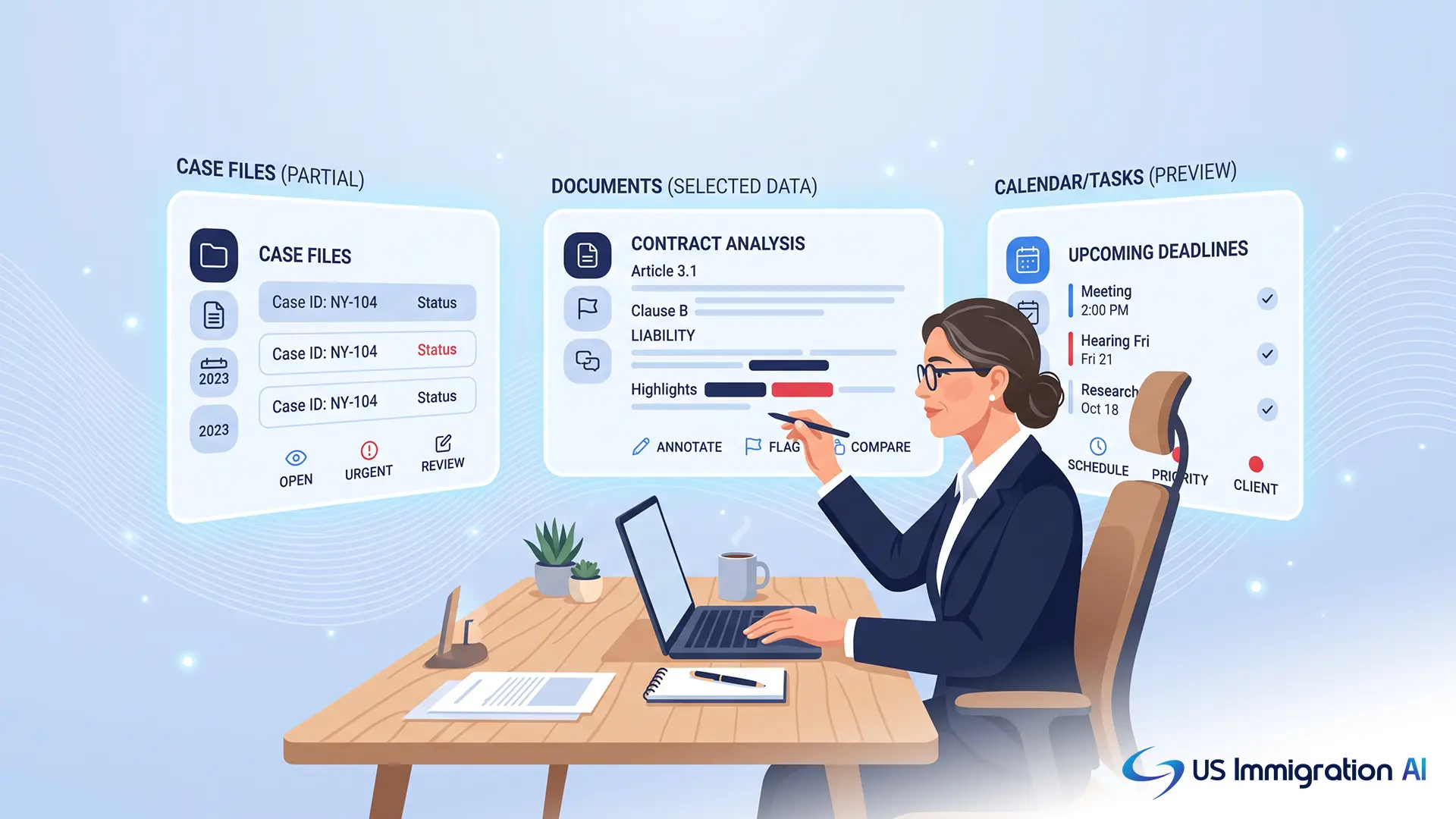
This is where a lot of automation projects quietly fail before they start. A drafting tool that pulls a typo, a stale address, or an empty field from a client record will produce a document with the same error. One bad draft is often enough to convince a skeptical attorney the whole system cannot be trusted.
Consolidating intake, document collection, drafting, and case assembly into one connected workflow removes most of the re-typing that causes this in the first place.
When Generic Software Meets Real Immigration Cases
Fragmentation is one problem. What many firms buy to fix it creates a different one. A lot of legal automation software is built horizontally, meant to flex across practice areas from real estate to litigation to corporate work.
That flexibility comes at a cost. The firm has to configure the platform for immigration work before it is useful. That means building out case types, checklists, and form logic a purpose-built tool would already have.
Generic platforms also tend to be designed around the clean, linear version of a case. Immigration work rarely stays clean.
A family petition turns into a waiver case. An employment petition needs a request for evidence response.
A single client has three matters open at once, each on its own timeline. When a template built for the simple version of a case hits one of these branches, it breaks. Staff end up back in Word rebuilding the document from scratch, exactly the outcome the software was bought to prevent.
Templates also decay over time. USCIS updates form editions and requirements on a regular basis, and a template nobody maintains starts producing outdated forms within a year.
Firms need a dedicated person to keep templates current. Or they need a platform built to track official form changes on its own, like the tools inside AI Legal Document Drafting.
Why Attorneys Quietly Stop Using the New Tool
Configuration problems and broken templates are visible failures. The bigger risk is a quieter one, playing out in how attorneys actually behave once the software is live.
The most common failure mode is not a dramatic one. Attorneys do not object out loud. They just stop opening the new tool and go back to drafting from scratch, a pattern sometimes called the quiet rebellion.
It usually comes down to three things: thin training, real anxiety about accuracy and confidentiality, and a generational gap in comfort with new tools. Each one is worth looking at on its own.
Thin Training
Training is often the first gap. A single onboarding webinar does not give an attorney enough hands-on time to trust a tool with a real client file. Without that trust, the tool sits unused.
Real Anxiety About Accuracy and Confidentiality
Accuracy concerns are not paranoia, and the data backs that up. In the American Bar Association's 2024 Legal Technology Survey Report, three-quarters of lawyers cited fear of AI hallucinations as a reason to hesitate.
Adoption splits sharply by firm size, too. Firms with 100 or more attorneys report 46% AI use, versus 30% at firms with 10 to 49 attorneys and 18% for solo attorneys. Mid-sized immigration firms sit squarely in the segment least likely to have adopted AI firm-wide, even as individual attorneys experiment with it on their own.
That gap between personal use and firm-wide adoption shows up clearly in immigration practice specifically. The Federal Bar Association's Legal Industry Report 2025 found immigration practitioners leading every other practice area surveyed in personal generative AI use, at 47%. Yet immigration firms trailed nearly every other practice area in firm-level adoption, at 17%.
Individual immigration lawyers are already comfortable with these tools. What is missing, in most firms, is a supported, firm-wide system built around how immigration cases actually move, rather than a patchwork of personal workarounds.
An Added Compliance Layer for Immigration Courts
Immigration practice carries its own compliance layer on top of general legal ethics rules. The Executive Office for Immigration Review's Policy Memorandum PM 25-40, "Use of Generative Artificial Intelligence in EOIR Proceedings," took effect August 8, 2025. It sets expectations for AI use in matters before the immigration courts, on top of the general duties in ABA Formal Opinion 512.
Attorneys unsure how a tool fits both frameworks tend to avoid it rather than sort out the answer mid-case. That is a reasonable instinct without clear guardrails built into the platform itself.
A Generational Gap in Comfort
Attorneys who built a successful practice long before AI existed have less reason to change a workflow that already works. Newer associates and paralegals are often the most comfortable with these tools, but they rarely have the authority to push adoption firm-wide.
That gap between comfort and authority can stall a rollout as effectively as any technical problem. Closing it takes a partner willing to champion the tool, not just staff willing to use it.

What Changes When the Software Is Built for Immigration Cases
Several of the failure points above share a common fix. A platform designed specifically for immigration practice, from the start, beats a general tool an immigration firm has to bend into shape.
A platform with immigration case types, form logic, and document checklists already built in skips the configuration project entirely. There is no six-month setup phase before the firm sees value. The templates and workflows already match how a family petition, an employment visa case, or a waiver actually moves.
AI Intake and AI Case Assembly work from the same client data. Information entered once at intake carries through drafting and into the final packet, cutting out the re-typing that causes so many errors above.
Attorney review built into every step also answers the accuracy and confidentiality anxiety directly. Nothing moves to a client or a filing without a licensed attorney checking it first. That gives firms a concrete answer when a partner asks how the tool fits their ethical duties.
Generic Automation Platforms vs. Purpose-Built Immigration Software
Laid side by side, the difference between the two approaches comes down to how much work the firm has to do before the software works for immigration cases.
Where This Leaves Your Firm
The table above is really just the earlier sections in one view. None of these failure points are unusual, and none of them mean automation is not worth pursuing.
They mean a mid-sized immigration firm should evaluate a platform on more than its feature list. Look at how much configuration it demands, how it fits the firm's billing model, and how directly it addresses attorney oversight. A platform built around immigration case types from day one removes several of the biggest reasons rollouts stall before they save anyone real time.
Grow Your Caseload With US Immigration AI
US Immigration AI connects intake, retainers, document collection, drafting, and case assembly in one system built specifically for immigration case types. There is no lengthy configuration project standing between your firm and a working rollout. Book a consultation to see how it fits your firm's caseload.