Form I-864, the Affidavit of Support, is a legally binding contract between a sponsor and the U.S. government under INA §213A. It requires a sponsor to show income at or above 125 percent of the Federal Poverty Guidelines and accept financial responsibility for the sponsored immigrant. The obligation exists to satisfy the public charge ground of inadmissibility under INA §212(a)(4), and it does not end when the case closes.
Most family-based green card cases need one. So do some employment-based cases, when the sponsoring employer is a relative who filed the underlying petition. Getting the right form, the right sponsor, and the right documentation in place the first time keeps a case moving instead of stalling on an RFE.
Key Takeaways
- Form I-864 requires a sponsor at or above 125 percent of the Federal Poverty Guidelines (100 percent for active-duty military sponsoring a spouse or child).
- Four related forms exist: I-864, I-864EZ, I-864A, and I-864W. Filing the wrong one is a common, avoidable delay.
- The obligation ends at only one of four events: naturalization, 40 qualifying work quarters, permanent departure with abandonment of LPR status, or death. Divorce does not end it.
- A joint sponsor must independently meet the income threshold and file a separate I-864.
- Tracking which form applies, whose income counts, and which documents are still outstanding is the part most likely to slow a case down across a busy caseload.
What Is Form I-864?
Form I-864 proves a sponsor can financially support an incoming immigrant so they will not need means-tested public benefits. USCIS Policy Manual, Volume 8, Part G, Chapter 6 sets out who must file it and why.
The form is required for most family-based immigrant cases. It also applies to certain employment-based cases where the immigrant will work for a relative who filed the Form I-130 petition on their behalf. Certain orphans who become U.S. citizens automatically at adjustment under INA §320 are exempt.
Sponsors file the completed affidavit with the National Visa Center for consular-processed cases, or with USCIS for adjustment of status filed inside the United States, per Department of State guidance at 9 FAM 302.8 and 9 FAM 601.14.
Who Can Be a Sponsor?
A sponsor must be a U.S. citizen or lawful permanent resident, at least 18 years old, and domiciled in the United States, per USCIS Form I-864 instructions. These three conditions are non-negotiable. USCIS will not accept an affidavit from someone who fails any of them.
Income comes next. The sponsor's household income must sit at or above 125 percent of the Federal Poverty Guidelines for their household size. Active-duty military members sponsoring a spouse or child only need to meet 100 percent.
Household size calculation trips up more filings than almost any other step. It includes the sponsor, the sponsored immigrant, the sponsor's spouse if not already counted, any dependent children, and anyone whose income is being combined in through a separate Form I-864A. Miscounting this number is one of the fastest ways to trigger an RFE.
The Four Affidavit of Support Forms
Sponsors do not always file the same form. Which one applies depends on the sponsor's income source, the number of beneficiaries, and whether the case is exempt entirely.
Filing the wrong variant is an avoidable delay. A sponsor who qualifies for I-864EZ but files the longer I-864 has not made an error USCIS will reject, but a sponsor who needs an I-864A and skips it will get an RFE for missing household-member income documentation.
What Happens if the Sponsor's Income Falls Short?
A joint sponsor can step in when the primary sponsor cannot meet the income threshold alone. The joint sponsor must independently meet the full 125 percent requirement and file their own separate Form I-864. Their income cannot be combined with the primary sponsor's.
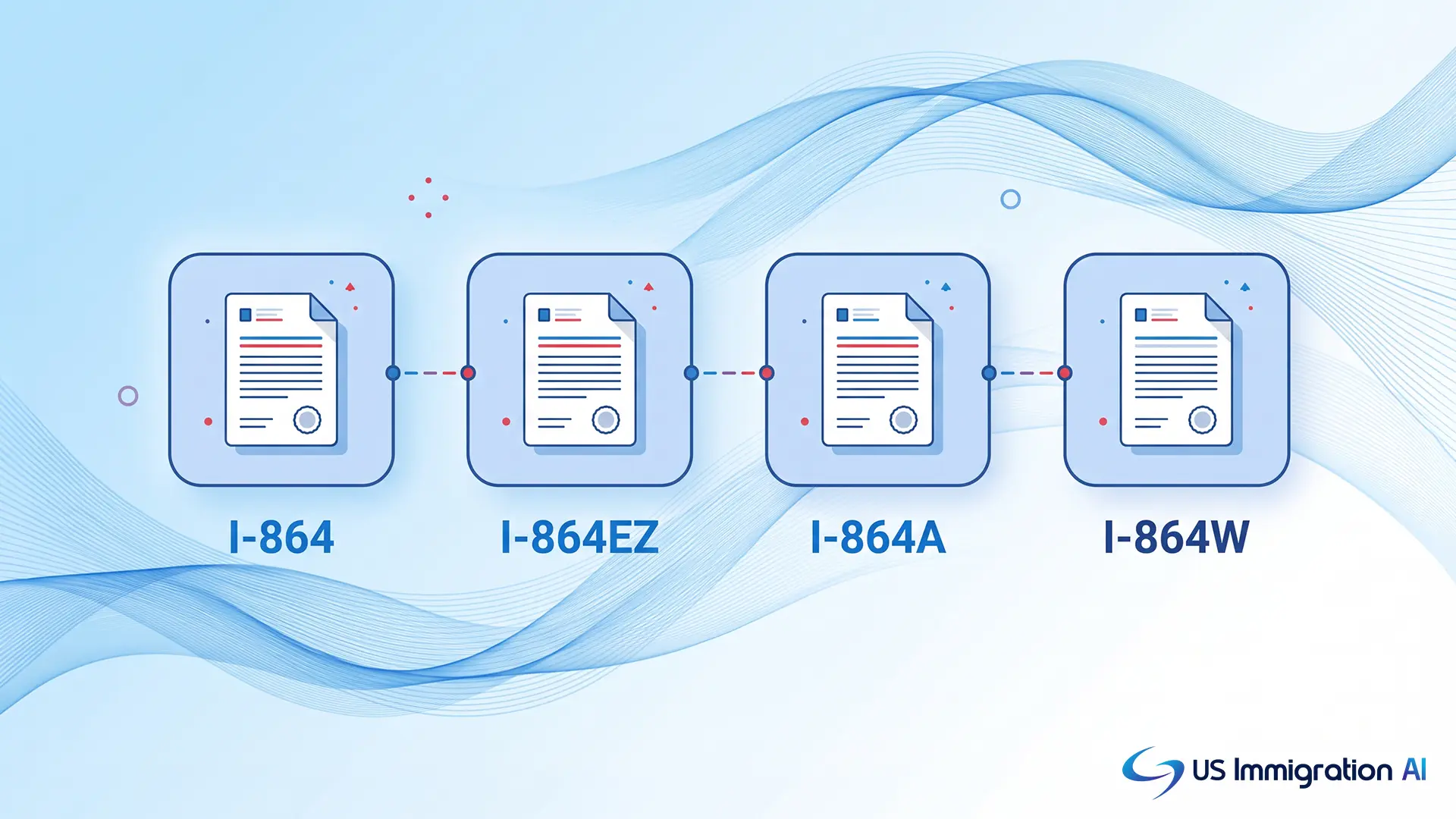
A household member's income works differently. If the sponsor wants to use a relative's or dependent's income to help reach the threshold, that household member signs Form I-864A instead, accepting legal responsibility alongside the sponsor rather than replacing them.
Both paths require the same supporting evidence: federal tax returns for the most recent year, or a certified statement explaining a lawful reason for not filing. Missing this documentation delays action on the underlying case.
Getting the form and the sponsor right is only the filing stage. What the sponsor actually signs up for lasts far longer than the case itself.
How Long Does the Sponsor's Obligation Last?
The obligation ends at exactly one of four events, and only one of four events, according to USCIS Policy Manual guidance:
- The sponsored immigrant becomes a U.S. citizen.
- The immigrant is credited with 40 qualifying quarters of work under the Social Security Act.
- The immigrant permanently departs the United States and abandons lawful permanent resident status.
- The immigrant or the sponsor dies.
Divorce is not on that list. Form I-864EZ itself states that "dissolution, annulment, or other legal process" does not relieve the sponsor of their obligations. A sponsor who divorces the immigrant they sponsored is still financially responsible for them until one of the four termination events occurs.
This surprises a lot of sponsors, and it is worth explaining clearly at intake rather than leaving it to come up later.
What Happens if the Sponsor Doesn't Meet the Obligation?
If the sponsored immigrant receives means-tested public benefits, the agency that paid out those benefits can seek reimbursement directly from the sponsor. If the sponsor does not repay voluntarily, the agency can sue to recover the cost, along with legal fees.
This is exactly why the affidavit deserves the same document rigor as the underlying petition. A sponsor who understands the commitment going in, with clean records to show it, is in a far stronger position than one who signed the form without reading it closely.
A sponsor can withdraw a signed I-864 before it becomes binding, but the cutoff differs by case type. For adjustment of status, USCIS Adjudicator's Field Manual §20.5(h) requires the withdrawal in writing, received by USCIS before the final decision on the I-485. For consular-processed cases, the written withdrawal must reach the National Visa Center or embassy before the immigrant visa is issued.
That document rigor does not happen by accident. It takes a system for tracking who owes what, across every sponsor on every open case.
Managing Affidavit of Support Documentation Across a Caseload
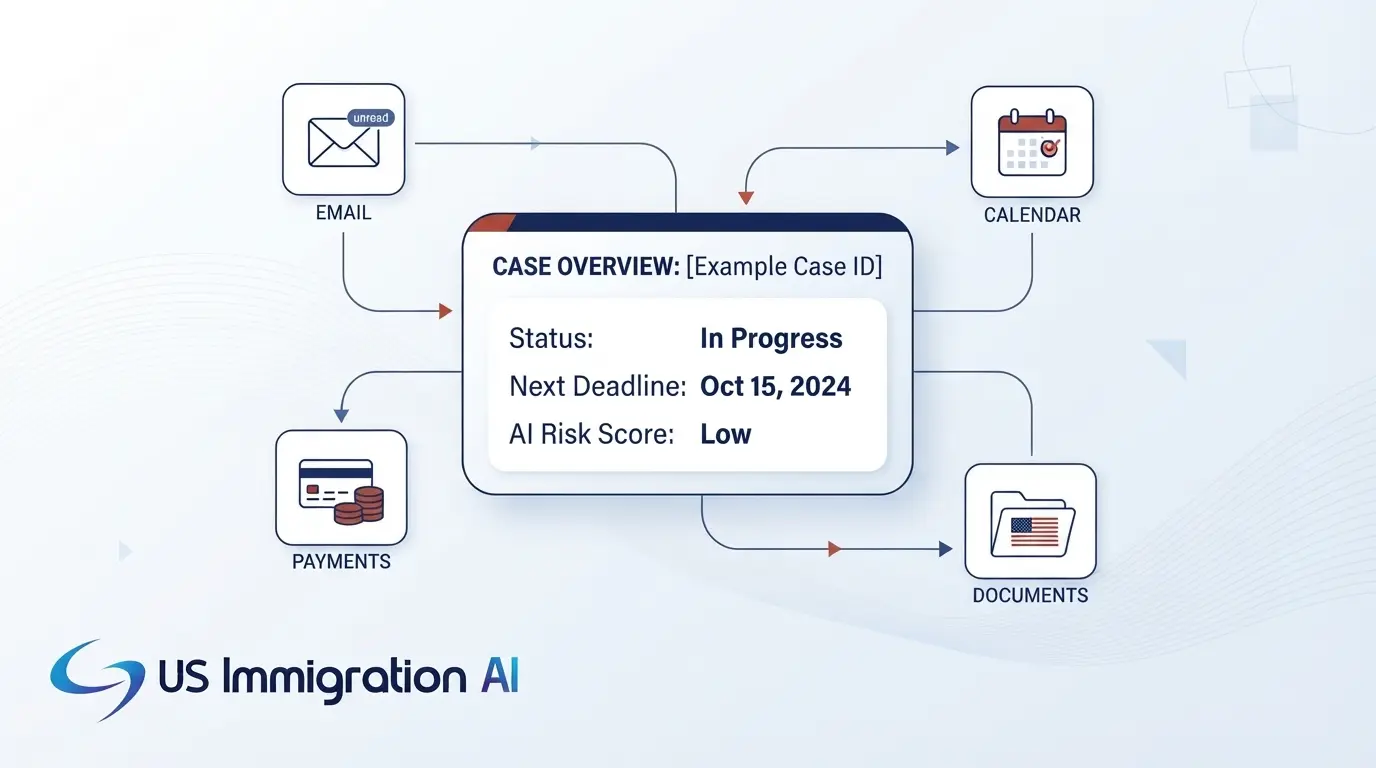
A single family-based case can involve a primary sponsor, a joint sponsor, and two or three household members each filing their own I-864A. Multiply that across a full caseload and the tracking problem grows fast: who has submitted tax returns, whose income still needs verification, and which form each person actually needs.
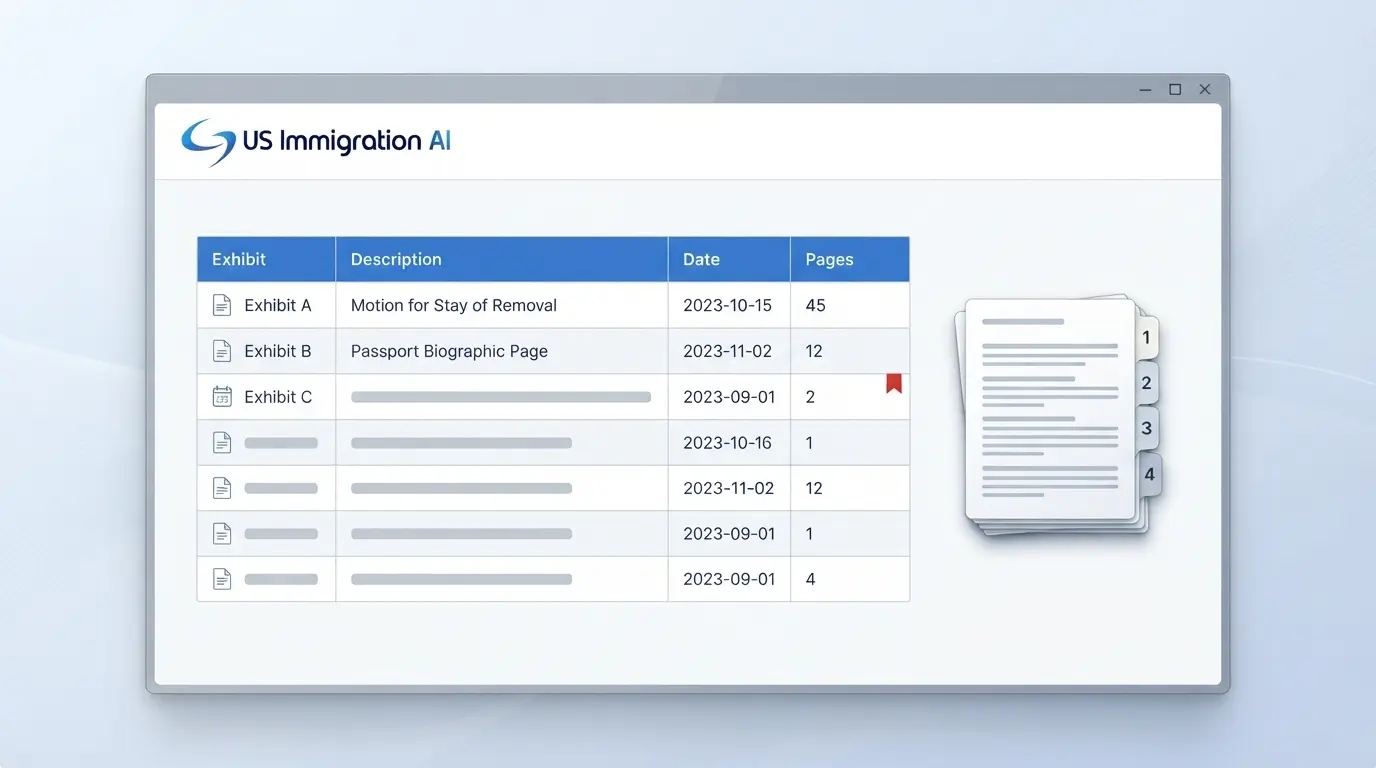
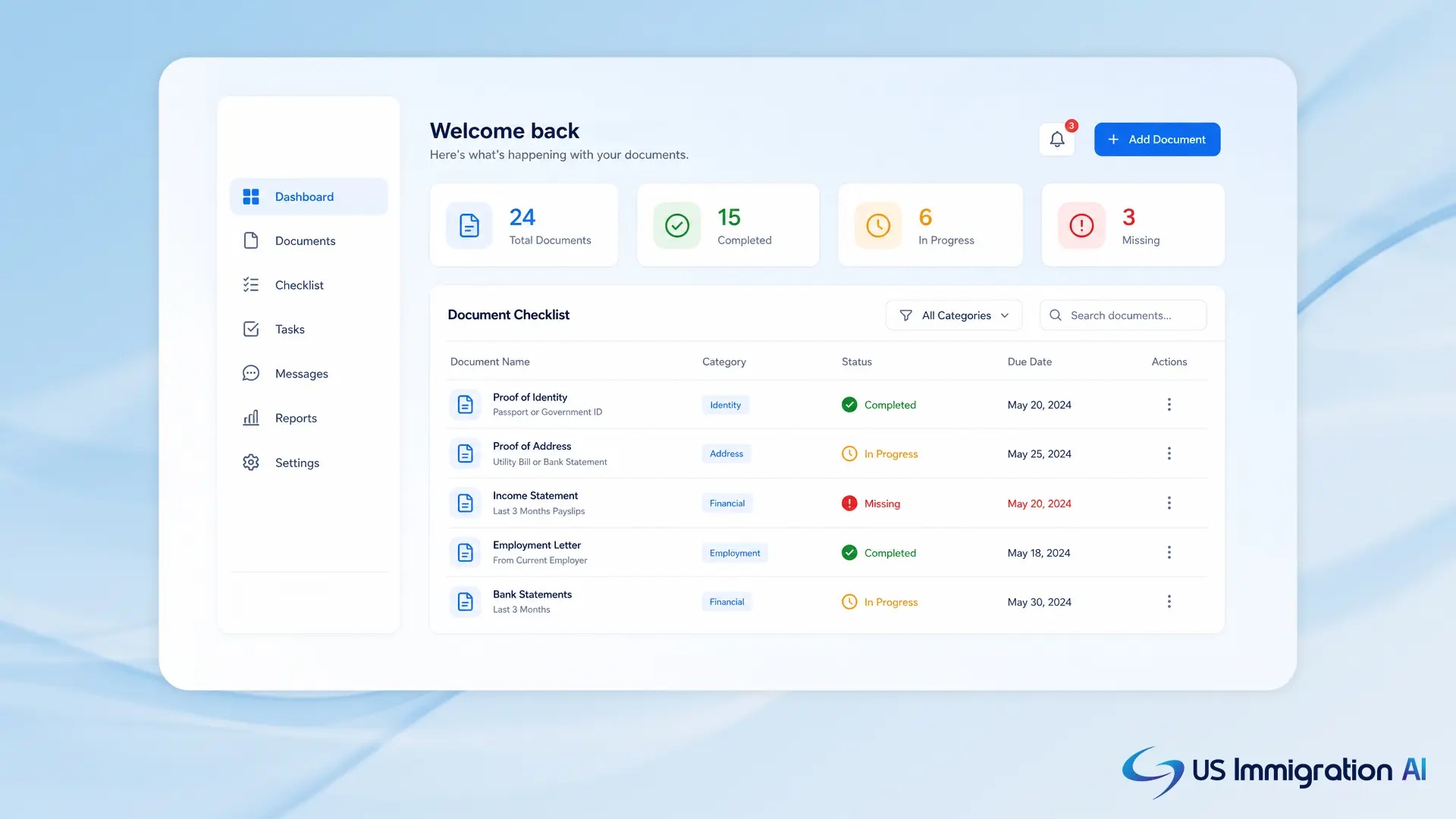
A shared document portal gives clients a single place to upload tax returns, pay stubs, and proof of assets, with status visible to the whole team handling the case. That keeps a paralegal from chasing down which sponsor still owes which document three weeks before a filing deadline.
Where This Leaves Your Firm's I-864 Workflow
The affidavit of support is a short form with a long tail. The paperwork closes out in a matter of weeks. The legal obligation it creates can run for years, sometimes decades, and it survives events that surprise most sponsors, divorce chief among them.
Getting the right form to the right sponsor, with the right documentation attached the first time, is what keeps a case moving instead of collecting RFEs. That is a workflow problem as much as a legal one, and it is worth treating it that way.
Grow Your Caseload With US Immigration AI
Affidavit of support cases involve more moving pieces than almost any other filing: multiple sponsors, multiple forms, and a stack of financial documents that all need to arrive before the deadline. US Immigration AI helps your firm track every piece in one place, with a licensed attorney reviewing every file before it goes out. Schedule a demo to see how it fits your caseload.
Frequently Asked Questions