
An I-9 form is used to confirm that every new employee is legally authorized to work in the United States. Its full name is the Form I-9, Employment Eligibility Verification. Every U.S. employer must complete one for each person they hire, and the employee and the employer each fill out a part.
The form exists because of federal immigration law. It is the main tool the government uses to keep unauthorized workers out of the workplace. That single purpose explains who completes it, what documents it requires, and why the penalties for getting it wrong are steep.
Key Takeaways
- The I-9 verifies a new hire's identity and legal authorization to work in the U.S.
- It is required by the Immigration Reform and Control Act of 1986 for nearly every new employee.
- U.S. Citizenship and Immigration Services administers the form. Immigration and Customs Enforcement audits it.
- The employee picks which acceptable documents to show. The employer cannot demand specific ones.
- Fines for non-compliance run from $288 per paperwork error to $28,619 per unauthorized worker.
The Two Things an I-9 Verifies
The I-9 verifies two things about a new employee: their identity, and their legal right to work in the United States. Both have to check out before the form is complete. One without the other is not enough.
The form does not go to the government when you complete it. Employers do not file it with USCIS or ICE. The employer keeps it on file and produces it later only if a federal agency asks to inspect it.
At its core, the I-9 is an immigration-control document. It is how federal law makes employers responsible for checking work authorization before someone starts a job. That purpose drives every rule that follows.
Why the I-9 Exists: The 1986 Immigration Law Behind It
The I-9 exists because of the Immigration Reform and Control Act of 1986, known as IRCA. Before that law, no federal rule stopped employers from hiring undocumented workers. IRCA changed that by making it illegal to knowingly hire or keep employing someone not authorized to work.
To enforce that rule nationwide, IRCA created the I-9 process. It forced every employer to verify the identity and work authorization of all new hires. The legal basis sits in Section 274A of the Immigration and Nationality Act, codified at 8 U.S.C. § 1324a.
IRCA placed three duties on employers. They cannot knowingly hire or keep an unauthorized worker. They must verify work authorization through the I-9. And they must not discriminate against workers based on national origin or citizenship status during hiring.
Per USCIS, the requirement covers every employee hired after November 6, 1986. People hired on or before that date fall outside IRCA and do not need an I-9.
Which Agencies Administer and Enforce the I-9
IRCA does not enforce itself. It hands the I-9 to three federal agencies, all under the Department of Homeland Security. U.S. Citizenship and Immigration Services (USCIS) creates and administers the form. Immigration and Customs Enforcement (ICE) enforces compliance.
ICE enforces by auditing employers. It serves a Notice of Inspection, then asks to see the employer's I-9 records, often within three business days, per the ICE Form I-9 inspection fact sheet. It then reviews the forms and penalizes employers who broke the rules. A separate office at the Department of Justice handles the anti-discrimination side, covered later in this guide.
This is why the I-9 carries more legal weight than a routine HR form. The agencies behind it are immigration-enforcement bodies, and they treat the form as a compliance record.
Who Has to Complete a Form I-9?
That compliance record starts with knowing who needs one. Every U.S. employer must complete an I-9 for each new employee, and both parties take part. The employee fills out the first section and shows documents. The employer fills out the second section and verifies those documents.
The rule applies regardless of the worker's citizenship. U.S. citizens, lawful permanent residents, and noncitizens authorized to work all complete the form. It applies to full-time, part-time, and short-term hires alike.
The employer can assign the verification to an authorized representative, such as a manager or an outside agent. The employer stays legally responsible for any mistakes that representative makes.
Who Is Exempt From the I-9?
A few categories of workers do not need an I-9. Per the USCIS list of exceptions, the common exemptions are:
- Independent contractors, including 1099 workers.
- Casual domestic workers who work in a private home on a sporadic or irregular basis.
- Unpaid interns and volunteers, unless they start receiving pay.
- Employees who perform all their work outside the United States.
- Workers placed through a staffing agency, where the agency completes the I-9.
Classification matters here. Labeling a worker an independent contractor to skip the I-9 can itself create a violation if the worker is really an employee.
The Sections of Form I-9
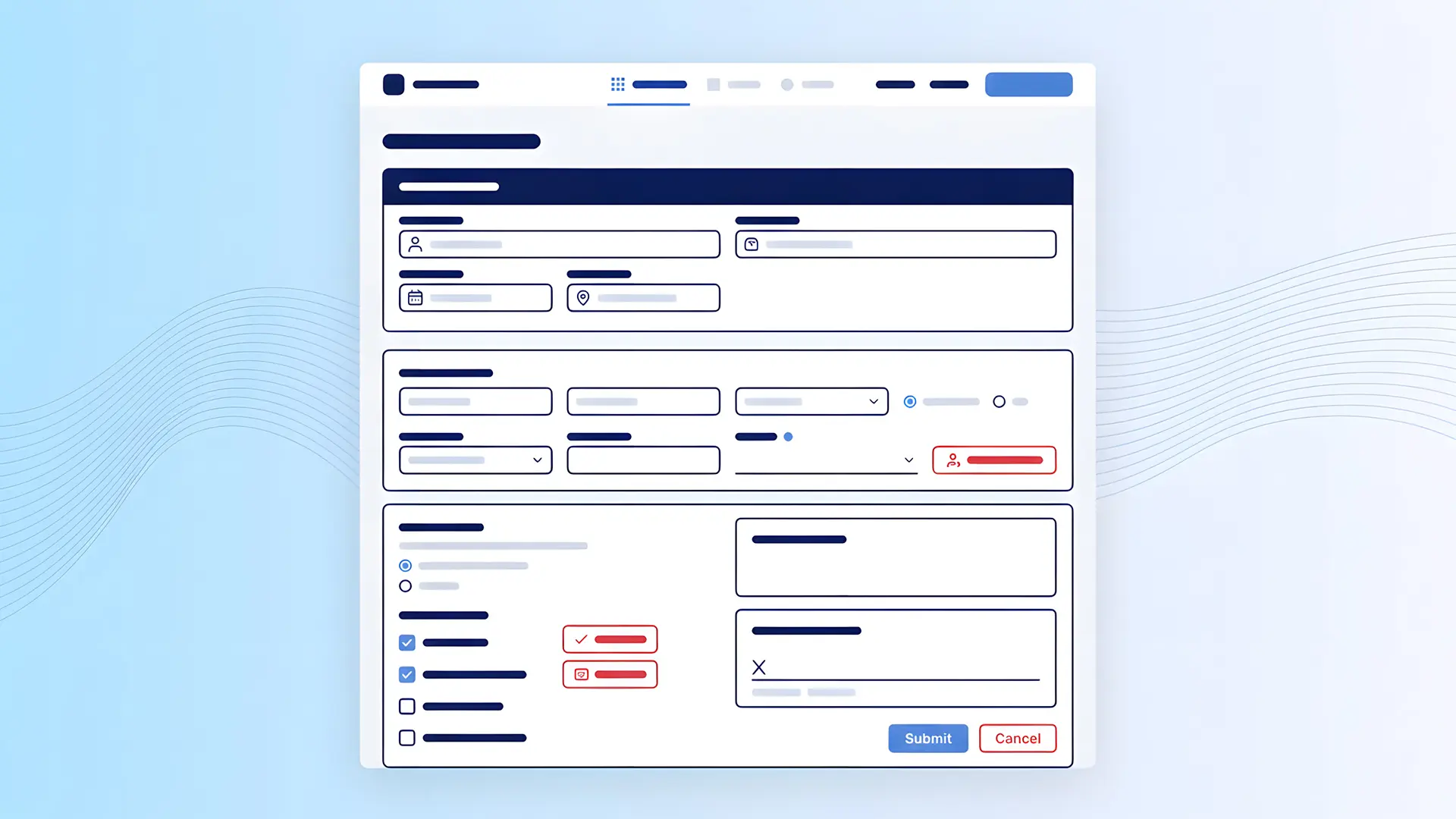
The I-9 is built from two main sections and two supplements. Each part has a clear owner and a clear deadline, set out in the USCIS Form I-9 instructions. Here is what each one does.
Section 1: Employee Information and Attestation
The employee completes Section 1. It asks for their full legal name, address, date of birth, and citizenship or work-authorization status. A noncitizen authorized to work also provides an identifying number, such as an A-Number or Form I-94 number.
The employee signs and dates the section under penalty of perjury. They must finish it no later than their first day of work. A Social Security number is optional unless the employer uses E-Verify.
Section 2: Employer Review and Verification
The employer completes Section 2. After the employee shows their documents, the employer examines them, confirms they look genuine, and records the details. The employer then signs, also under penalty of perjury.
This must happen within three business days of the employee's start date. For a job lasting fewer than three days, the employer completes Section 2 by the end of the first day.
Supplement A: Preparer and Translator Certification
Supplement A is only used when someone helps the employee fill out Section 1. A preparer or translator records their name, address, and signature. The page is kept with the completed I-9.
Supplement B: Reverification and Rehire
Supplement B, formerly Section 3, handles two situations. It is used when a worker's employment authorization expires and needs reverifying, and when a former employee is rehired within three years. The employer reviews new documents and records the update.
Acceptable Documents: Lists A, B, and C
The I-9 relies on the USCIS Lists of Acceptable Documents, split into three groups. The employee presents either one document from List A, or one document from List B paired with one from List C. Every document must be unexpired.
List A: Proves Both Identity and Work Authorization
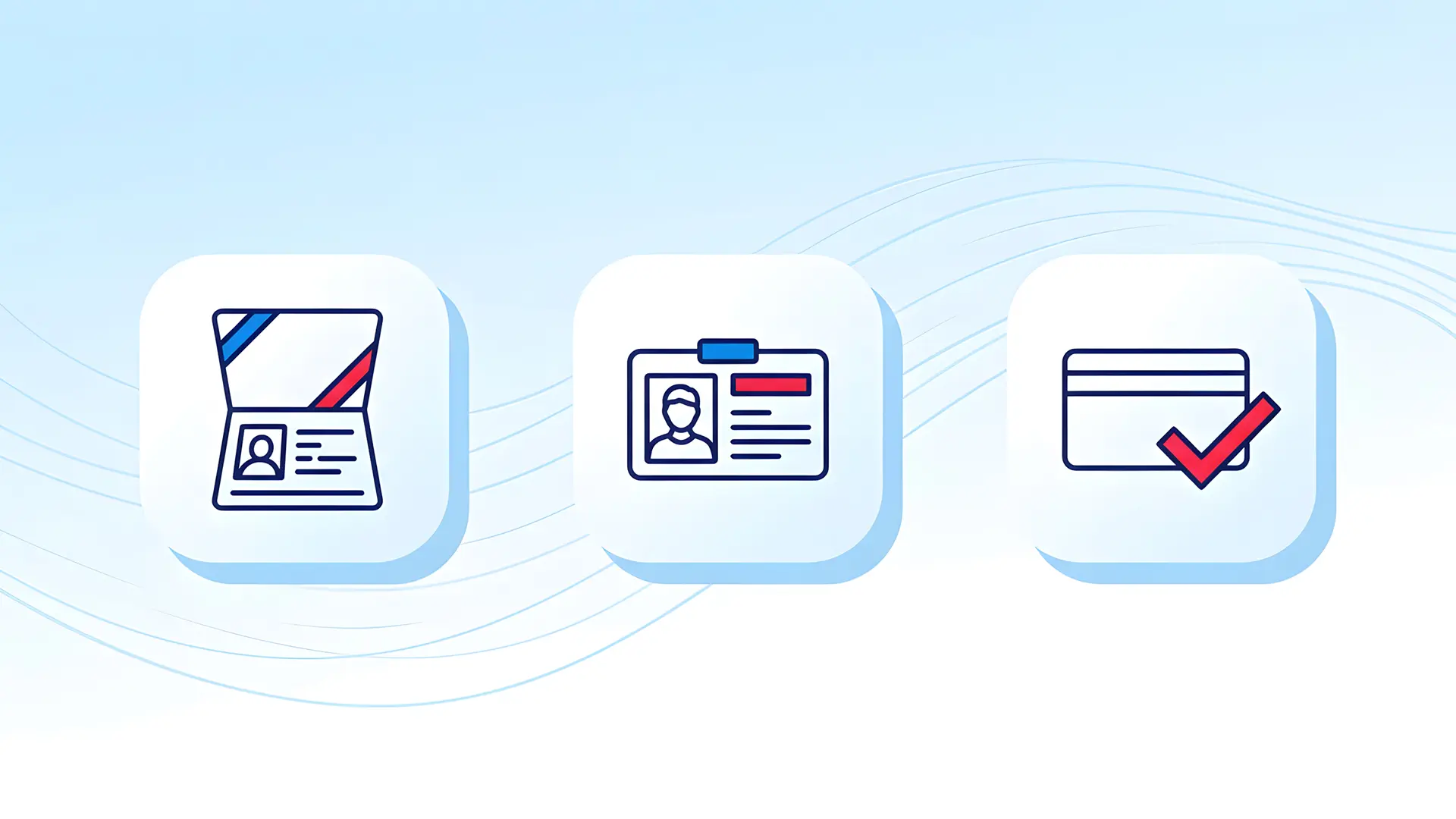
A single List A document is enough on its own. The accepted documents are:
- U.S. passport or U.S. passport card
- Permanent Resident Card or Alien Registration Receipt Card (Form I-551), known as the green card
- Foreign passport with a temporary I-551 stamp, or a printed I-551 notation on a machine-readable immigrant visa
- Employment Authorization Document that contains a photograph (Form I-766)
- A foreign passport with a Form I-94 endorsing the holder's nonimmigrant status, for a worker authorized to work for a specific employer
- A passport from the Federated States of Micronesia or the Republic of the Marshall Islands with a Form I-94 issued under the Compact of Free Association
List B: Proves Identity Only
A List B document only works when paired with a List C document. Accepted List B documents include:
- Driver's license or state-issued ID card with a photo or identifying details
- ID card issued by a federal, state, or local government agency
- School ID card with a photograph
- Voter registration card
- U.S. military card or draft record, or a military dependent's ID card
- U.S. Coast Guard Merchant Mariner Card
- Native American tribal document
- Driver's license issued by a Canadian government authority
For minors and certain people with disabilities who cannot present any of the above, USCIS allows alternatives such as a school record or a clinic, doctor, or hospital record.
List C: Proves Work Authorization Only
A List C document is paired with a List B document. Accepted List C documents include:
- Social Security card, unless it is marked not valid for employment
- Birth certificate issued by a U.S. state, county, or municipal authority with an official seal
- Certification of birth abroad issued by the U.S. Department of State (Form FS-545, FS-240, or DS-1350)
- Native American tribal document
- U.S. Citizen ID Card (Form I-197) or Resident Citizen ID Card (Form I-179)
- An employment authorization document issued by DHS
The employer's job is to confirm the documents look genuine and relate to the person. One rule matters more than the rest here. The employee decides which documents to show. The employer cannot demand a specific document, such as a green card, or reject valid ones. Doing so is its own violation, explained in the anti-discrimination section below.
I-9 Deadlines and Retention Rules
Two deadlines control the I-9, both noted above. The employee completes Section 1 by their first day, and the employer completes Section 2 within three business days. Missing either one is a violation on its own.
Retention is the rule employers forget most. Per the USCIS Handbook for Employers (M-274), the employer keeps each I-9 for three years after the hire date, or one year after the worker leaves, whichever is later. Many employers store I-9s separately from regular personnel files so they are easy to produce during an inspection.
Using the current form matters too. Per USCIS, the current edition is dated 01/20/25 and is valid through May 31, 2027. The earlier 08/01/23 edition stays acceptable until its own printed expiration date.
How E-Verify Uses the I-9
E-Verify is a government website that checks an employee's information against federal records. It compares the data on the I-9 against Social Security Administration and DHS records, then returns a result confirming or questioning work authorization.
The I-9 is mandatory for all employers. E-Verify is voluntary for most, with exceptions. It is required for certain federal contractors and in some states, and it is required for any employer that wants to examine I-9 documents remotely by video instead of in person.
So the two work together. The I-9 is the form and the legal record. E-Verify is an optional check that runs on the data the I-9 collects.
How the I-9 Protects Workers
The I-9 carries a second purpose: protecting workers from discrimination. When Congress required employers to check work authorization, it expected some would overreact and refuse to hire anyone who seemed foreign. The law was written to stop that.
The anti-discrimination provision of the Immigration and Nationality Act, at 8 U.S.C. § 1324b, makes it illegal to discriminate against a worker based on national origin or citizenship status. It is also illegal to commit "document abuse." That means demanding more or different documents than the I-9 requires, or rejecting valid documents that look genuine.
These rules are enforced by the Immigrant and Employee Rights Section (IER), formerly the Office of Special Counsel, inside the Justice Department's Civil Rights Division. They are why the choice of documents belongs to the employee. Pressuring a worker toward a particular document, or refusing a valid one, is the violation IER pursues.
Penalties for I-9 Non-Compliance
Because the I-9 is an immigration-control tool, the fines for getting it wrong are significant. They fall on the employer, and they are adjusted for inflation each year. The current amounts took effect on January 2, 2025, and remain in force through 2026 under the Federal Register adjustment to 8 CFR 274a.10.
Repeat or deliberate violations can go further. An employer that shows a pattern or practice of hiring unauthorized workers can face criminal charges and prison time. Loss of federal contracts is another possible result.
For an immigration firm advising employer clients, these numbers are the reason accuracy matters. A single audit can reach every form a company holds.
Common I-9 Mistakes
Most I-9 problems are clerical, not deliberate. The frequent ones include:
- Missing signatures, dates, or fields in Section 1 or Section 2.
- Completing Section 2 after the three-business-day deadline.
- Accepting an expired document, or the wrong mix of List B and List C documents.
- Failing to reverify expiring work authorization on Supplement B.
- Storing forms poorly, so they cannot be produced during an inspection.
A regular internal self-audit catches most of these before an agency does. Employers can correct many errors by lining through the mistake, adding the correction, and initialing and dating it.
I-9 vs. W-9: A Quick Comparison
One mix-up the list above does not cover is using the wrong form altogether. The I-9 and the W-9 get confused because of their similar names. They serve completely different purposes and go to different places.
If a worker is an employee, they complete an I-9. If they are a contractor paid by a business, they complete a W-9. The two are not interchangeable.
Where the I-9 Fits in Immigration Work
The I-9 is the front line of workplace immigration law. It is used to verify that a new hire can legally work in the U.S., it comes from the 1986 IRCA statute, and it is enforced by the same agencies that handle the rest of immigration policy. Knowing what it is for makes the documents, deadlines, and penalties make sense.
For immigration firms, the I-9 also touches the work they already do. The documents an employee presents, an Employment Authorization Document, a green card, an approved visa, are often the result of an immigration case. The case produces the authorization. The I-9 simply records it.
Grow Your Caseload With US Immigration AI
Work-authorization cases, from EAD filings to employment-based petitions, are exactly the kind of casework that fills an immigration firm's pipeline. US Immigration AI automates the routine parts of that work, from client intake and document collection to form drafting and final case assembly, so your team can take on more files. A licensed attorney reviews every file before it goes out. Book a walkthrough to see it on your own cases.
Frequently Asked Questions