
I-140 processing timelines run anywhere from 15 calendar days under premium processing to well over a year under standard processing, depending on the employment-based category, the assigned service center, and whether USCIS issues a Request for Evidence. For a firm running dozens of these petitions at once, that spread isn't just a range to quote a client. It's a scheduling problem, a staffing problem, and a client-communication problem, all wrapped into one form.
This guide covers what actually drives an I-140 timeline, where to check the current range for a specific case, and how a firm turns that information into a system: when premium processing earns its fee across a caseload, how to structure an RFE response workflow, and what to tell clients without promising a date USCIS hasn't committed to.
Key Takeaways
- I-140 timelines vary mainly by one factor: whether the case required PERM labor certification before filing.
- Premium processing guarantees a 15- or 45-calendar-day decision window for $2,965, not an approval.
- A Request for Evidence gives a maximum of 84 days to respond, plus 3 days if USCIS serves it by mail.
- Firms that track deadlines by category and service center avoid the two most common late surprises: expired PERM filing windows and missed RFE deadlines.
Current I-140 Processing Timelines
The honest answer to "how long does an I-140 take" has two parts: what's fixed by regulation, and what varies by category.
Fixed by Regulation: Premium Processing
Premium processing is the one part of the timeline USCIS locks down by rule, not left to shift by category or caseload.
- 15 calendar days for most I-140 classifications
- 45 calendar days for the E13 multinational executive/manager and E21 National Interest Waiver classifications
- Guaranteed by USCIS's premium processing rules, with a fee refund if USCIS misses the window
Variable: Standard Processing
Standard processing times aren't fixed, and USCIS updates them weekly, but the pattern is consistent across categories:
- PERM-based categories (EB-2 and EB-3 with a job offer) tend to be the fastest at the I-140 stage. The labor market test already happened during the separate PERM process with the Department of Labor, so the I-140 review itself is narrower.
- Self-petitioned and executive categories (EB-1A, EB-1C, EB-2 NIW) tend to run the longest under standard processing, often well past a year, because these skip PERM and require USCIS to evaluate the full record of qualifications directly.
Because these ranges shift from week to week, the only reliable source for a specific case is the USCIS Processing Times tool. Select Form I-140, the classification, and the service center to see the current range, updated weekly and based on recently completed cases in that category.
A Recent Change That Affects RFE Risk
On August 5, 2026, USCIS issued Policy Alert PA-2026-05. It restores officers' full discretion to deny a benefit request outright, without first issuing an RFE or NOID, when required initial evidence is missing or the record doesn't establish eligibility. The change applies to petitions already pending on that date, not just new filings.
For years, an incomplete I-140 could generally count on an RFE as a second chance to fix it. That's no longer something a firm can assume. The practical shift:
- Front-end completeness now matters more than the ability to cure later. A thin or placeholder filing risks an outright denial instead of a request for more evidence.
- The maximum response window, if an RFE is issued, is unchanged. USCIS regulations still cap it at 84 days (12 weeks), and a NOID at 30 days. What changed is whether USCIS issues one at all before denying, not how long the response window runs once it does.
- Firms filing high volumes on tight templates should review intake checklists now. A checklist built around "we can always fix it in the RFE" needs to become a checklist built around "this needs to be complete at filing."
Why I-140 Timelines Are a Caseload Problem
An individual applicant tracks one thing: when their own I-140 will be decided. A firm filing I-140s across EB-1, EB-2, and EB-3 categories for dozens of clients needs to track something more complex.
A single-case view only has to answer one question: is this one petition on track?
A Caseload View Has to Answer More
- Which cases are running on schedule?
- Which ones justify the cost of premium processing?
- Which ones are approaching a deadline that actually matters, like an expiring PERM certification or a closing RFE window?
Without the second view, the same failure pattern shows up in most firms: a paralegal remembers to check on the client who calls the most, not the client whose case is quietly aging past its expected range. Tracking by category, service center, and deadline type catches both.
What Actually Sets an I-140 Timeline
Three factors explain most of the variation firms see across a caseload.
PERM Labor Certification, or the Lack of It
The biggest driver of timeline differences is whether the case required a Department of Labor PERM certification before filing.
- EB-2 and EB-3 petitions based on a job offer generally go through PERM first, a Department of Labor process on its own separate timeline.
- Self-petitioned categories, including EB-1A extraordinary ability and EB-2 National Interest Waiver, skip PERM. USCIS officers instead review the full record of qualifications directly at the I-140 stage, which tends to lengthen adjudication even though the case skipped a step.
Once USCIS certifies the PERM application, the petitioner has exactly 180 calendar days to file the I-140. This window is set by the USCIS Policy Manual (Volume 6, Part E, Chapter 6) and the underlying regulation at 20 CFR 656.30. Miss it, and the PERM certification expires, forcing the case to restart from scratch. Firms tracking PERM-based cases need this date on the calendar the moment certification comes through, not when someone remembers to check.
Service Center Assignment
USCIS assigns I-140 petitions filed with premium processing to either the Nebraska Service Center or the Texas Service Center. The assignment depends on the beneficiary's worksite location, according to USCIS's filing address guidance. Firms can't choose the center, but knowing which one a case landed at still matters, since the two centers don't always move at the same pace.
Requests for Evidence
An RFE pauses the adjudication clock entirely. The case doesn't resume its place in line until USCIS receives a complete response. That means an RFE issued eight months into a standard-processing case can add several more months before a decision comes back. A caseload with a high RFE rate in one category, commonly self-petitioned filings with thin documentation, carries a hidden timeline risk that a category-only view will miss.
When Premium Processing Pays Off Across a Caseload
Premium processing buys a guaranteed 15- or 45-day action window for $2,965, following a DHS fee adjustment rule. What it doesn't buy:
- An approval. USCIS can still act with an RFE inside that window.
- A better place in line. The fee doesn't move a beneficiary's spot in the visa bulletin queue.
- A guaranteed win if USCIS misses the deadline. It refunds the fee and continues processing, but that refund doesn't undo the time already lost.

That leaves the real question for a firm: which cases in the caseload are actually worth $2,965. Three situations tend to justify it:
- A beneficiary's nonimmigrant status is close to a hard limit. A worker approaching the six-year H-1B cap, for example, may need an approved I-140 to qualify for status extensions beyond that limit. A slow standard timeline puts that eligibility at risk.
- The priority date is current or close to current. If the client can file for adjustment of status as soon as the I-140 is approved, a faster decision moves the entire case forward. If the priority date sits years out, premium processing buys speed the case can't yet use.
- The category runs long under standard processing. Self-petitioned and executive categories that skip PERM tend to see officers spend more time on the underlying record, which is exactly where a guaranteed window has the most value.
Firms filing high volumes of PERM-based EB-2 or EB-3 cases, which already move faster under standard processing, often reserve the fee for the cases where it changes an outcome rather than applying it uniformly.
Building an RFE Response System
A Request for Evidence carries a maximum response time of 84 days (12 weeks). USCIS regulations don't permit officers to extend that deadline, per the USCIS Policy Manual (Volume 1, Part E, Chapter 6). Mail service adds another 3 days, which is where the commonly cited 87-day figure comes from. A Notice of Intent to Deny carries a shorter maximum: 30 days.
For a single case, that deadline is one date on a calendar. For a caseload, it's a rolling set of dates that all need the same things.
What a Firm-Wide RFE Workflow Needs
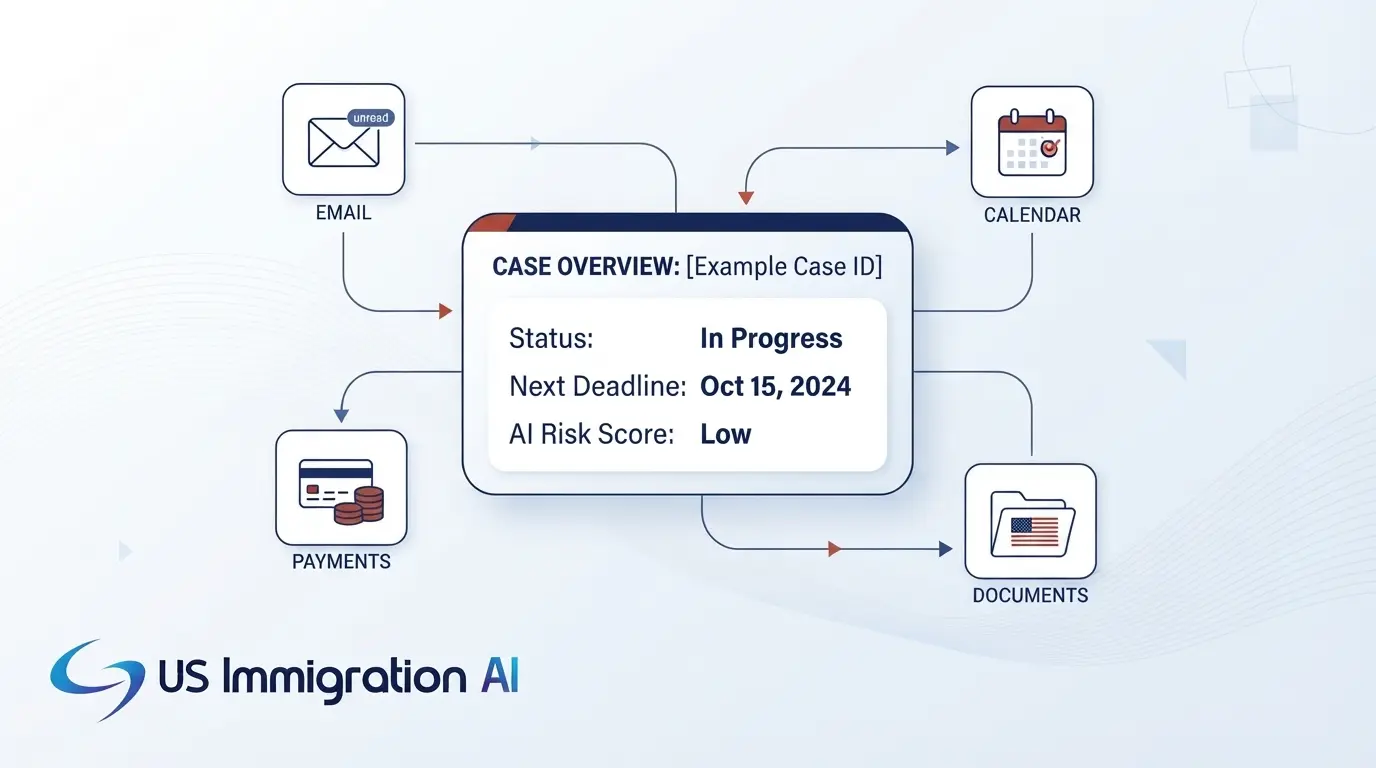
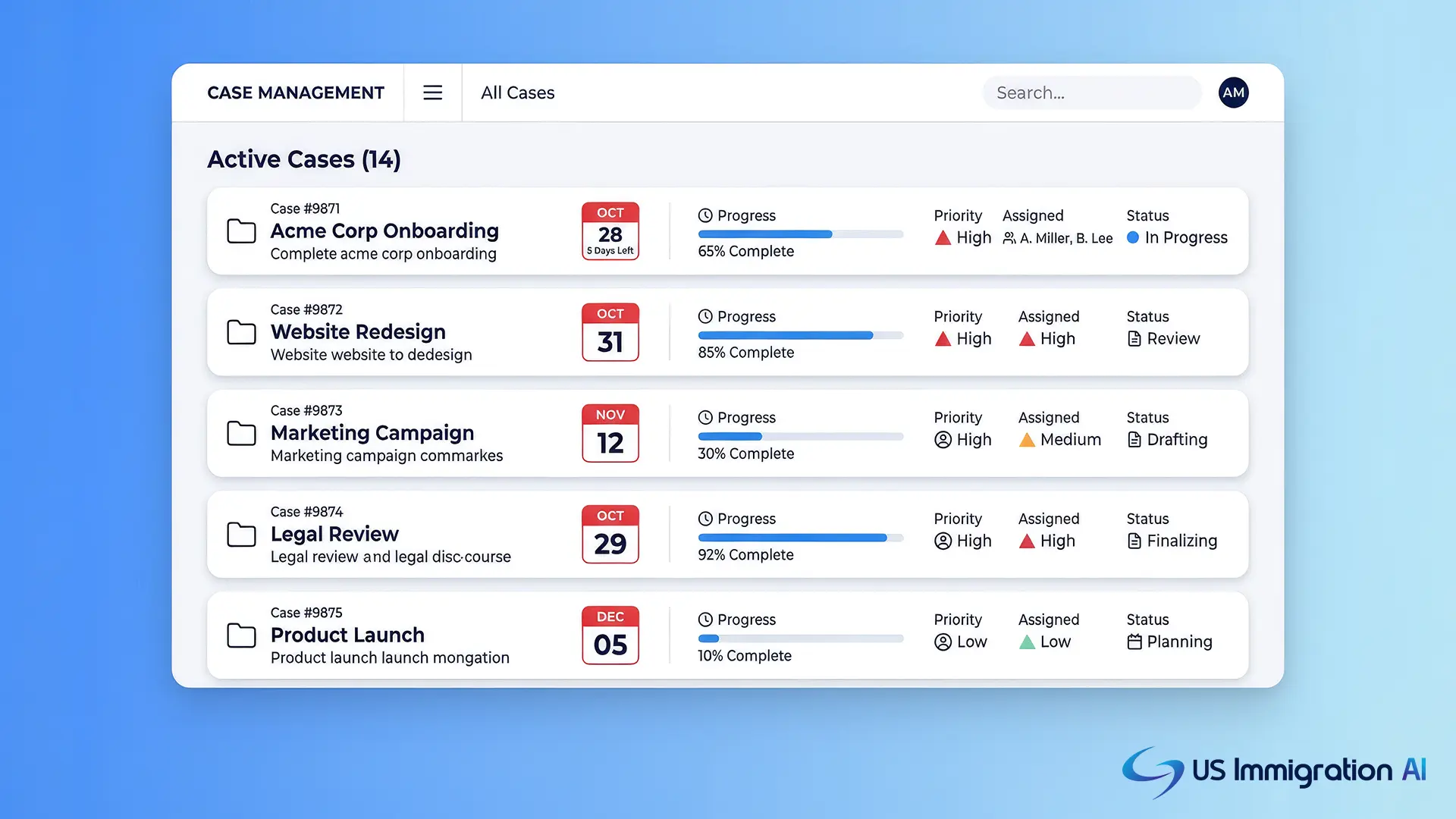
- A single source of truth for every open deadline, rather than dates tracked in individual attorneys' calendars or inboxes.
- A standard intake step that logs every item USCIS requested as a checklist, not a paragraph to reread later.
- A document assembly process that pulls supporting evidence from the client's existing file instead of rebuilding it from scratch. US Immigration AI's drafting tools pull from data already collected at intake, which shortens the RFE response work a firm actually needs to do.
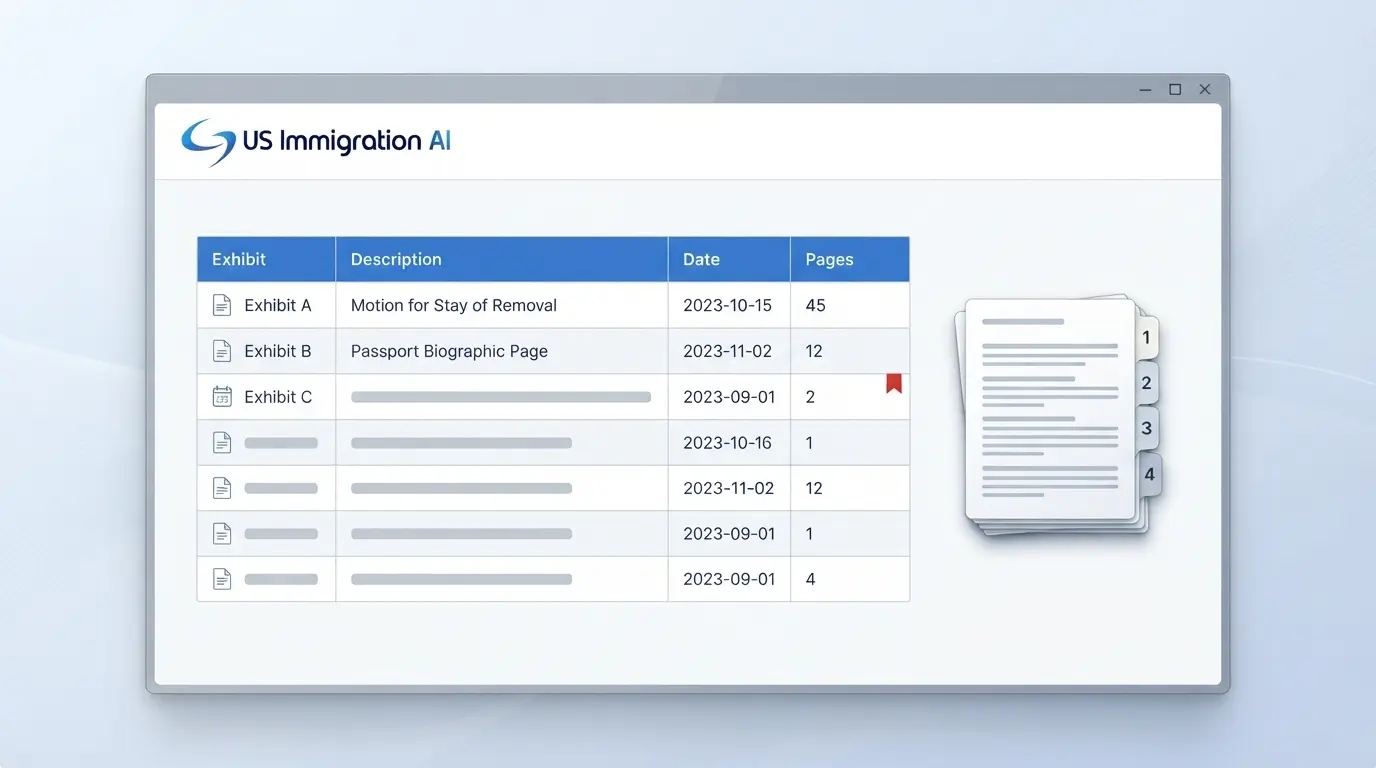
- A packaging step that organizes the response into a labeled, submission-ready file before it goes to the attorney for final review, similar to how case assembly tools organize a full petition packet.
Setting Client Expectations Without Guessing
The Processing Times tool isn't the only timeline data USCIS publishes, and mixing up the two leads to firms giving clients numbers that don't match reality.
- The Processing Times tool shows the category- and office-specific range, the one to quote a client.
- The Historic Processing Times page shows one median across all I-140 categories combined, for a full fiscal year.
A client who found that headline median online will see a very different number than the range posted for their specific category. The firm ends up fielding a confused, anxious phone call over a mismatch that was never really a discrepancy.

USCIS is explicit that even the category-specific range is a planning estimate, not a guarantee. Set expectations around that range, re-check it if a case runs past the top of it, and explain what could move it, rather than committing to a single date.
Manual I-140 Tracking vs. a System Built for It
Where This Leaves Your Caseload
Category, service center, RFE deadlines, and PERM windows are all trackable data points, not separate fires to put out. A firm that keeps them in one place spends less time reacting to surprises and more time on the review work that actually needs a licensed attorney's judgment.
Keep Every I-140 Deadline on Track With US Immigration AI
US Immigration AI connects intake data straight through to document drafting and case assembly, so RFE responses and premium processing decisions don't start from a blank file. Book a consultation to see how it fits your caseload.
Frequently Asked Questions