
To set up bilingual intake for immigration cases, settle three decisions first. Choose your languages, name who handles each one, and list what they may never answer.
Everything else, from scripts to software, follows from those choices. This guide covers each step, including the points where ABA ethics guidance and USCIS translation rules apply.
Key Takeaways
- ABA Formal Opinion 500 puts the duty to arrange interpretation on the lawyer, so name a supervising attorney for each language line.
- Use one script, with the same questions in the same order, in every language, and collect each answer once.
- Send eligibility, cost, case strength, and deadline questions to an attorney, and urgent situations to a live person.
- Translated intake answers are for internal use. Documents filed with USCIS need a certified English translation under 8 CFR 103.2(b)(3).
- Test five inquiries per language and channel, then pilot one real case before you roll the setup out.
What English-Only Intake Costs Your Firm
English-only intake adds rework at three points: the question, the answer, and the re-entry. Each one shows up later as staff hours and slower filings.
- At the question, a client who misreads a field enters the wrong information or leaves it blank.
- At the answer, staff spend calls re-explaining the same question to each new client.
- At re-entry, someone retypes a translated answer by hand, and one typo can travel onto several forms.
Errors at intake spread, because the forms, the document checklist, and the attorney's review all build on those first answers.
Some firms cover the gap with a bilingual staff member who interprets for part of each day. That works, and it ties one person's time to work that has nothing to do with the legal substance of a case.
How the Setup Fits Together
A bilingual intake setup runs in four stages, and each depends on the one before it. First, decide your languages, your professional-conduct rules, and who handles each language. Next, build the script, the case record, the client portal, and the error checks. Then protect the setup with limits on what intake may say, the filing rules, and data security. Last, launch with testing and a regular review.
To keep the steps concrete, the sections use one running example. Suppose your records show Spanish and Mandarin inquiries, and no other language yet.
Choose the Languages Your Clients Use
Everything else depends on which languages you cover, so decide that first. Count the language of each inquiry from the last quarter, using call notes, web form entries, and consultation bookings. In the running example, that count points to Spanish and Mandarin.
Then check outside data for your area. The Migration Policy Institute publishes state-level counts of residents with limited English proficiency, built from U.S. Census Bureau survey data.
Write a coverage promise for each language you add. It should state:
- The hours you answer in that language.
- The channels you cover, such as phone, web form, text, and email.
- The response time you will meet.
- The trigger for adding a language. One workable rule of thumb is about one in twenty inquiries over a full quarter. Adjust that figure to your caseload.
- The variety you support. A Mandarin speaker and a Cantonese speaker need different staff, and Haitian Creole is a separate language from French.
Build the Ethics Rules Into the Setup
With your languages chosen, set the professional-conduct rules for serving them. ABA Formal Opinion 500, issued in October 2021, says a lawyer must communicate with a client in a way the client understands. It grounds that duty in Model Rule 1.4 on communication and Model Rule 1.1 on competence.
The opinion puts the responsibility on the lawyer to arrange interpretation or translation when it is reasonably necessary. The firm cannot leave that task to the client. The ABA Journal's coverage of the opinion lists three points that shape your setup:
- A multilingual lawyer or nonlawyer staff member in the firm may help communicate with the client.
- A relative or friend may serve as interpreter in some cases, but the lawyer must watch for bias from a personal interest in the outcome.
- The lawyer must supervise interpreters under Model Rule 5.3 and make sure they protect client information under Model Rule 1.6.
Turn those points into three written rules:
- Name a supervising attorney for each language line.
- Add confidentiality terms to every interpreter and vendor agreement.
- Check your state bar's guidance, because it can differ.
Decide Who Handles Each Language
Once the rules are set, assign people to each language line. Four staffing models cover most firms, and many firms combine two of them.
In the running example, a firm might cover Spanish with bilingual staff plus an after-hours service, and cover Mandarin through an outside interpreter. ABA Formal Opinion 500 says whether a technology solves a particular language problem is beyond its scope. Test any tool in each language before clients rely on it.
Write the Intake Script for Each Language
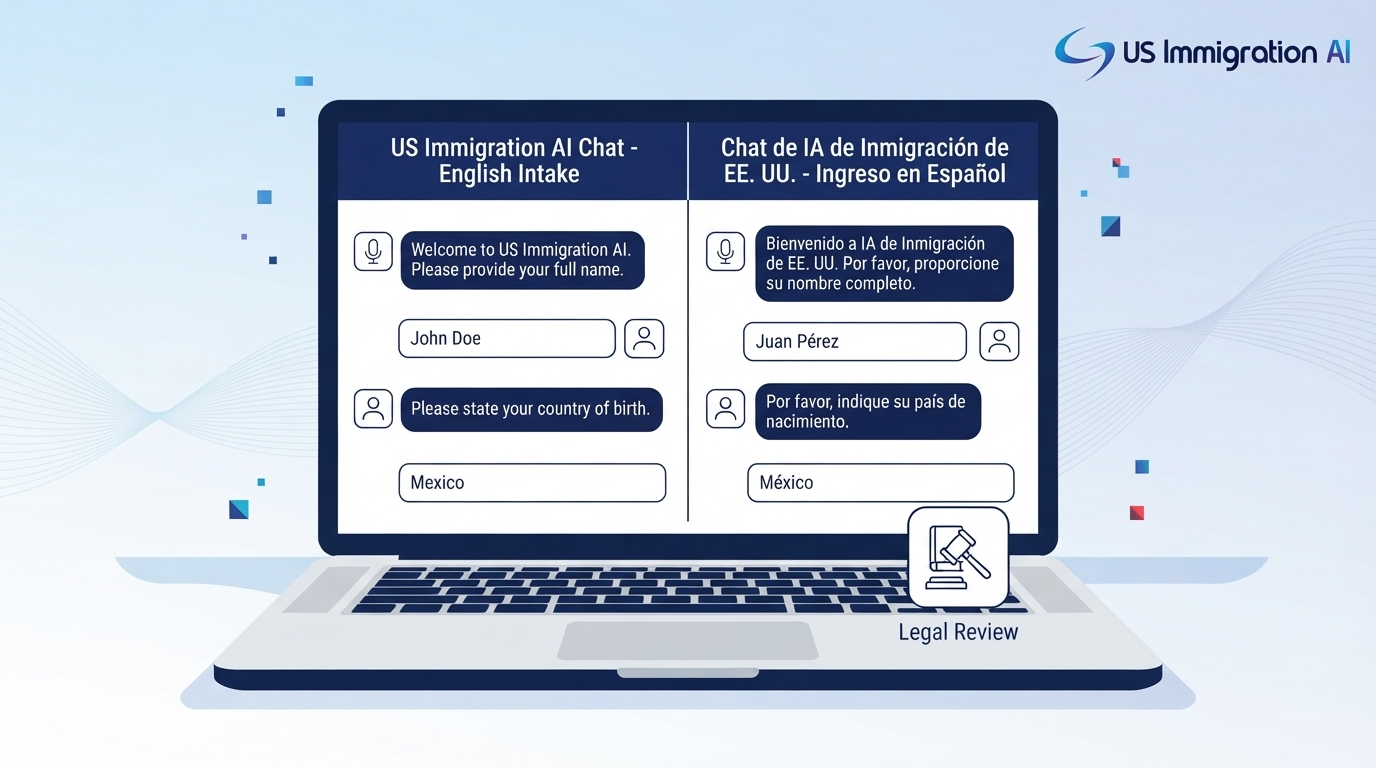
Staffing decides who speaks to clients, and the script decides what they say. Use one script, with the same questions in the same order, for every language. A matching order lets answers land in the same fields no matter which language the client used.
- Ask for the client's preferred language first, for example "¿Prefiere continuar en español o en inglés?", and record the answer in its own field.
- Have a qualified bilingual person translate the script, and a second qualified person review it. Do not publish a raw machine translation.
- Use plain words. Ask "Have you ever been in immigration court?" and explain any term like "removal proceedings" before you use it.
- Read names, birth dates, and receipt numbers back to the client before the intake ends.
Collect Each Answer Once and Reuse It
The script produces the first answers, so the next step is how you store them. Design intake so a client gives each fact once, in their own language, and your team reuses it across the case.
Map every intake question to one field in your case record, then map each field to the form lines that need it. A client's name, birth date, and address history can then flow onto every form that asks for them, with no re-asking and no retyping.
Keep each answer in the language the client gave, and add an English summary beside it. When a form answer looks off, the attorney can check the client's own wording. Revisit the map whenever USCIS issues a new edition of a form.
Give Clients One Place to Answer and Upload
The same record can feed a client portal, where people answer questions and send documents on their own schedule, in their own language. Send each client a private link to a page that lists their questions and the documents their case needs.
Clients can upload photos of passports and birth certificates from a phone. Keep the document checklist in the client's language, and show which items are still missing. The goal is fewer explanatory calls and fewer half-finished submissions.
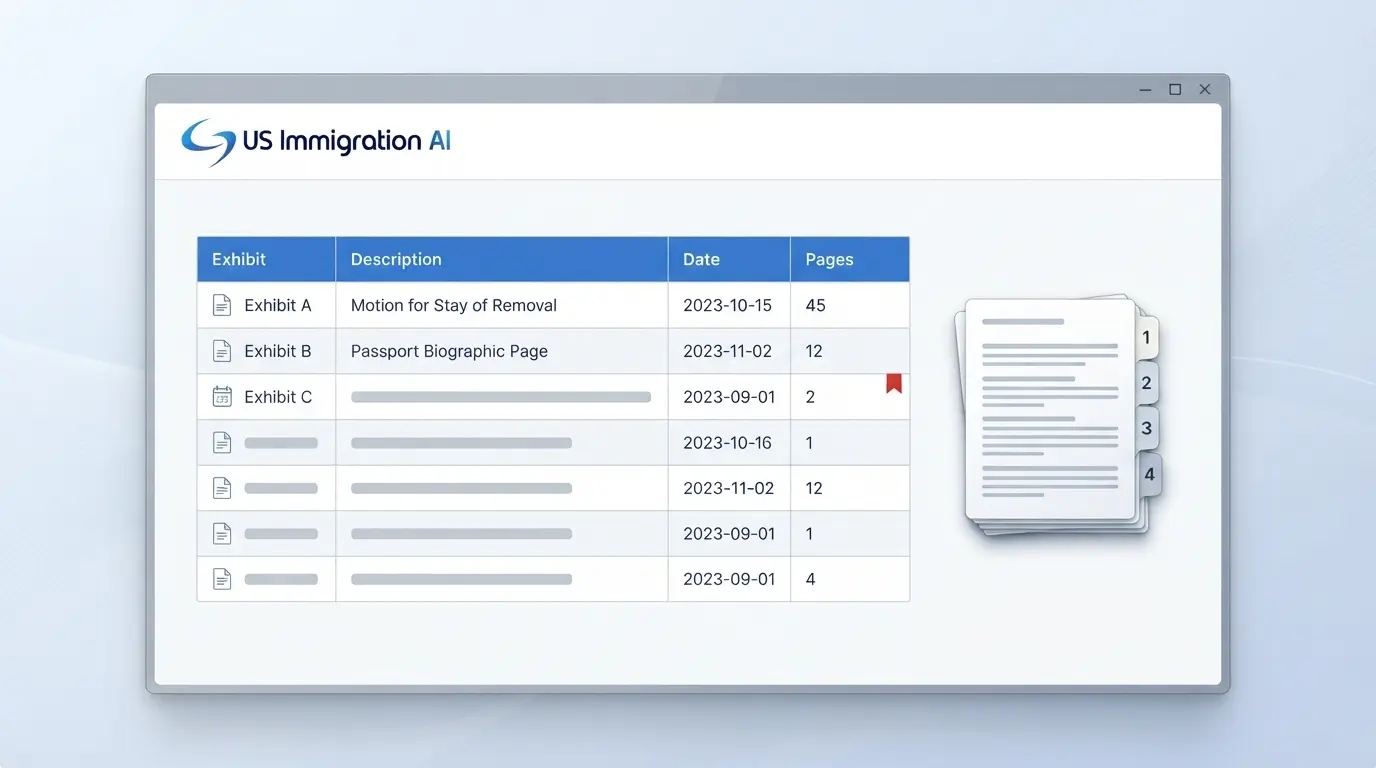
Firms that spend hours chasing passports and birth certificates can use a document collection portal that tracks missing files and sends reminders. A foreign-language document a client uploads still needs a certified English translation before filing, as the translation section below explains.
Catch Errors Before the Attorney Does
Once answers and uploads land in one record, add simple checks that flag mechanical errors as soon as an answer is entered. Four checks are a practical starting set:
- A date range that ends before it starts.
- A required field left blank.
- An identifying number, such as a receipt number, in the wrong format.
- A name or birth date that differs between two records for the same person.
These checks find typing and consistency problems. They do not judge eligibility or choose a strategy.
Set Hard Limits and Escalation Rules
The record and the portal handle data. Next, set limits on what anyone handling intake may say, in any language. Intake gathers facts and leaves legal answers to an attorney, and two written lists enforce that line.
Questions That Always Go to an Attorney
Route these questions to an attorney, whatever language the caller uses:
- Eligibility for a visa or status.
- The cost of the case.
- How strong the case is.
- What deadlines apply.
Triggers That Need a Live Person
Send these situations to a live person right away:
- Detention.
- Contact with ICE.
- An upcoming court date.
- A caller under eighteen.
- A caller in crisis.
- A person who is already a client.
Enforcing the Rules
Software can enforce these rules too. AI Intake, for example, routes urgent inquiries to the right person on your team and hands anything outside the firm's rules to a human.
If you record calls, check your state's consent rules. Some states require every party to agree, so play a disclosure before recording begins.
Know Where Interpreters and Certified Translations Still Apply
Hard limits cover what staff say. A separate set of rules covers what you file, and translated intake answers do not satisfy them.
Certified Translations of Documents
Under 8 CFR 103.2(b)(3), any foreign-language document filed with USCIS needs a full English translation. The translator must certify that the translation is complete and accurate, and that they are competent to translate the language. A machine translation without a translator's certification does not meet that rule.
In the running example, a birth certificate in Spanish and a marriage certificate in Chinese both need certified English translations before filing.
Interpreter Certifications on Forms
Many USCIS forms also have an interpreter section. When someone reads the form to the client in another language, that person is named and signs a certification. Form I-130A, Part 5, is one example, and the interpreter certifies fluency in English and the client's language.
Record at intake who interpreted for each client. Your team can then complete that section accurately when the forms are drafted.
Keep Client Data Secure in Every Language
The last protection covers what you store. Language does not change your confidentiality duties, so apply the same access rules to every intake record.
- Limit each record to the people working that case, with role-based access so an intake coordinator sees inquiries without seeing everything an attorney sees.
- Log who opens each file and when.
- Show outside interpreters only what the interpretation requires, under the confidentiality terms you set in the ethics step.
Test and Review the Setup
With the pieces in place, test them before clients depend on them. Then keep reviewing them after launch.
Before Launch
- Send five test inquiries per language through each channel you use. In the running example, that is ten per channel for Spanish and Mandarin.
- Check that the language, the answers, and any urgency flag land in the right fields.
- Time the handoff for each urgent trigger. A live person should pick up as fast as your coverage promise says.
Pilot One Real Case
Before you roll the setup out to every matter, run one real case through it, with the client's agreement. Follow it from first inquiry to a drafted form. Compare the time spent and the number of back-and-forth messages with your current process.
Review Each Month
Set a monthly review owned by a supervising attorney. Track three numbers by language:
- Response time.
- Completed intakes.
- Drop-off.
If one language completes far fewer intakes than the others, review that script first.
Grow Your Caseload With US Immigration AI
US Immigration AI helps immigration firms capture and pre-qualify inquiries around the clock across chat, web forms, SMS, and email. Attorneys get review-ready summaries, and every file stays under attorney control. Book a consultation to see how AI Intake fits your workflow.
Frequently Asked Questions