
Form I-485 is the application your clients file with USCIS to become lawful permanent residents without leaving the country. It sits at the center of nearly every adjustment-of-status case, from a marriage-based green card to an EB-2 filing. Getting it right the first time keeps a case on schedule. Getting it wrong costs months.
This guide covers who can file, what it costs in 2026, and what the packet needs to include. It also covers the May 2026 discretionary-adjustment memo and what changes once a firm is filing more than one I-485 at a time.
Key Takeaways
- Form I-485 lets an applicant already in the U.S. adjust status to a green card without leaving the country.
- Most applicants need an approved or concurrently filed petition (Form I-130 or I-140) and a current priority date.
- The 2026 fee is $1,440 per applicant age 14 and older, or $950 for a child filing with a parent. No online discount applies.
- As of May 2026, USCIS treats adjustment of status as discretionary under Policy Memorandum PM-602-0199, not a routine step.
- A firm filing several I-485 cases at once has to keep every derivative family member's paperwork consistent, not just one applicant's.
What Is Form I-485?
Form I-485, the Application to Register Permanent Residence or Adjust Status, is the form USCIS uses to grant a green card. It's filed by someone already living in the United States. USCIS calls this process adjustment of status, and it applies whether the underlying case is family-based, employment-based, or humanitarian.
Adjustment of status differs from consular processing, where an applicant living abroad interviews at a U.S. embassy instead. A client outside the country cannot file Form I-485. Confirming that distinction early decides which form the case actually needs.
Who Can File Form I-485?
Eligibility comes down to two questions. Does the client have an approved or concurrently filed immigrant petition, usually Form I-130 or Form I-140? And is a visa available to them under the category charts in the monthly Visa Bulletin?
Immediate relatives of U.S. citizens skip the wait for a priority date. This group includes spouses, parents, and unmarried children under 21. A visa is treated as immediately available to them. That's why many marriage-based cases file the I-130 and I-485 together, a practice known as concurrent filing.
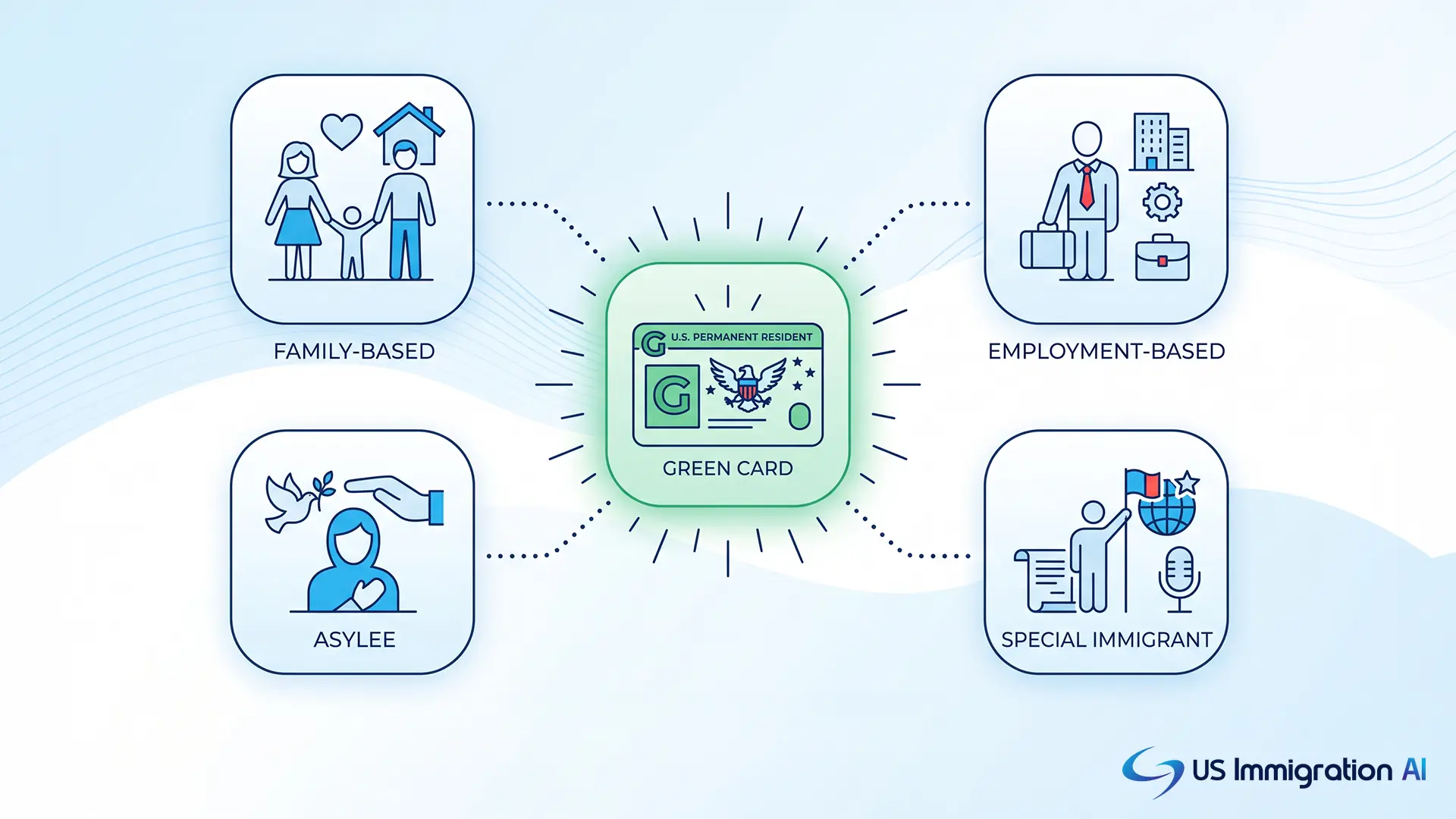
Beyond that, clients typically fall into one of these categories:
- Family-based applicants. Spouses, parents, unmarried children under 21, and family-preference categories whose priority date is current. See our family-based case types for the full range of qualifying relationships.
- Employment-based applicants. EB-1 through EB-5 categories, typically filed alongside or after an approved Form I-140. Our employment-based case types page covers these pathways in more detail.
- Derivative spouses and children. Dependents of a principal applicant file their own Form I-485, usually on the same underlying petition.
- Asylees and refugees. Eligible one year after a grant of asylum or admission as a refugee.
- Special immigrants and Diversity Visa selectees. Certain religious workers, Special Immigrant Juveniles, and DV lottery winners already in the United States.
The May 2026 Discretionary-Adjustment Memo
Eligibility on paper is no longer the end of the analysis. On May 21, 2026, USCIS issued Policy Memorandum PM-602-0199, reframing adjustment of status as a matter of "discretion and administrative grace" rather than a routine step.
What the memo changes:
- Officers are directed to weigh whether a client could instead get a green card through consular processing abroad.
- Heightened scrutiny applies where a client's conduct looks inconsistent with their original purpose for being in the U.S., such as remaining well past the purpose of a visit or parole.
- The discretionary lens applies at the time of decision, so it can reach a case filed before the memo was issued.
What it doesn't change:
- The statute and regulations behind adjustment of status.
- The technical eligibility requirements a client has to meet.
For firms, this moves the consular-processing conversation earlier in case strategy, especially for clients with gaps or an overstay in their status history. Implementing guidance is still developing, so check the current USCIS policy memoranda list before advising on a borderline case.
Form I-485 Filing Fee in 2026
None of that changes the mechanics of filing. Once a firm decides adjustment is still the right path, the next fixed number is the fee, set on the USCIS Fee Schedule. As of 2026, it breaks down as follows:
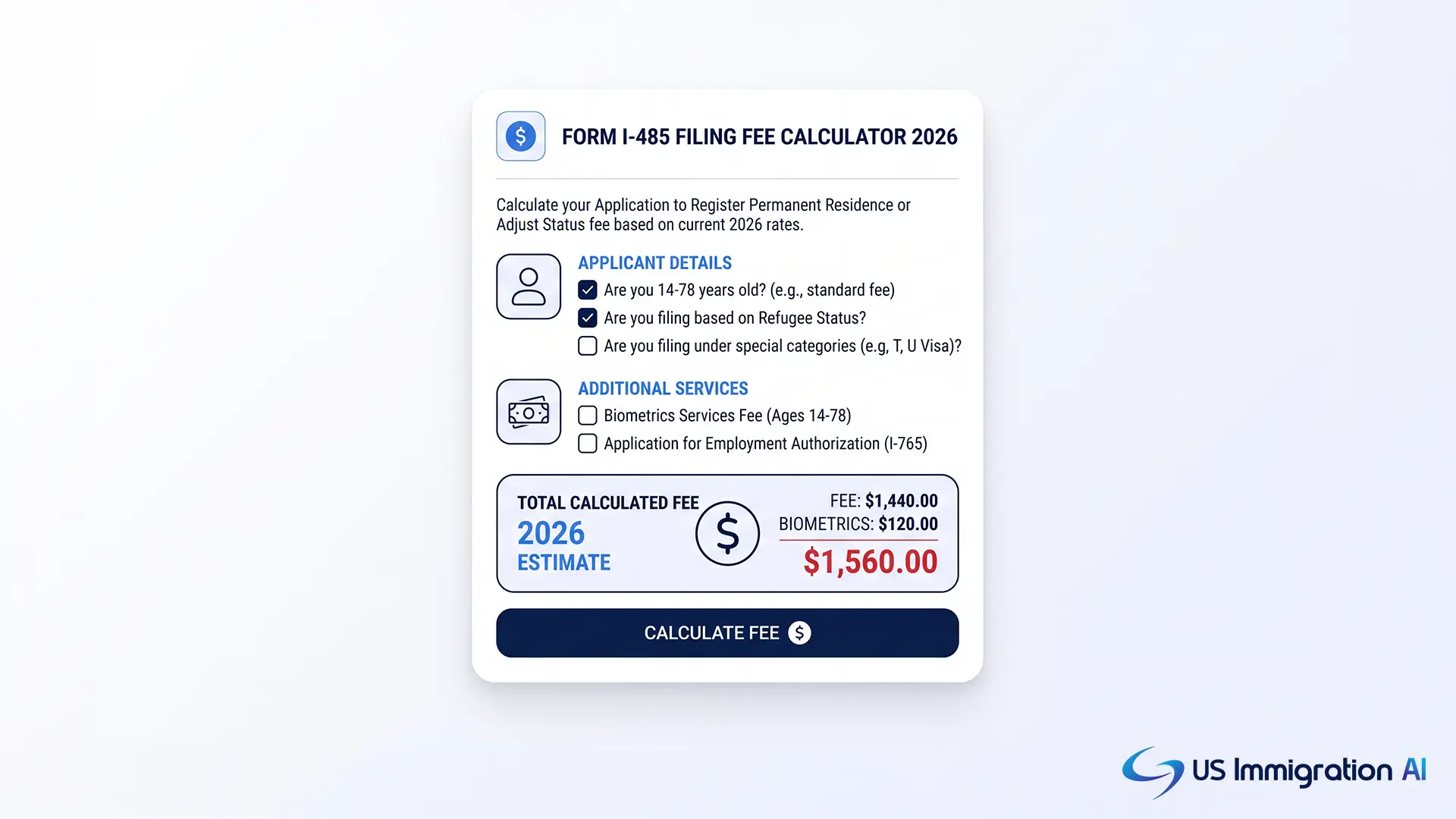
A few things to know about the fee:
- Each family member on the application pays their own fee.
- No online-filing discount applies to Form I-485, unlike most USCIS forms, under 8 CFR 106.
- Biometric services are included, so there's no separate fingerprinting charge.
- Fee waivers exist only in narrow circumstances, mainly for asylees, refugees, and other humanitarian categories, using Form I-912.
- DHS adjusts some fees for inflation each fiscal year. Confirm the current amount on the official schedule before a client pays.
Documents and Evidence Your Client Needs
The fee only covers the application itself. USCIS still needs a complete evidence packet behind it, and it publishes an official evidence checklist for exactly this purpose. Submitting everything up front is one of the simplest ways to avoid a delay.
At a minimum, most packets need:
- A properly signed Form I-485
- Proof of lawful entry, such as Form I-94 and passport pages
- Two passport-style photos taken within 30 days of filing
- A birth certificate with a certified English translation, if needed
- The receipt or approval notice (Form I-797) for the underlying petition
- Form I-693, the medical exam report signed by a civil surgeon
That last item carries real filing risk. Since a December 2024 policy update, USCIS requires most applicants to submit Form I-693 with Form I-485 itself. A missing or incomplete I-693 can now mean an outright rejection instead of a request for more information.
Depending on the category, a packet may also need:
- Form I-864, the Affidavit of Support
- Marriage or divorce records
- Supplement J, for employment-based cases
- Form I-765 or I-131, if the client wants work authorization or travel permission while the case is pending
A secure client portal keeps these files organized as they arrive, instead of scattered across email threads.
How to File Form I-485
With the fee paid and the evidence gathered, filing follows a fixed sequence.
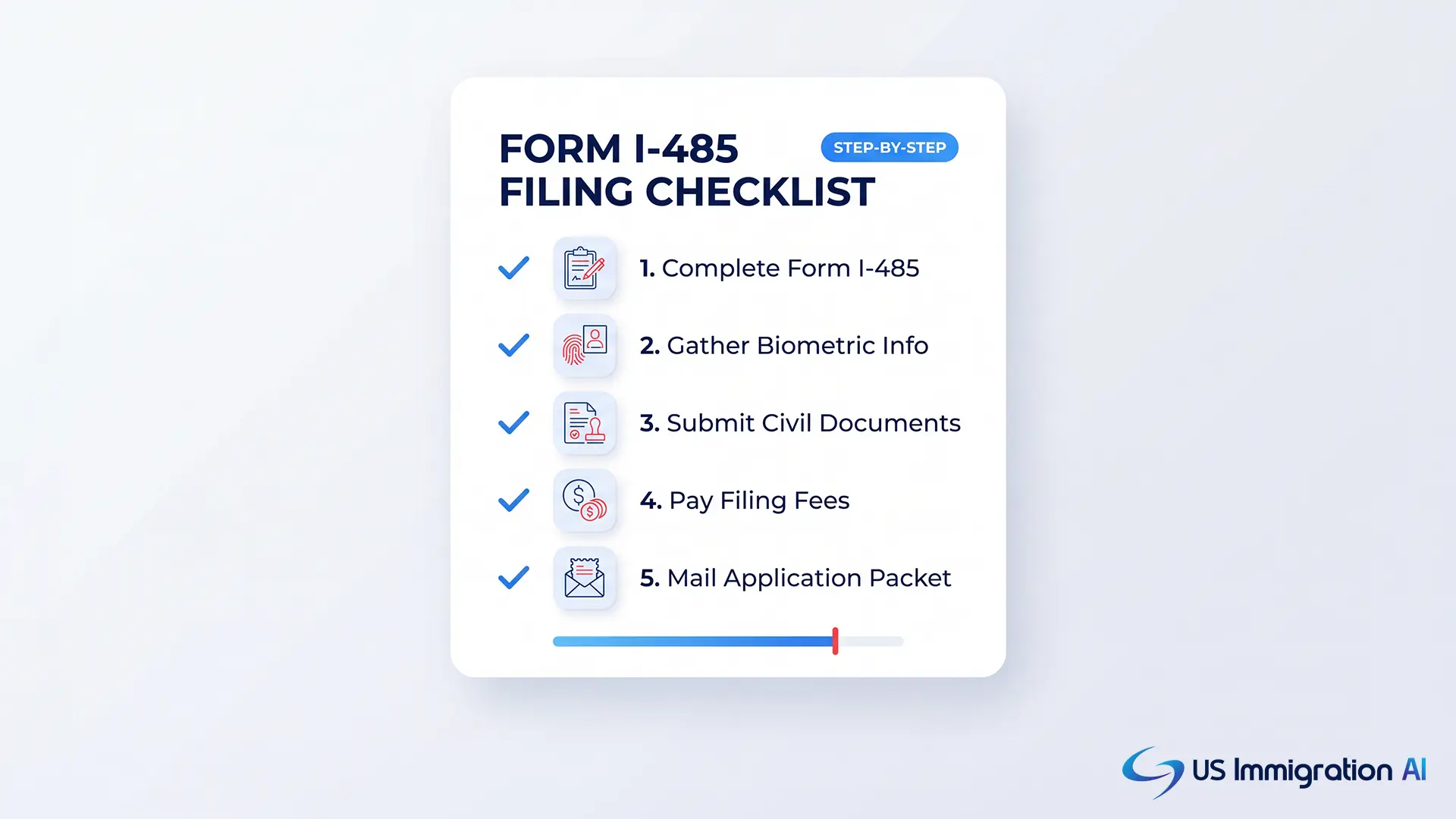
- Confirm the priority date is current. Check the Visa Bulletin category chart before filing anything. Immediate relatives of U.S. citizens are always current.
- Complete Form I-485 accurately. Every question needs an answer. Leave nothing blank, and give any "yes" on an inadmissibility question a second look before submission.
- Assemble the evidence in order. Follow the sequence in the official form instructions, with a cover letter and labeled exhibits. Form drafting tools can pull the same intake data into every form in the packet.
- File to the correct address or account. Most family-based and concurrently filed cases go by mail. USCIS now accepts online filing for certain standalone employment-based applications.
What Happens After You File
Filing is the start of the case, not the end of it. From here, most cases move through the same checkpoints.
Receipt Notice and Biometrics
A receipt notice, Form I-797C, typically arrives within two to four weeks. It confirms the case is in the system. USCIS then generally schedules a biometrics appointment within a few weeks of filing, covering fingerprints, a photo, and a signature.
Requests for Evidence
USCIS issues a Request for Evidence, or RFE, when the initial packet is missing something. Common triggers include an incomplete affidavit of support or a document that needs explaining. An RFE sets a fixed response deadline, and there's little room to extend it once issued.
The Interview
Many family-based and marriage cases include an in-person interview at the local field office. Clients should bring originals of everything they submitted.
The Decision
An approval shows up in the client's USCIS online account first, followed by the physical green card in the mail. A denial notice explains the reason and any appeal or motion options.
Common Reasons Form I-485 Cases Stall or Get Denied
Most delays trace back to a handful of preventable issues:
- Inconsistent information across forms. Names, dates of birth, and receipt numbers that don't match exactly between documents raise questions for the reviewing officer.
- Gaps in status or unauthorized work. Section 245(c) of the Immigration and Nationality Act bars adjustment for some applicants who fell out of status, though several categories are exempt.
- A missed RFE deadline. USCIS generally won't accept a late response, so a fixable gap turns into a denial.
- An unsupported answer on an inadmissibility question. A "yes" that lacks the required explanation can turn a manageable filing into a denial.
Keeping Multiple Filings Accurate as Your Caseload Grows
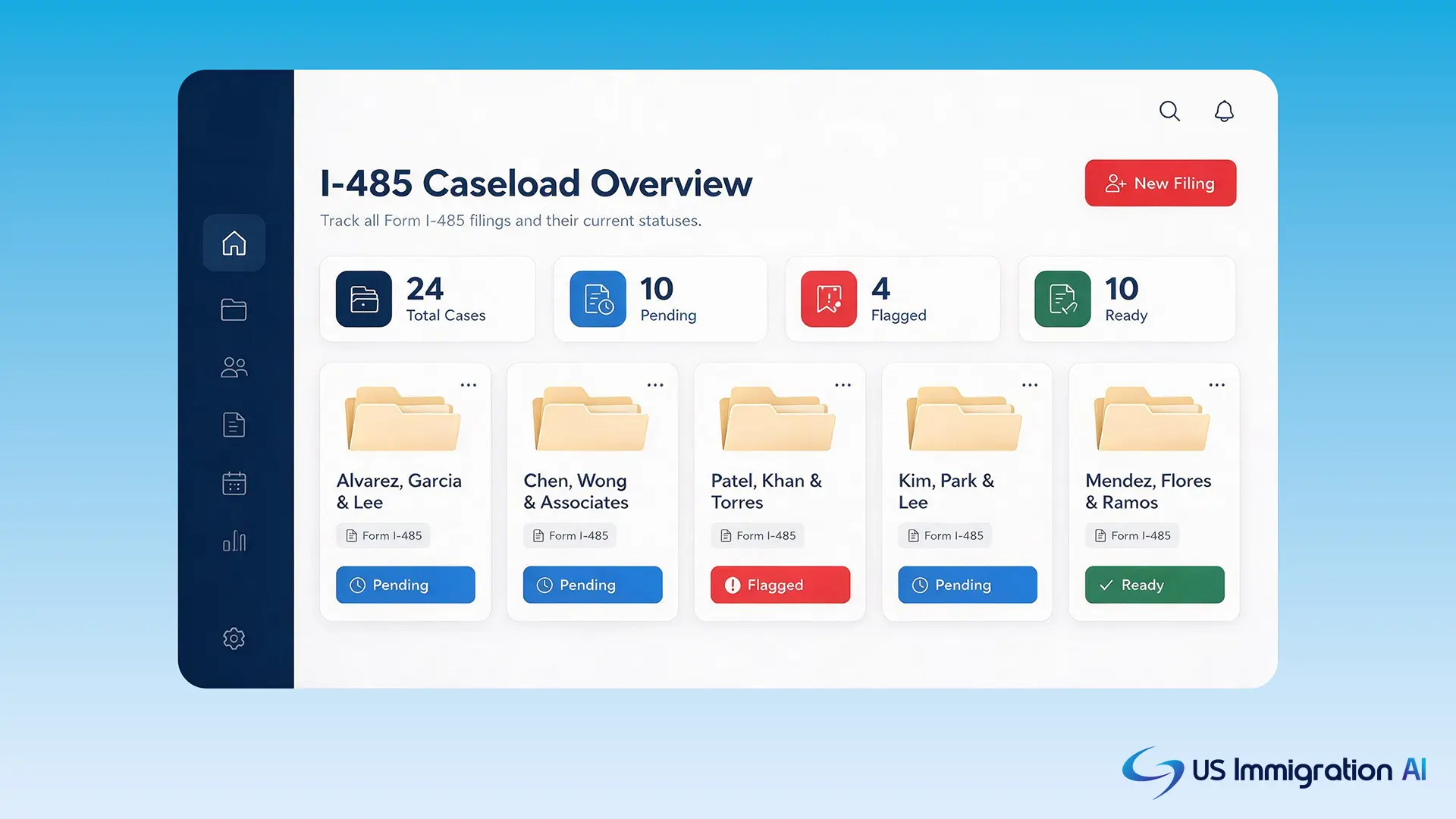
Everything above assumes one case. A firm running thirty family-based and employment-based filings at once runs into compounding versions of the same failure points.
Coordinating Derivative Filings
- A spouse-and-two-children case means four separate I-485 applications, four fees, and four I-693 exams, all tied to one underlying petition.
- Each derivative's paperwork has to line up with the principal applicant's petition and with each other.
- Tracked by spreadsheet across several open cases, a mismatched A-number or an outdated receipt number is easy to miss until USCIS flags it.
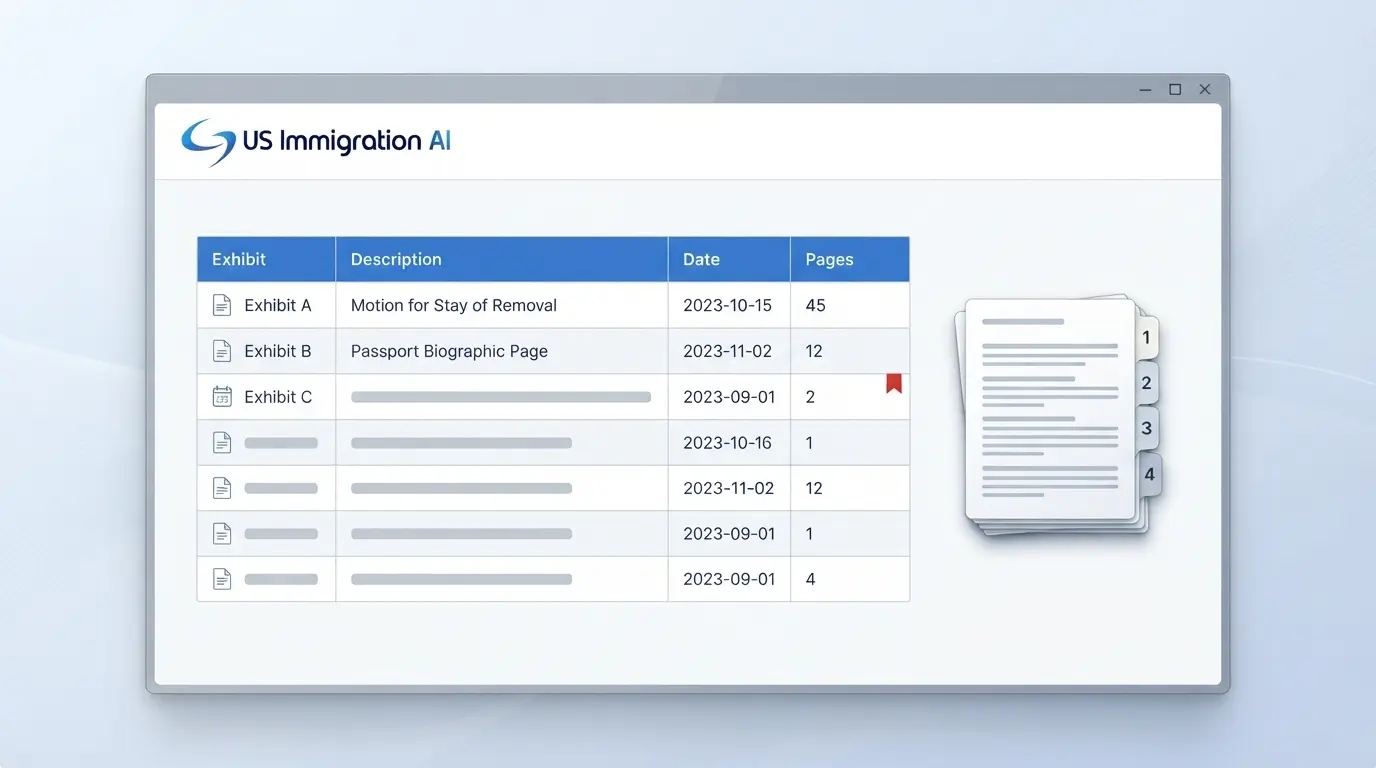
Keeping Every Exhibit Consistent
- USCIS officers compare names, addresses, and dates across every document in a packet.
- A client's name spelled one way on the I-485 and another way on a translated birth certificate draws exactly this kind of second look.
- Case assembly software can check these details automatically before a packet goes out, flagging mismatches for the attorney to resolve instead of leaving that check to a final manual read-through.
Tracking Form Editions and Deadlines
- USCIS periodically retires an old edition of Form I-485 after a set date; the December 2024 revision became mandatory the following February.
- A firm with several cases open at once needs every template current.
- Every outstanding RFE deadline needs a calendar someone actually owns.
Turning I-485 Filings Into a Repeatable Process
None of that is complicated in isolation. The complexity comes from doing it accurately across every open case at once. A complete, consistent packet moves through USCIS review with fewer detours than one built under time pressure, whether a firm files five I-485 applications a year or fifty. The steps in this guide don't change with volume; what changes is whether a firm can repeat them accurately across every case, without adding headcount just to keep up.
Handle More I-485 Filings With US Immigration AI
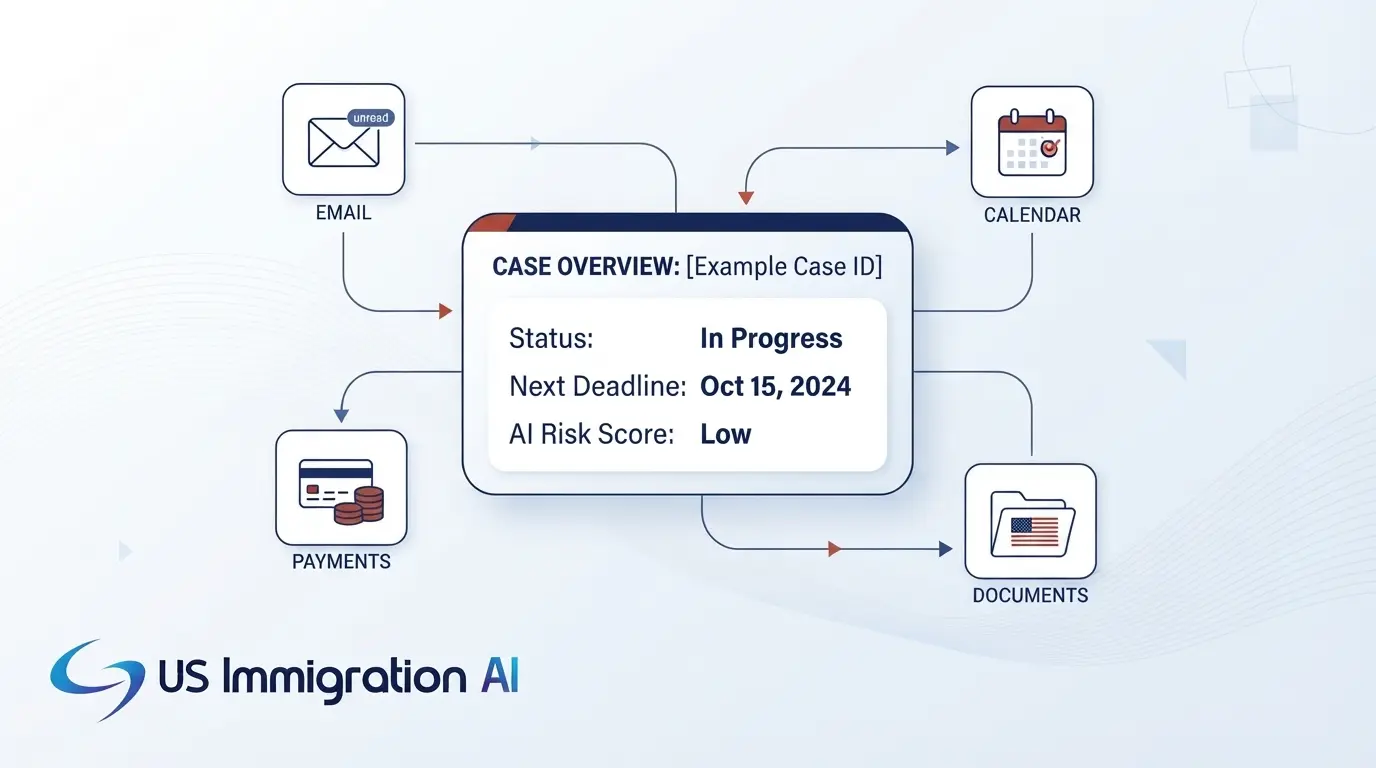
US Immigration AI connects intake, document collection, form drafting, and case assembly into one workflow built for immigration practices. Your attorneys still review and approve every filing; the platform keeps the packets consistent while they do. Book a consultation to see how it fits your current caseload.