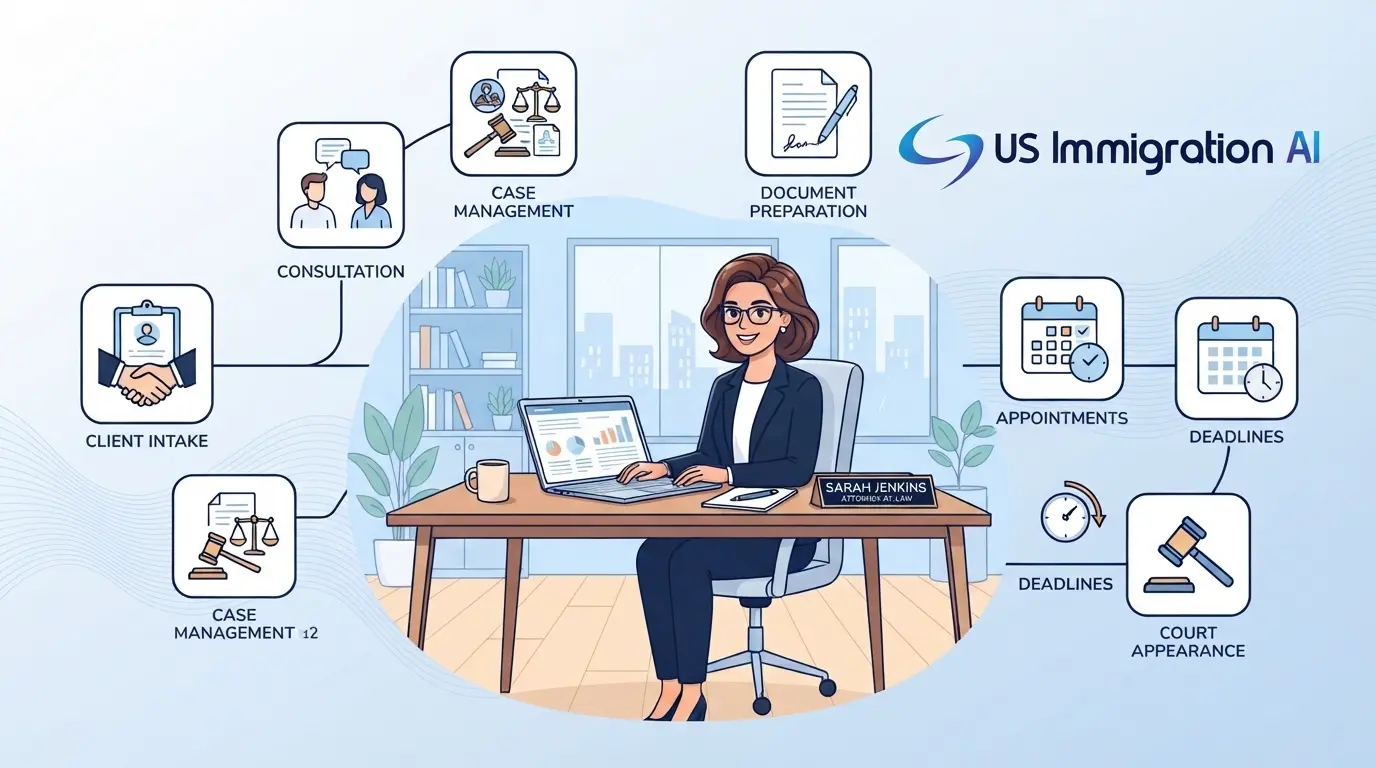

You convert more immigration law firm leads by answering fast, screening early, and getting the urgent ones to a lawyer before a competitor does. Most prospects hire whoever replies first with a clear answer. Automated intake lets your firm be that firm, without adding hours to anyone's day.
The sections below walk through capturing, screening, and nurturing new leads, with a licensed attorney signing off on every file.
Key Takeaways
- The firm that replies first usually wins the client, so speed matters more than any other intake factor.
- Automated text replies, around-the-clock chat, and intake in several languages catch leads your team would otherwise miss.
- A fast background check can surface a stronger visa option the client never thought to ask about.
- Texting leads is legal once you collect clear written consent and honor every opt-out.
- Keep a lawyer reviewing every file. The software handles the routine work, and your attorneys keep the judgment.
Why Speed Decides Who Wins the Client
Prospective immigration clients usually reach out in a hurry. A hard filing deadline, a sudden travel block, a relative stuck abroad. They are anxious, and they tend to hire the first firm that answers clearly and quickly.
A slow reply is the most common reason a firm loses a case it should have won. You cannot sit by the phone all day and night, and you should not have to. A system that answers your immigration law firm leads on its own covers the hours you cannot. You stop losing clients while you are in court or asleep.
Where Your Best Leads Come From
Strong leads arrive from two places above all: local search and referrals. Both can feed the same intake, so nothing sits in a voicemail waiting for a callback.
Connect Local Search to Your Intake
Most high-value clients look for help close to home, so they search for an immigration attorney in their own city. To catch those searches, keep your Google Business Profile current, with your exact visa services and the languages your team speaks listed plainly.
The link matters as much as the listing. When someone taps your profile or a local ad, drop them into an automated reply instead of a phone line that rings into voicemail. A curious searcher becomes a tracked lead in the time it takes to read this sentence.
Build Referral Partnerships in Adjacent Fields
Search is not your only well. Some of your best cases come from businesses that already work with immigrants every day. For family matters, that might be a wedding planner who handles international couples. For business cases, it could be a language school, a cultural association, or a corporate recruiter.
Give each partner one simple intake link to pass along. When they send someone your way, the software logs the source and starts intake on its own. No one on your staff retypes a thing.
Reply to New Leads in Seconds
However a lead reaches you, the clock starts the moment it lands. The fastest firms close the gap between a form submission and the first reply down to seconds. Email will not get you there, since it sinks into spam folders. A text gets opened almost the instant it arrives.

Set up a text that fires the second someone submits your form. The first message simply tells them you have their request, which already puts you ahead of the firm still letting the inquiry sit. Then the system asks a question or two about their visa needs. Their answers route the lead to the right attorney queue.
Texting leads comes with real legal duties, and they are easy to meet. The Telephone Consumer Protection Act (TCPA) requires prior express written consent before you send automated marketing texts to a cell phone. So put a plain consent checkbox on every web form and have your software keep the record.
Opt-outs carry the same weight. When someone replies STOP, the texts have to stop. Under the FCC opt-out rule that took effect April 11, 2025, a reply like STOP counts as revoking consent, and you are required to honor it.
Intake in the Client's Language, Day or Night
Speed only helps if someone, or something, is there to answer. Many immigration prospects search after hours, between long shifts or from a time zone where your office is closed. A human receptionist alone means those people hit a wall and move on.

A digital intake assistant picks up at any hour and speaks the prospect's language, whether that is Spanish, Mandarin, Portuguese, or English. That keeps a strong client from bouncing off an English-only form. It also listens for urgency: a mention of a court date or an expiring visa flags the file and pings a lawyer to step in. You can see how this works on our AI Intake page.
Screen Cases and Spot Visa Options Automatically
Once a lead is talking to you, the next question is whether they actually qualify. That check normally eats up a paralegal's afternoon. The software handles the first pass in minutes. It builds a short summary of the person's history and lines it up against the visa rules that apply.

Now and then that pass turns up something better than the client expected. Someone applying for an H-1B specialty occupation visa may, on a closer look, fit the O-1 category on the strength of their record. A lawyer confirms it, but the software is good at raising the flag early, and a catch like that can change the whole case.
Follow Up Until the Client Is Ready
Plenty of qualified leads still will not sign on day one. They might be saving up, or waiting on a birth certificate from back home. Leave them alone and they drift to whichever firm stayed in touch.
Wire your intake form to a follow-up system that checks in on a set schedule, in a friendly voice. A few days usually does it:
- Hour 1: a quick text asking if they have questions about the intake form.
- Day 1: a short, helpful note about current government processing times.
- Day 3: a final check-in offering an open consultation slot.
When they are ready, the system hands them a booking link to pick a time on your calendar. No phone tag, no chain of scheduling emails.
Track the Numbers That Predict Growth
None of this scales if you are guessing. Watch one figure every week above all: your lead conversion rate, from total leads to qualified leads to signed retainers. That ratio is the honest read on how your intake is doing.
Watch your costs by source, too. Set what you spend on search ads against what your referral partners bring in. The comparison tells you which channels to feed and which to quietly drop, so the budget follows the cases worth winning.
Keep Your Tools Ethical and Compliant
All of this is worth nothing if it puts your license at risk. The American Bar Association has spelled out how lawyers should handle generative AI, and three of its duties bear directly on intake. Read them as the case for choosing a careful, review-first tool.

Keep a Lawyer in the Loop
A licensed attorney should lay eyes on every file before it goes anywhere. Build in a review step ahead of any binding action, like declining a client or sending out a contract. ABA Formal Opinion 512 (2024) grounds this in the duties of competence (Model Rule 1.1) and supervision of nonlawyer assistance (Model Rule 5.3). The same two-minute check also rescues the occasional strong client the software underrated, like a qualified applicant with barely any online footprint.
Bill Honestly for AI Time
Bill for the time and reasonable costs the work actually took. If a tool drafts a letter in two minutes, two hours of attorney labor is not yours to charge. Formal Opinion 512 runs this through Model Rule 1.5 and its requirement of reasonable fees.
Protect Client Confidentiality
Keep private client facts out of free public AI tools, which may feed your inputs back into their own systems. Model Rule 1.6 puts you on the hook for safeguarding that information. Formal Opinion 512 expects you to know how a tool handles data before you enter any. Use something built to keep client files sealed off, like the approach on our data security and compliance page.
Manual Intake vs. Automated Intake
Automation does not push the lawyer aside. It clears the repetitive work so your attorneys spend their hours on the parts that need judgment.
Putting Automated Intake to Work
The playbook is not complicated. Reply fast, screen early, follow up on a schedule, and keep a lawyer over every call. Each piece quietly recovers clients you would otherwise lose to a quicker firm. Pick the gap that is costing you the most, which is almost always the slow first reply, and start there.
Grow Your Caseload With US Immigration AI
US Immigration AI captures, screens, and follows up with your leads on its own, while a licensed attorney reviews every file. You sign more cases without asking your team for more hours. Schedule a demo and watch it run on your own intake.
Frequently Asked Questions