
Immigration law firm marketing in 2026 means getting found in Google, in AI answer engines, and in the languages your clients search in. It also means having a system ready to catch the leads that show up. Most firms treat visibility and intake as two separate problems. They aren't. A firm that ranks well but responds slowly loses the same client as a firm that never ranked at all.
This guide covers the channels worth your budget this year: AI search visibility, multilingual content, local SEO, paid ads, and video. It also covers the part most marketing guides skip: what happens the moment a lead reaches out.
Key Takeaways
- AI answer engines like ChatGPT, Google AI Overviews, and Perplexity now summarize immigration questions before a searcher clicks any website. Visibility inside those answers matters as much as ranking position.
- Multilingual content needs cultural adaptation, not machine translation, and should live in a subdirectory of your main domain rather than a separate site.
- Local Services Ads and traditional Google Ads solve different problems. LSAs suit high-volume consumer cases; PPC suits complex, high-value employment matters.
- A Harvard Business Review study found firms that contact a lead within an hour qualify it seven times more often than firms that wait longer.
- ABA Model Rule 7.1 and its official comment bar marketing claims that create unjustified expectations about results, which limits how firms can describe AI tools and case outcomes.
Why Immigration Marketing Looks Different This Year
Immigration clients search under pressure. A visa deadline, a denied application, or a family separation puts them in research mode within hours, not weeks. That urgency shapes every channel below, from how AI engines summarize your content to how fast your team needs to respond once someone reaches out.
The channels themselves aren't new. What changed is where the first impression happens: increasingly, it happens inside an AI-generated answer before a prospective client ever lands on your site.
Getting Found by AI Search Engines, Not Just Google
That AI-generated answer starts with a search engine, and it's one you can still optimize for. Generative engines like ChatGPT, Google's AI Overviews, and Perplexity now answer immigration questions directly, often without sending the searcher to any website at all. Getting cited inside those answers, sometimes called generative engine optimization, is becoming a separate skill from traditional SEO.
These engines favor content that demonstrates real expertise and can be trusted at face value. Three moves help:
- Answer questions directly. Structure content around the exact question a client would ask, such as "How long does an I-130 take to process." Put the answer in the first sentence or two.
- Add FAQ schema markup. Structured FAQ data helps both traditional search results and AI engines pull accurate, attributable answers from your site.
- Keep a named author and clear credentials. AI engines and human readers both weigh who wrote the content, not just what it says.
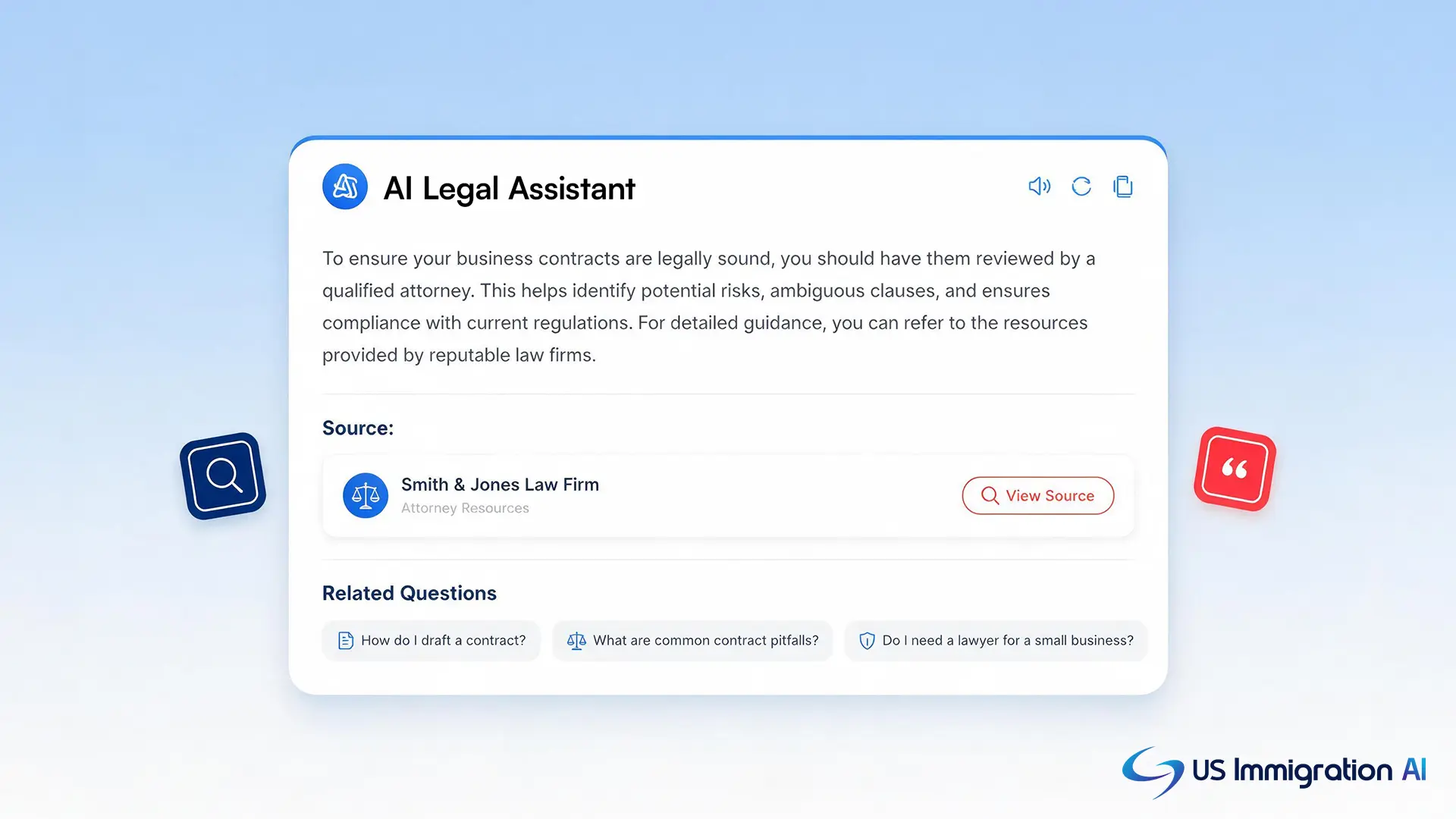
None of this replaces traditional SEO. It sits alongside it. A page written to rank on Google, and to answer a question clearly, tends to get cited by AI engines too.
Multilingual Content Without Losing Accuracy
Getting cited by an AI engine or ranked on Google still assumes the search happened in a language your content covers. A large share of immigration searches happen in languages other than English. Pew Research Center's 2024 analysis of Hispanic Americans' news habits found 54% consume news mostly in English. Another 21% consume it mostly in Spanish, and 23% split time between both. That means a meaningful share of your audience is actively looking for Spanish-language content, even if English still dominates overall.
Machine-translating your English pages is not a safe shortcut. A direct translation can misstate a legal process, use the wrong regional term, or simply read as unnatural to a native speaker. Firms are instead using transcreation, adapting the content itself for cultural context and real search behavior rather than translating word for word.
A few practical rules keep multilingual SEO from creating new problems:
- House translated content in a subdirectory of your main domain, such as yourfirm.com/es/, rather than a separate site, so it shares your domain's existing authority.
- Leave proper nouns alone. Attorney names, firm names, and courthouse addresses should stay as written; translating them confuses both readers and search engines.
- Match your intake to your content. Multilingual pages only convert if a bilingual staff member or an intake system can pick up the conversation in that language.
Local Visibility Still Decides Who Gets Called First
Language isn't the only way immigration searches narrow down to a specific firm. Many are local by nature. Someone searching "deportation defense lawyer near me" wants a name and a phone number, not a national brand.
A complete, accurate Google Business Profile remains one of the most effective local tools available. Firms that keep their hours current, answer questions in the Q&A section, and collect a steady stream of reviews outperform firms with a thin profile.
Legal directories still carry weight too. Profiles on Avvo, Justia, FindLaw, and the American Immigration Lawyers Association member directory tend to rank well on their own. Each one also gives your site a credible backlink.
Choosing Between Local Services Ads and Google Ads
Local rankings and directory listings earn attention over time, but paid ads can put your firm in front of the same local searchers today. Paid search for immigration firms usually comes down to a choice between two formats, and the right one depends on the case type you're trying to attract.
- Local Services Ads (LSAs) appear above traditional search results with a Google Verified badge, and you pay per qualified lead rather than per click. They work well for high-volume, consumer-facing cases like green card applications and naturalization, where the goal is steady case flow.
- Google Ads (PPC) fits complex, higher-value matters such as H-1B or EB-5 filings. Here, a smaller number of well-qualified leads is worth more than high volume. To avoid wasted spend, add negative keywords like "free" and "pro bono." Send traffic to a landing page built around one specific case type, not a general contact page.
Content and Video That Build Trust Before the First Call
Ads and rankings get a prospective client to your site. What keeps them there, and convinces them to call, is different. Immigration clients are making a high-stakes decision, often the most consequential legal decision of their lives. Content that demonstrates depth, not just visibility, earns their trust before they ever pick up the phone.
A pillar-cluster structure works well here. Build one thorough guide around a broad topic, such as family-based green cards. Surround it with shorter articles targeting specific questions, like processing timelines or interview preparation. That structure signals topical depth to both readers and search engines.
Short-form video adds a human layer that text alone can't. A 60-second explainer on what to expect at a green card interview builds more trust than the same information buried in a blog post. Post it natively to YouTube Shorts, TikTok, or Instagram Reels. Producing that same video in Spanish, or whichever language your client base uses, extends its reach without extra production cost.
Closing the Intake Gap Before Leads Go Cold
Here is the part most marketing guides leave out: visibility only pays off if your firm can respond fast enough to keep the lead.
A Harvard Business Review study by James Oldroyd, Kristina McElheran, and David Elkington audited 2,241 U.S. companies handling web-generated leads. Only 37% responded within an hour, 24% took more than a day, and 23% never responded at all. Firms that made contact within the first hour qualified the lead roughly seven times more often than firms that waited longer.
Immigration firms face the same math with none of the excuse. Inquiries about a visa deadline or a court date can't sit in a shared inbox until Monday. Every channel covered above, from AI search visibility to multilingual content to paid ads, generates the same outcome. It sends an inquiry that needs an answer now, at any hour, in whatever language it arrived in.
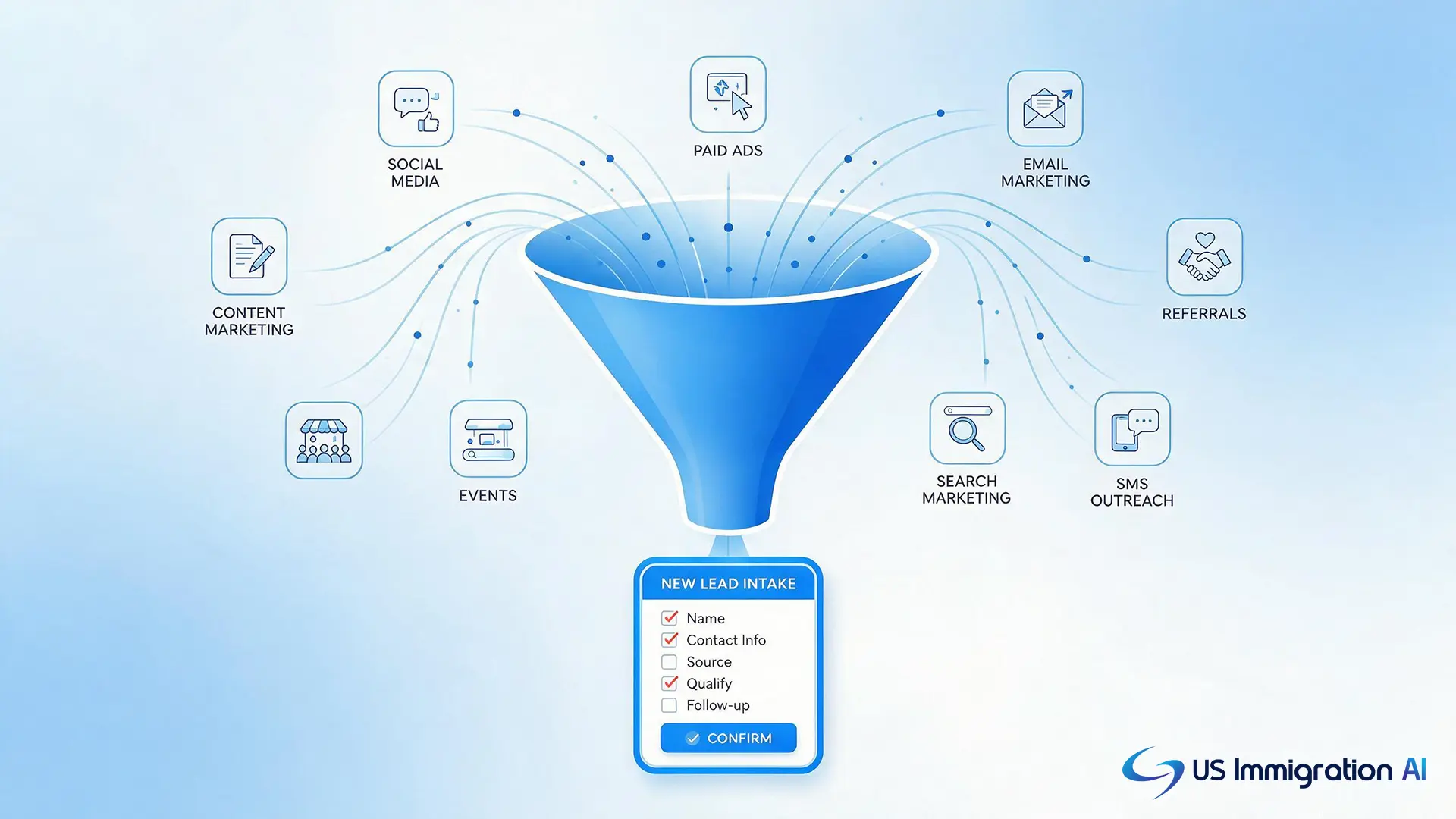
This is where a lot of firms lose ground they already paid to win. A well-optimized site brings in the inquiry. What happens in the next five minutes decides whether it turns into a signed client or a lead your competitor picked up instead. AI Intake answers inbound inquiries by chat, web form, SMS, and email around the clock, then screens and qualifies each lead. It closes that gap without a bigger front desk.
Marketing Without an Intake System vs. Marketing With One
Staying Within Ethical Advertising Rules
None of this works if it puts your license at risk. ABA Model Rule 7.1 bars any communication with a material misrepresentation of fact. Its official comment also bars statements likely to create an unjustified expectation about results. That covers everything from a homepage headline to a paid ad.
A few rules of thumb keep marketing content compliant:
- Avoid unsubstantiated superlatives like "the best immigration lawyer" or guarantees of a specific outcome.
- If your firm uses an AI chatbot for intake or client questions, disclose that clearly and never let it offer legal advice.
- Attorneys remain responsible for supervising any AI tool used in marketing or intake, and for keeping client data out of public AI training systems.
US Immigration AI is a technology platform, not a law firm. It does not provide legal advice, does not replace attorney judgment, and does not form an attorney-client relationship. Every AI-assisted output is built for attorney review before it reaches a client.
Where This Leaves Your Firm
Immigration law firm marketing in 2026 has more moving parts than it did even two years ago. AI search visibility, transcreated multilingual content, local SEO, paid ads, and video all compete for the same limited marketing budget. None of it matters if the firm can't answer the leads it generates fast enough to keep them.
The firms pulling ahead this year are the ones treating visibility and intake capacity as one system, not two separate line items on a budget.
Grow Your Caseload With US Immigration AI
Marketing brings the leads. AI Intake makes sure none of them go cold while your team is busy with active cases. See how it fits your firm's workflow on the schedule page.
Frequently Asked Questions