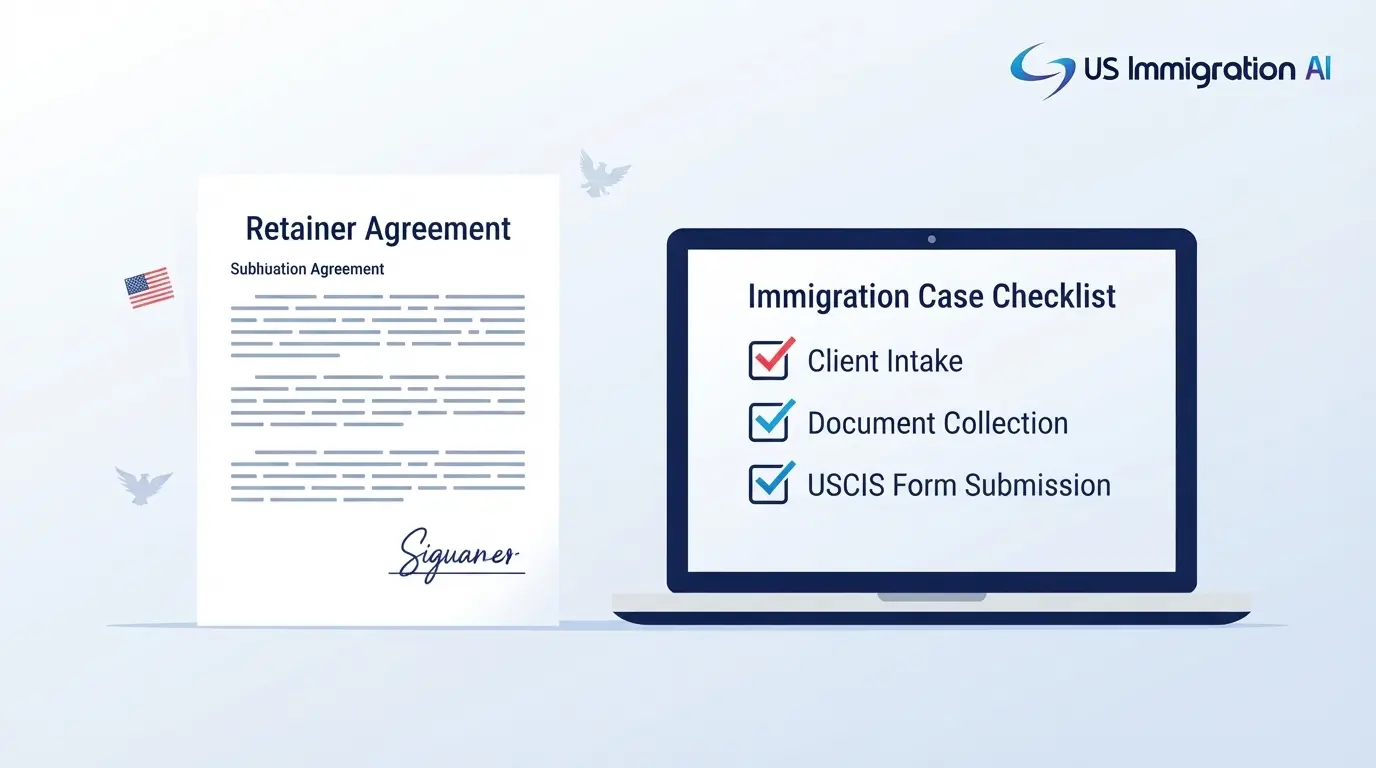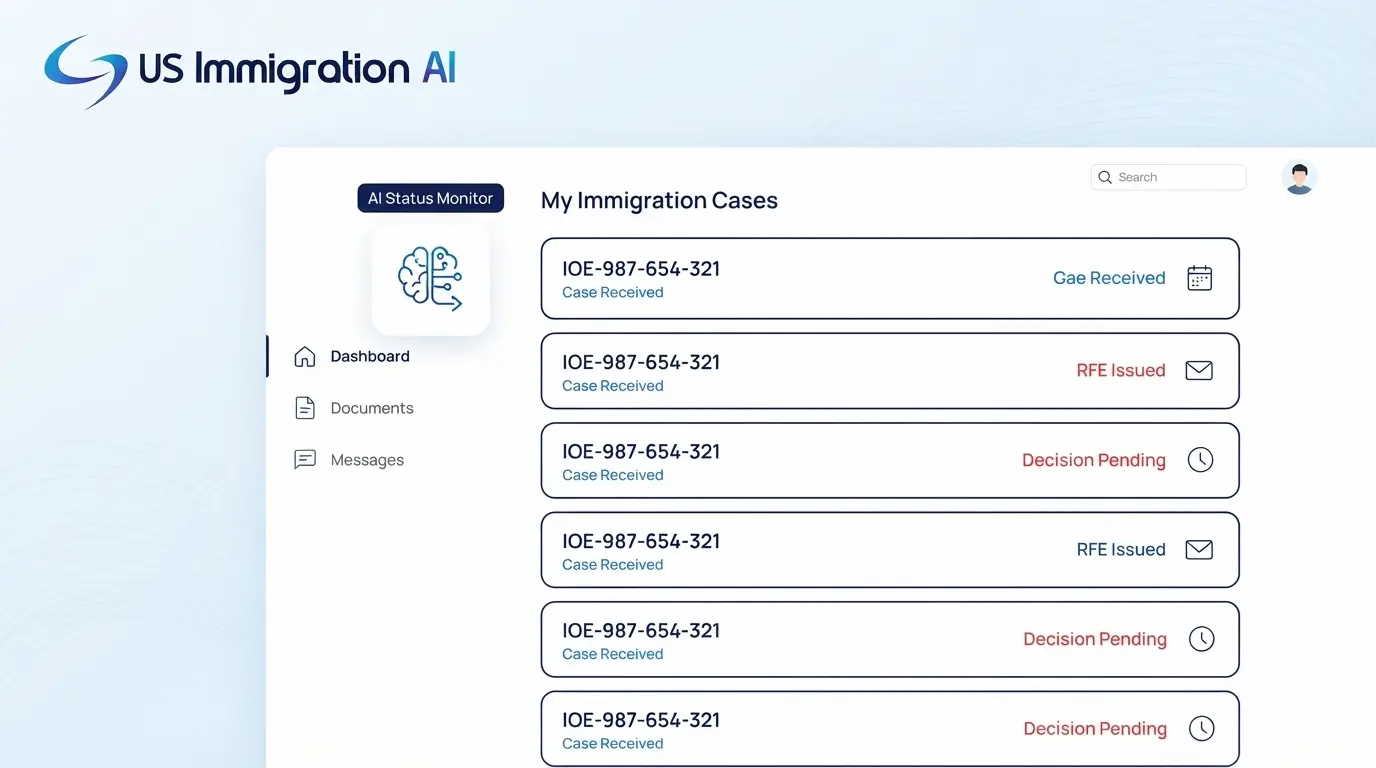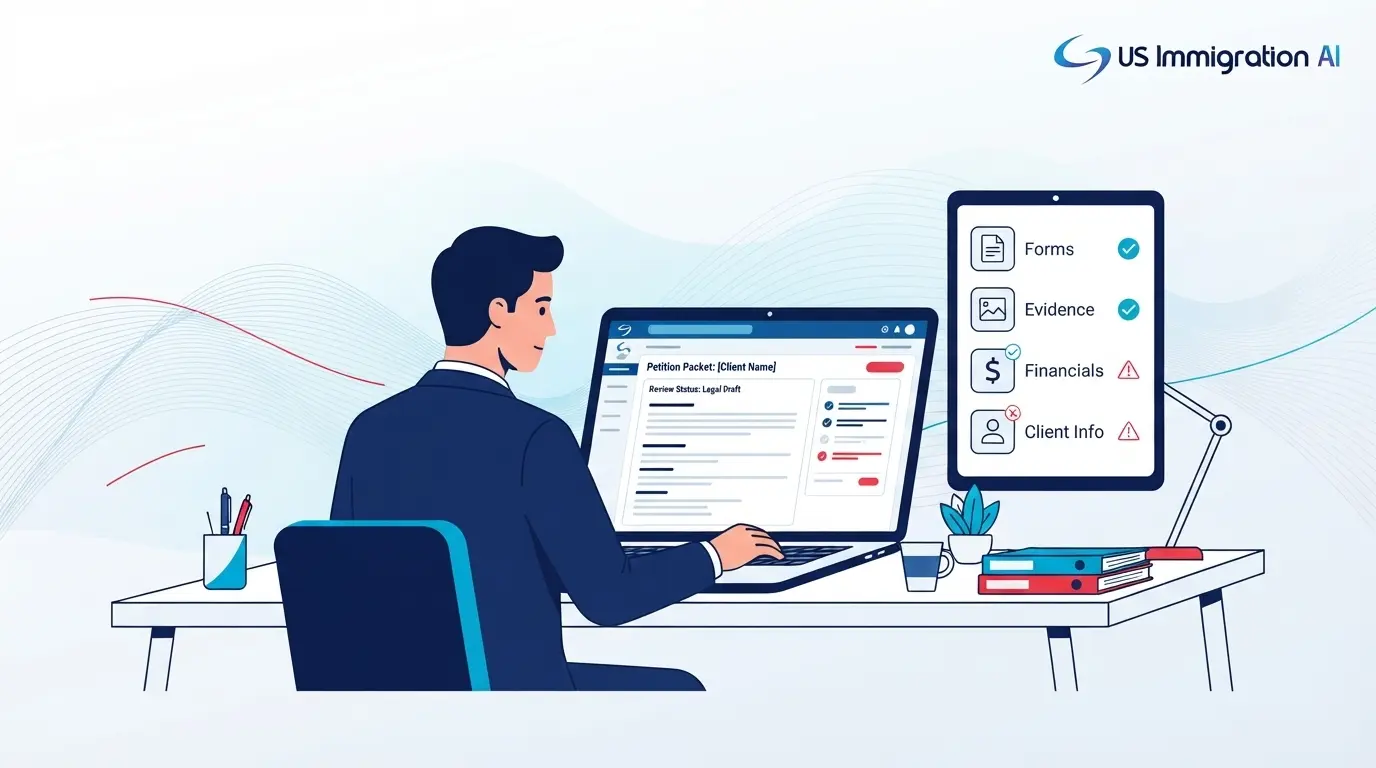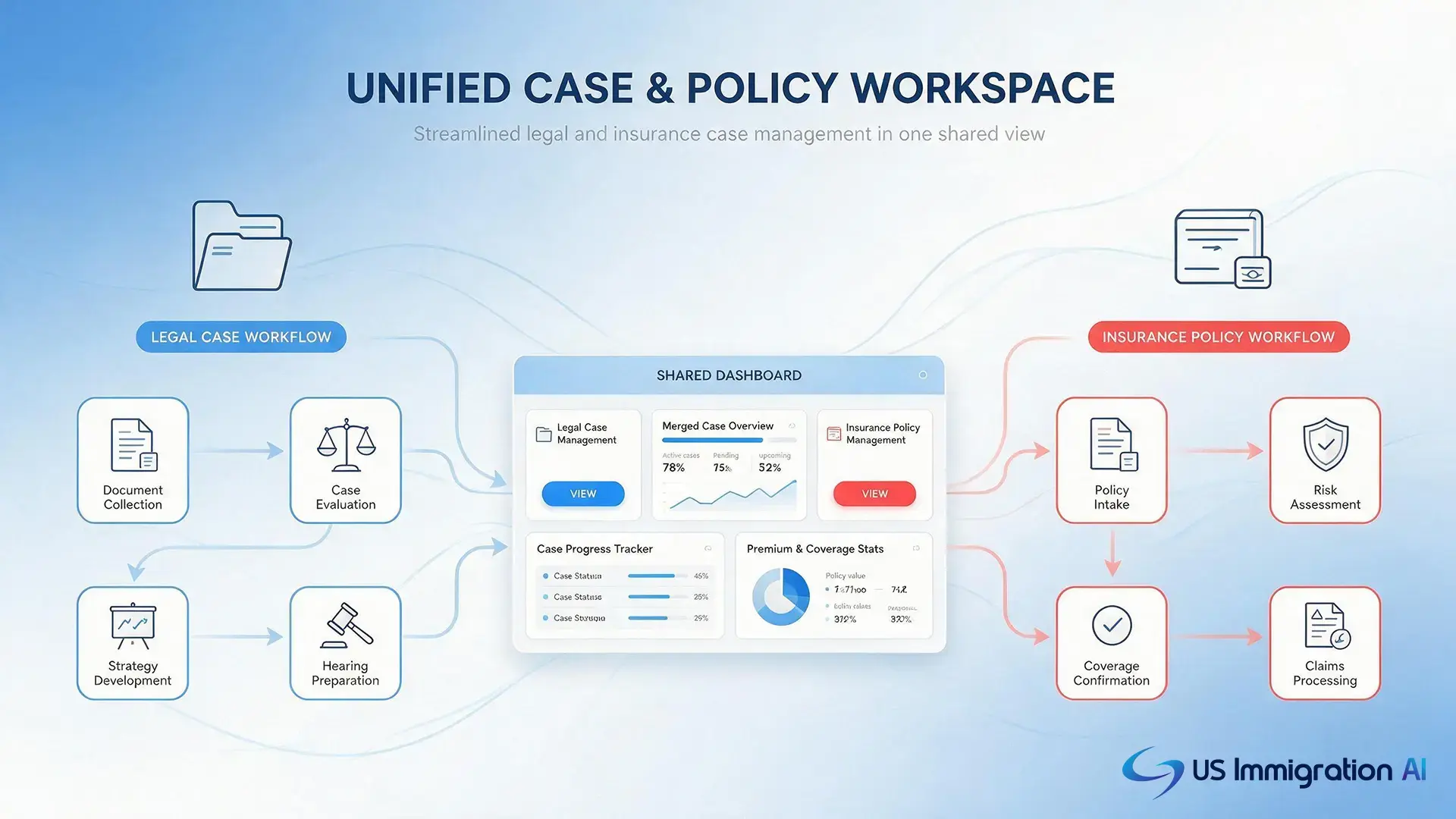

Legal and insurance firms are landing on the same CRM and document automation requirements for a simple reason: both carry real liability when administrative work slips, and both have outgrown software built for a one-time sale. Five things explain the shift: shared liability exposure, a client record that outlives the first matter, a real connection between front-office intake and back-office work, document automation as a default rather than an upgrade, and one compliance bar both industries answer to. Here is how each plays out, and what it means if you run an immigration practice.
Key Takeaways
- Legal and insurance firms share real liability exposure when administrative work slips, which pushes both toward stronger CRM requirements.
- Both industries need a client or policyholder record that outlives the first sale, not a CRM built around a closing deal.
- Document automation and a working connection between front-office intake and back-office systems have become baseline requirements, not upgrades.
- Both industries lean on the same compliance frameworks, including SOC 2, HIPAA, and ISO 27001, because they handle equally sensitive data.
- Large firms often meet all of this with an enterprise CRM plus several integrated tools. Immigration firms can get the same result inside one purpose-built platform.
The First Pressure: Liability When Administrative Work Slips
Administrative delays are not just an inconvenience in either industry. A missed follow-up or a lost document can turn into a professional liability claim.
The American Bar Association Standing Committee on Lawyers' Professional Liability tracks this directly. Its Profile of Legal Malpractice Claims: 2016–2019 found that claims tied to immigration matters saw a substantial increase over that period, alongside a rise in settlement-related claims and in claims involving payouts of $2 million or more.
Insurance carries a parallel exposure. Errors and Omissions coverage for insurance professionals exists precisely because a missed document, a lapsed renewal, or a miscommunication with a client can lead to a claim, the same way a missed filing deadline can lead to a malpractice claim in a law office. Both industries respond the same way, with software that logs every step automatically and follows up before a deadline is missed rather than after.
The Second Problem: a Data Model Built for a Sale That Never Closes
Most CRMs are built around a sales pipeline that ends when a deal closes. That model fits a one-time purchase. It does not fit legal or insurance work, where the relationship is the whole point.
A law firm's relationship with a client often continues well past the first matter. A family petition today can lead to a second filing years later, and a CRM built only for a linear funnel risks overwriting or duplicating that client's history. Insurance works the same way: a policy sale is the start of a multi-year relationship that includes renewals, endorsements, claims, and household relationships tied to one policyholder.
What both industries actually need is a database built around the relationship, not the sale: one persistent contact record that branches into separate matter or policy records without losing the connection between them. For a law firm, that looks like a single client file holding every matter that client has ever had, open or closed. For an insurer, it looks like one policyholder record linked to every policy, claim, and renewal tied to that household.
The Third Problem: Front Office and Back Office Don't Talk
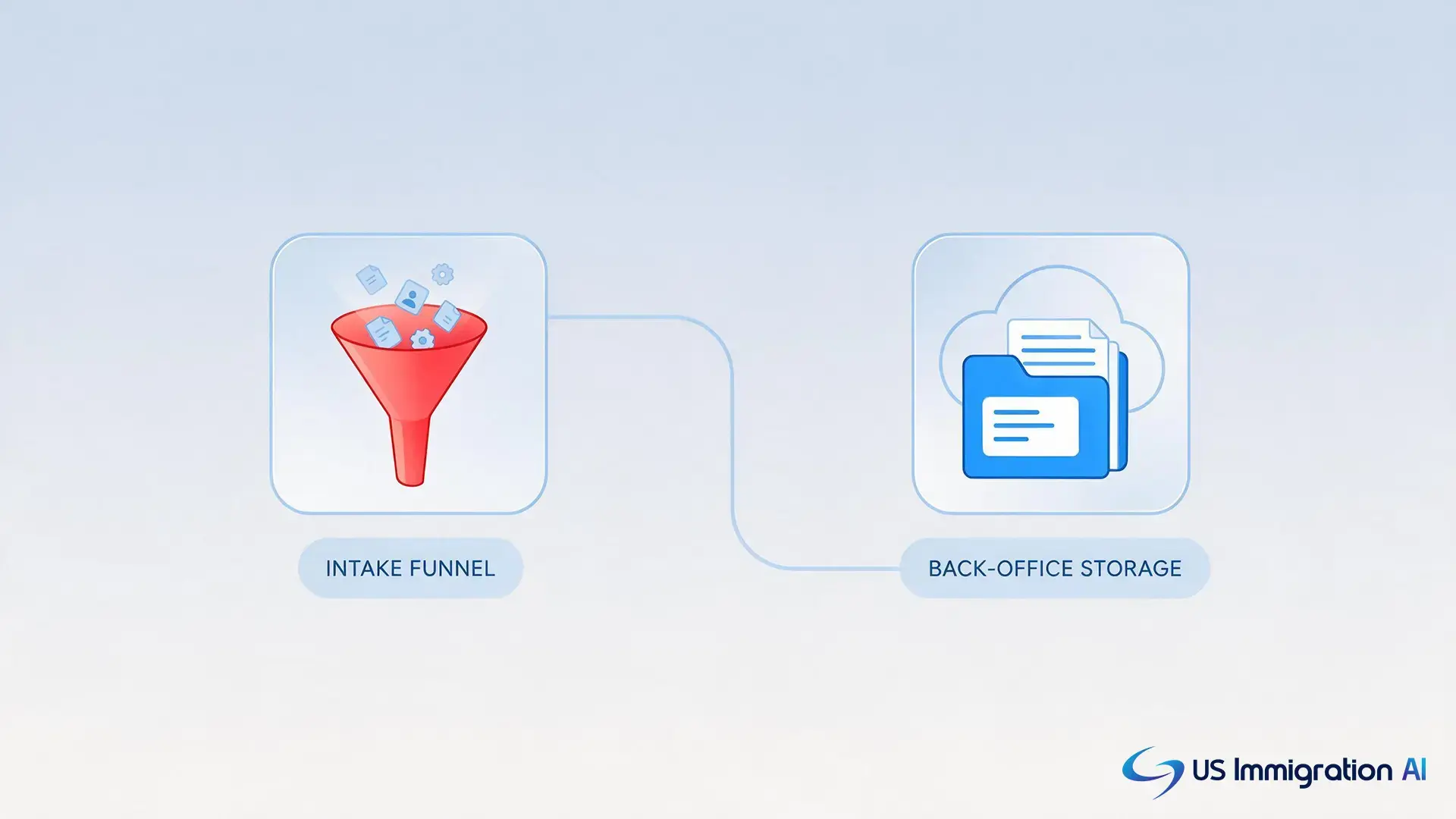
Legal and insurance firms both run a strict divide between front-office intake and back-office administration, and closing that gap is one of the biggest reasons both industries are rethinking their CRM stack.
In a law firm, front-end intake tools capture a new client's information, but that data often has to be re-entered into a separate back-office system for case management, billing, or drafting. In insurance, a sales and marketing CRM frequently sits apart from the agency management system that handles policy administration and commission reconciliation.
Every point where data has to move between two separate systems is a point where it can be entered wrong, entered twice, or not entered at all. Immigration firms feel this acutely when intake data does not carry forward automatically into the rest of a case. AI Intake is built to keep that data connected from the first conversation onward.
The Fourth Requirement: Document Automation as a Default
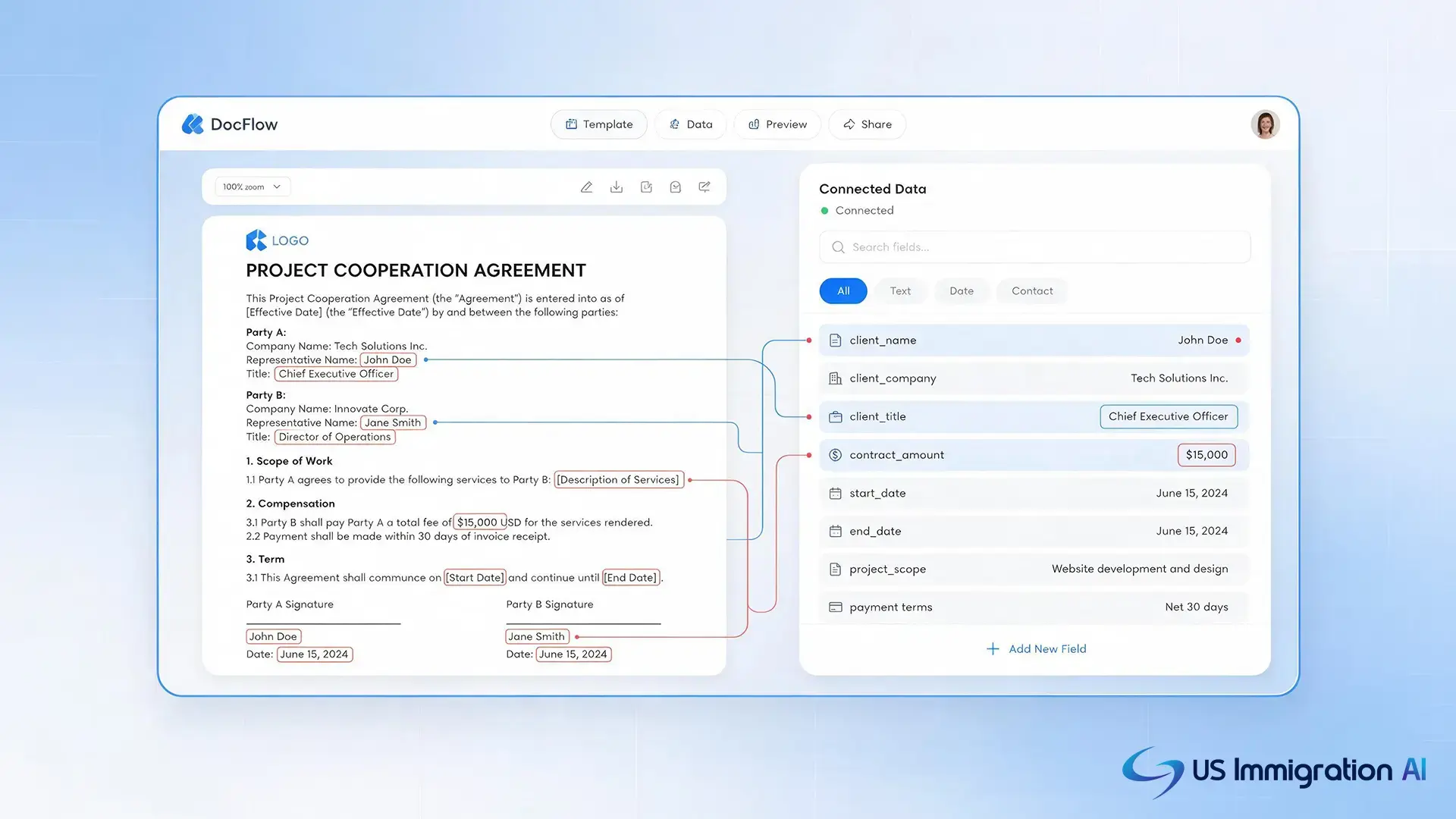
Legal and insurance work both run on paperwork, and both sectors have outgrown basic form fillers. Document automation now needs to merge structured client or policyholder data into standardized templates on its own.
For a law firm, that means generating petitions, court filings, and supporting letters. For an insurer, it means generating policy packets and claims summaries. Either way, the software needs conditional logic to handle different scenarios, a library of pre-approved language, and a clear path to e-signature once a document is ready.
For an immigration practice, this shows up as USCIS forms and supporting letters drafted from the same intake data collected at the start of a case, rather than retyped by hand for every filing. AI Legal Document Drafting applies this directly to immigration petitions and applications, with every draft still routed to an attorney for review.
The Fifth Requirement: One Shared Compliance Bar
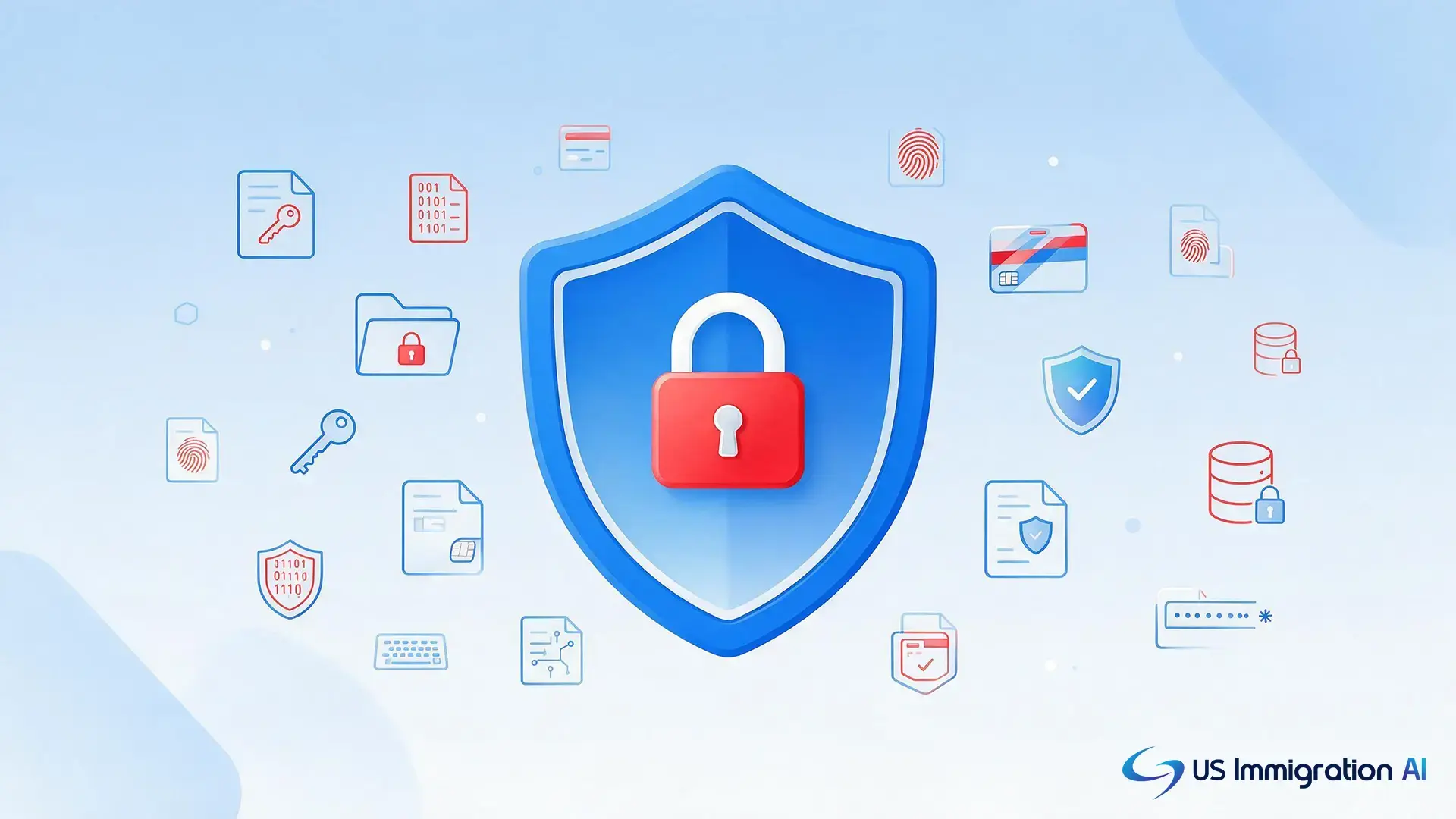
Legal and insurance platforms both handle highly sensitive personal data, so they lean on the same compliance frameworks. SOC 2, the HIPAA security standards published by the U.S. Department of Health and Human Services, and ISO 27001 all show up across both industries' software requirements.
In practice, this means encrypted storage, role-based access so only authorized staff can view a given file, and agreements with any AI vendor that stop it from keeping or training on client data. Firms in both industries increasingly expect vendors to document all three during procurement. You can see how US Immigration AI approaches this on the data security and compliance page.
Two Paths to Meeting These Five Requirements
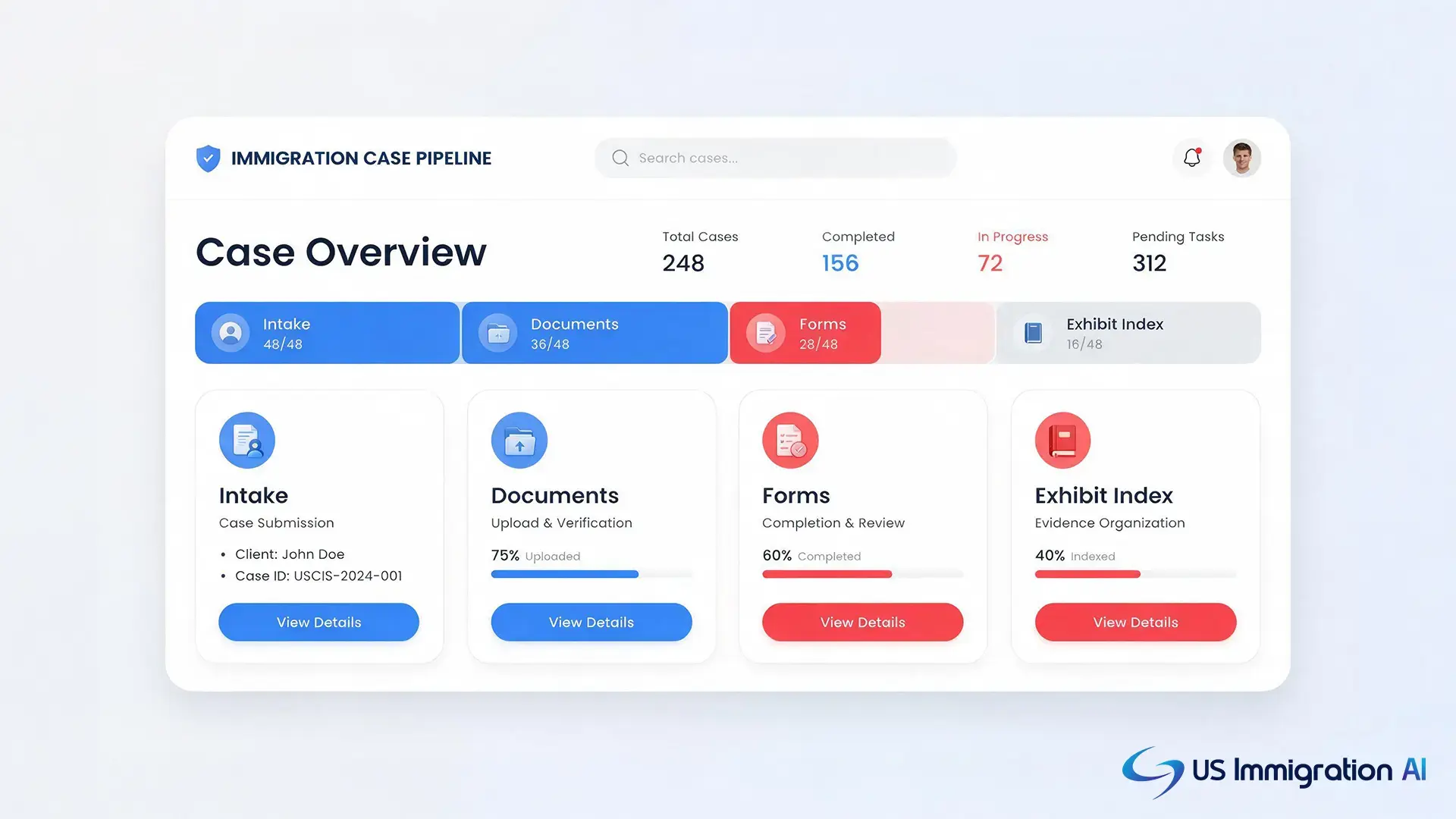
Firms meet these five requirements one of two ways. At the largest law firms and insurance carriers, convergence often plays out as a move to a large, horizontal CRM platform layered with custom industry-specific modules and several separate point tools stitched together. That path can work, but it comes with a real cost: a multi-tool budget, an implementation team, and ongoing integration maintenance every time one of the connected tools changes.
An immigration practice does not need to build that version to get the same underlying benefits. The same lifecycle-first client record, audit trail, document automation, and compliance coverage can live inside one system built specifically for immigration case types from day one. AI Case Assembly is one part of that same connected system, turning the intake, documents, and drafts already in the platform into a submission-ready packet.
Recognizing the Pattern in Your Own Stack
The fastest way to spot where your firm sits is to count logins. If intake, document drafting, and your client portal each live in a different tool with their own logins, your firm is already carrying the integration cost the enterprise path involves, just without the enterprise budget behind it.
That gap, more than any single feature, is what the convergence trend is really pointing at. Firms that close it, whether through a large custom stack or a platform built around their practice from the start, see the same payoff: less re-entry, fewer dropped follow-ups, and one place to check when a file's status is in question.
See Where Your Own Workflow Stands
US Immigration AI connects intake, documents, drafting, and case assembly in one system built specifically for immigration case types. Book a consultation to map your firm's current stack against the pattern above.
Frequently Asked Questions