
PERM processing time currently runs about 22 to 24 months from prevailing wage request to certification, and longer if a case draws an audit. That figure has grown steadily over the past two years as filing volume has climbed and the Department of Labor's review queue has stretched further behind. This guide walks through what PERM actually requires, how long each stage takes right now, what can push a case past the average, and what a certification means for your client's I-140, green card, and H-1B timeline from there.
Key Takeaways
- PERM certification currently takes 22 to 24 months end to end for a clean, non-audited case, with no premium processing option available.
- The Department of Labor updates its PERM processing queue monthly at flag.dol.gov/processingtimes, and the numbers have moved slower, not faster, over the past two years.
- An audit adds several months on top of standard review, and a small number of outcomes, like a qualified U.S. applicant surfacing in recruitment, stop a case outright rather than just delaying it.
- PERM interacts directly with the H-1B six-year limit through AC21 sections 106(a) and 104(c), so filing timing matters as much as case quality.
- PERM certification is roughly the midpoint of the green card process for many clients, not the finish line.
What Is PERM Labor Certification?
PERM, short for Program Electronic Review Management, is the Department of Labor's process for confirming that an employer can hire a foreign worker for a permanent position, as described on the DOL's own program page. The employer must first prove no qualified, willing U.S. worker is available for the role, protecting wages and job opportunities for similarly employed U.S. workers. A certified PERM is a prerequisite for filing Form I-140 with U.S. Citizenship and Immigration Services in the EB-2 or EB-3 employment-based categories.
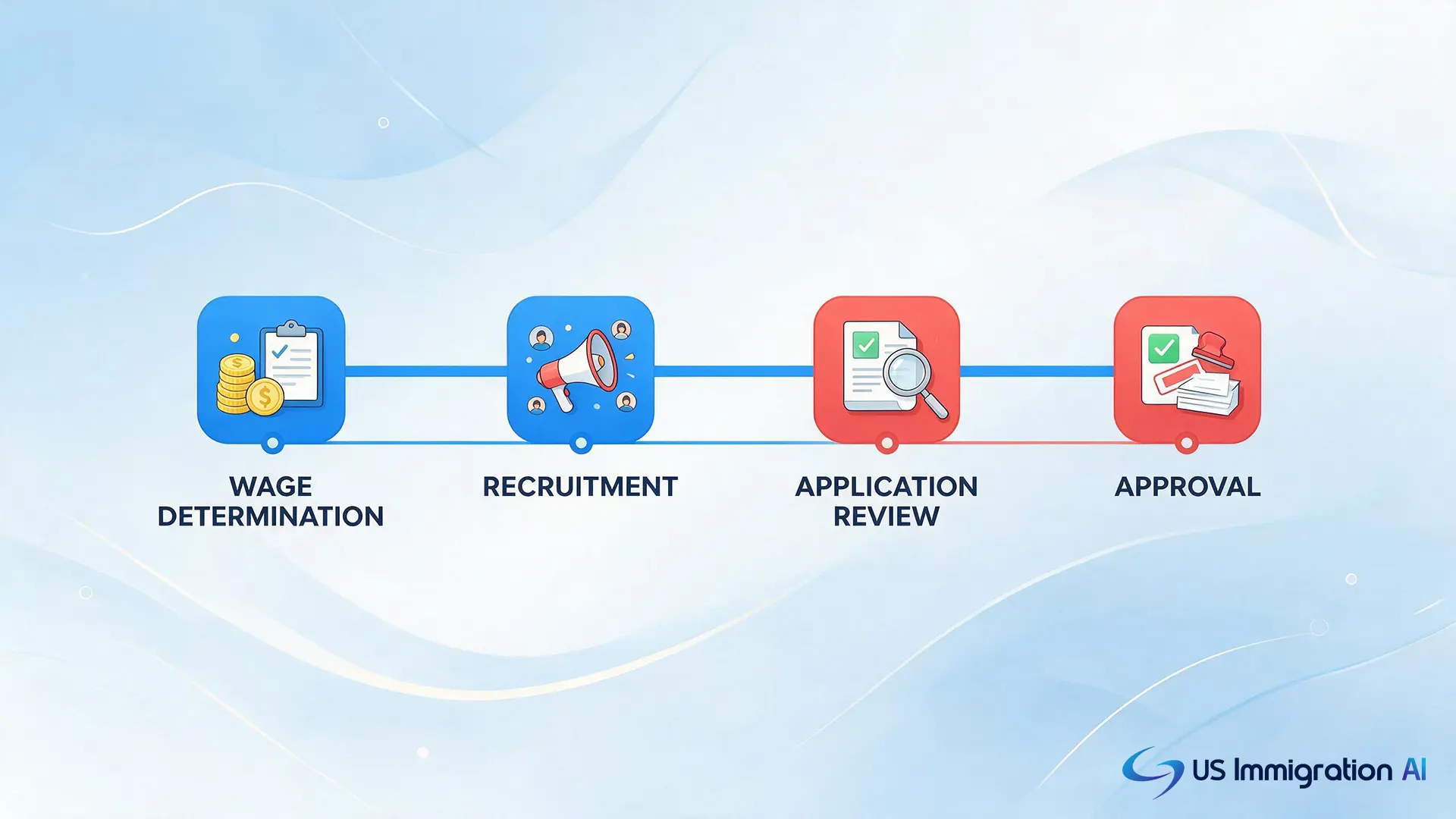
The process runs in four parts:
- The employer requests a prevailing wage. This determination is filed on Form ETA-9141.
- The employer recruits for the position. This is a defined campaign that follows federal recruitment rules.
- The employer files the labor certification. This happens once recruitment closes, using Form ETA-9089.
- DOL may audit the application. A small share of applications are pulled for audit before certification.
The wage determination and the labor certification are separate filings, not one combined step. An employer cannot file Form ETA-9089 until DOL has issued the prevailing wage determination and recruitment is complete, so the two cannot be submitted together to save time.
Two employment-based categories skip this entire process: EB-1 (for workers with extraordinary ability, outstanding researchers, or multinational managers) and EB-2 National Interest Waiver. Those categories file Form I-140 directly. Everyone else filing EB-2 or EB-3 through employer sponsorship starts with the four stages above, and here is what each one currently costs in time.
PERM Processing Time by Stage in 2026
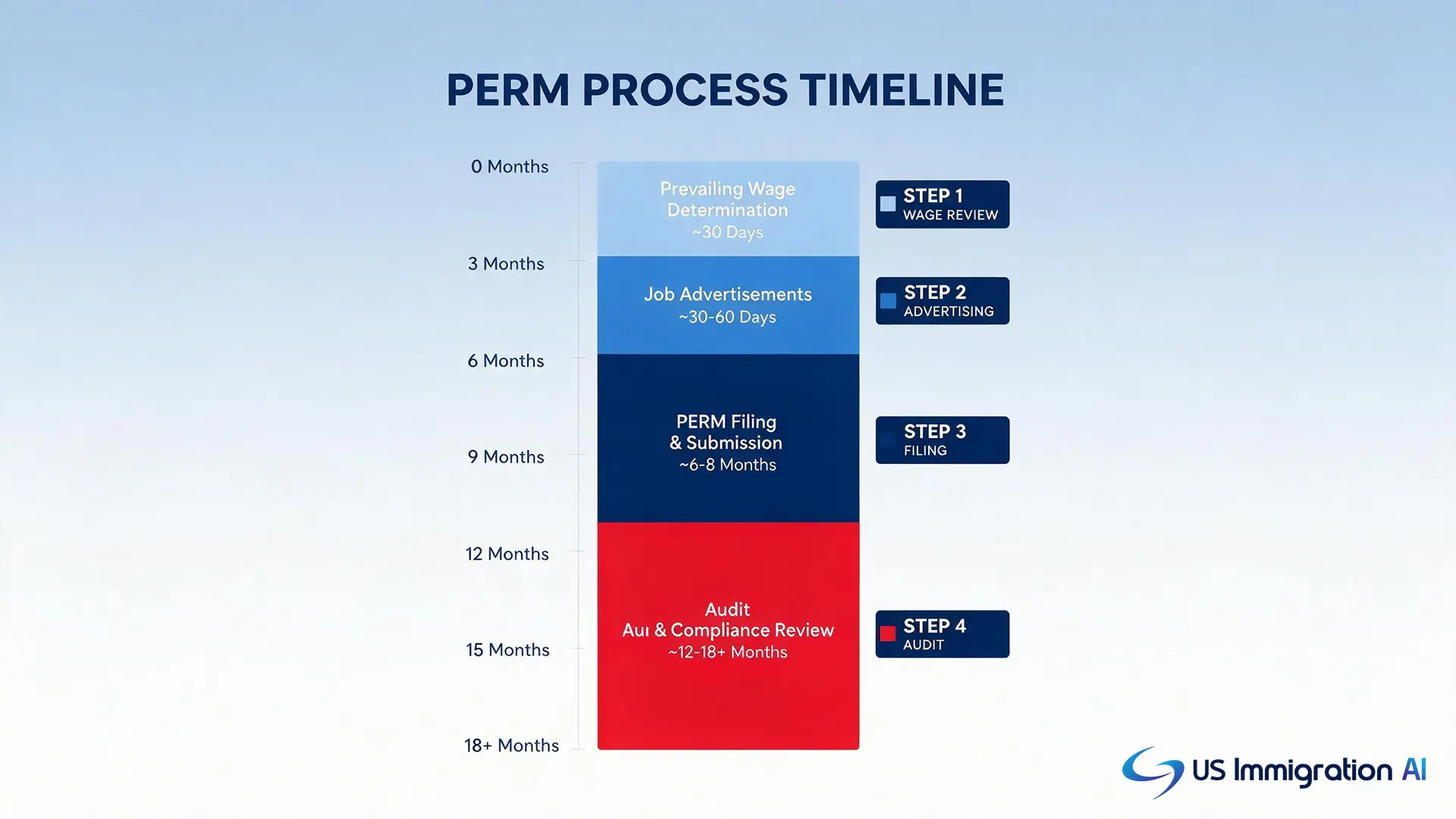
These figures come from the Department of Labor's PERM processing times page, last checked on July 17, 2026, and they update monthly. The trend over the past two years has been longer processing, not shorter, so a case filed even a few months from now may face a different queue than the one shown here. Check the live page directly before setting client expectations.
Why Processing Times Keep Growing
Filing volume explains most of that lengthening trend. DOL's own processing times page shows the queue of pending prevailing wage requests tied to PERM cases jumped from 627 in March 2026 to more than 18,000 by May 2026, before easing slightly to 16,797 in June. A queue that size does not clear quickly, regardless of staffing levels.
Key PERM Terms to Know
Checking the DOL page directly means running into a few terms that are easy to misread:
- OEWS is DOL's default wage source. It stands for Occupational Employment and Wage Statistics, the standard data DOL uses for most prevailing wage requests.
- Non-OEWS sources cover exceptions. These include a private wage survey or collective bargaining agreement, used when OEWS data does not apply.
- A redetermination challenges the initial wage. The employer files this request when it disagrees with DOL's initial prevailing wage level.
- Center Director Review follows a denied redetermination. DOL escalates the case to this further level of review if the redetermination is denied.
- A reconsideration request appeals a denial or audit. The employer files this formal appeal with the DOL certifying officer.
- Analyst review is the standard first pass. A DOL analyst conducts this initial review of every PERM application.
Getting the underlying forms right the first time matters just as much as knowing these terms, since an application that comes back for correction only adds to the timeline above. Filling out Form ETA-9141 and Form ETA-9089 accurately helps avoid the kind of missing or inconsistent data that can trigger a request for more information mid-review. AI Legal Document Drafting pulls client and job data from intake straight into these forms, so the same details do not get retyped or mistyped across both filings.
What Can Make PERM Take Longer
Even a well-prepared filing runs into forces outside the applicant's control. The 22-to-24-month figure assumes a clean case with no audit, no denial, and no challenge to the prevailing wage.
- The case gets audited. DOL selects some applications for audit, often at random, though certain patterns raise the odds: tailored job requirements without a clear business reason, an owner or relative in the sponsored role, recent layoffs in the same occupation, or duties that look unusual for the stated job classification. An audited case leaves the standard queue and typically adds 9 to 10 months.
- DOL denies the case. A denial usually means starting recruitment over and filing a new ETA-9089. The clock resets close to zero.
- DOL orders supervised recruitment. DOL can require an employer to conduct recruitment under direct DOL supervision, which extends the timeline well beyond the standard path.
- The employer challenges the prevailing wage. A redetermination request, as defined above, adds several more months before recruitment can even begin.
- A qualified U.S. worker applies. This is not a delay. If recruitment turns up a U.S. worker who meets the job requirements and is willing to take the role, the case cannot proceed and cannot be appealed. The only path forward is revisiting the job requirements and starting over.
Keeping recruitment records, interview notes, and disqualification reasons organized as they happen, rather than reconstructing them after an audit notice arrives, is the biggest factor employers control. A secure document collection portal keeps that evidence in one place from the start of recruitment.
Since audits and other detours are common enough to plan for, the next question every pending case eventually raises is simple: where does it actually stand today.
How to Check a PERM Case's Status
Visibility into a specific case is limited, and it works differently depending on who is asking.
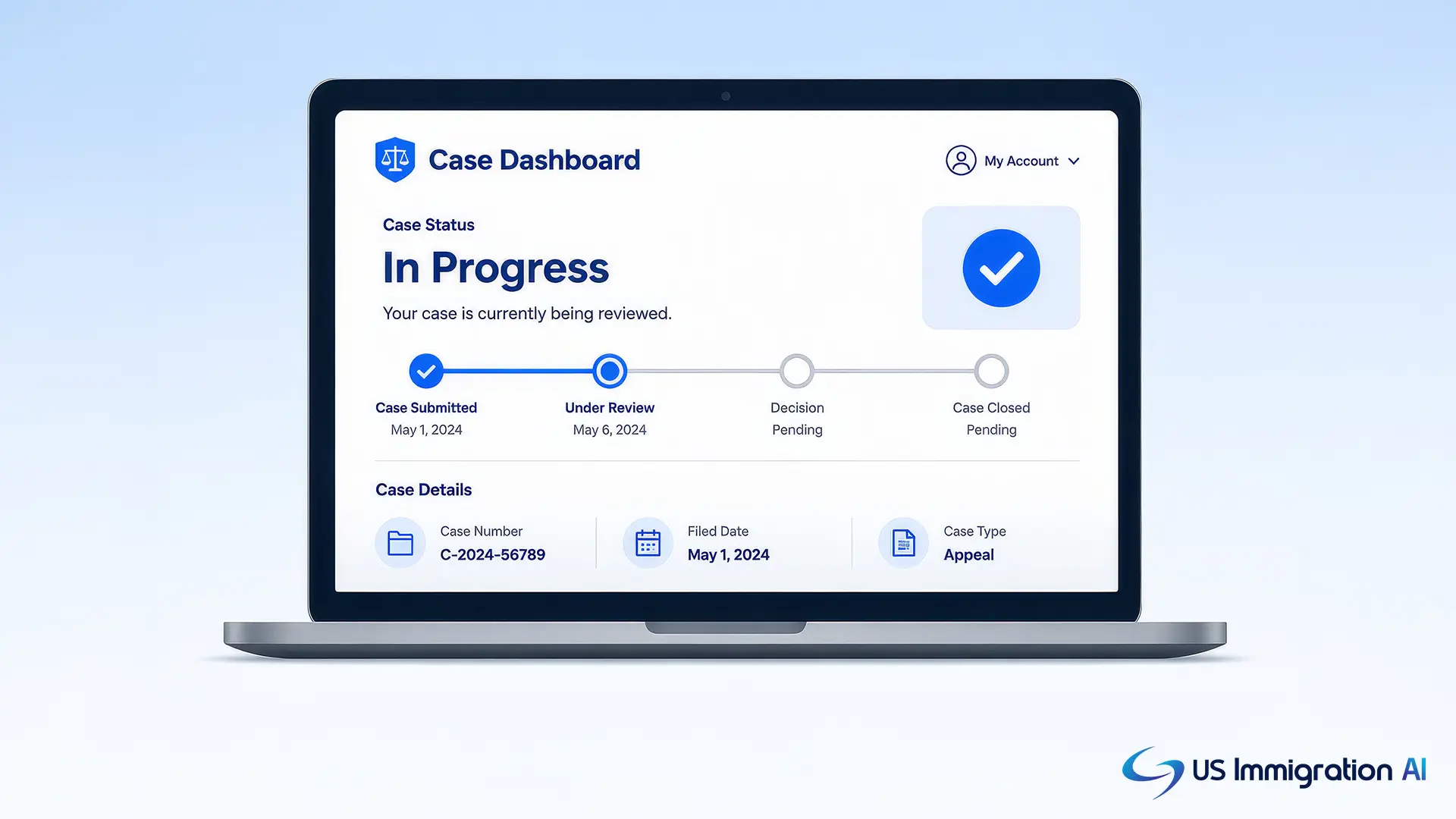
Who Can Check a Case
Only the employer and its designated attorney have a login to check a specific case directly through the Department of Labor's FLAG system, using the case number in the A-XXXXX-XXXXX format. The sponsored worker does not get direct access and has to go through the employer or attorney for updates. Attorneys should build a regular status-check cadence into their workflow rather than waiting for the client to ask.
Estimating Where a Case Stands
The DOL processing times page will not show a specific case, but it shows which filing month DOL is currently working through for each queue. Comparing a case's filing date to that queue gives a reasonable estimate of where it sits in line, though the queue does not always clear in strict first-in, first-out order. If a case sits well past the published queue date with no movement, that is the signal to follow up directly rather than keep waiting.
Knowing where a case sits matters even more when a client's status has its own deadline running in parallel, which for most PERM beneficiaries means the H-1B clock.
PERM and the H-1B Six-Year Clock
Most PERM beneficiaries hold H-1B status, which carries a standard six-year limit. The American Competitiveness in the Twenty-First Century Act (AC21) provides two ways to extend past that limit, and both depend on where the PERM case stands.
- AC21 Section 106(a) allows one-year extensions. These renew until a final decision, once a labor certification or I-140 has been filed and pending for at least 365 days before the six-year mark.
- AC21 Section 104(c) allows three-year extensions. These apply once the I-140 is approved but the priority date is not yet current.
Because PERM has to be filed, not approved, at least 365 days before the six-year cutoff to qualify for the Section 106(a) extension, and the process itself takes 22 to 24 months, most employers need to start PERM well before that deadline. A worker with 24 to 30 months left on their H-1B clock is typically the point to begin PERM, not the point to start planning to begin it.
Which category the case falls into also affects this planning, since backlog exposure after PERM varies sharply by category and country of birth.
EB-2 vs. EB-3: Which Category Applies
PERM supports two employment-based green card categories, and the job requirements, not the worker's resume, decide which one applies.

The distinction matters beyond paperwork. The August 2026 Visa Bulletin from the U.S. Department of State shows EB-2 India as unavailable for the rest of the fiscal year, with the State Department warning that EB-2 for the rest of the world and EB-1 India could also retrogress before the fiscal year ends. A case that could plausibly qualify for either category is worth a second look at which one actually moves faster given the current bulletin, not just which one matches the job on paper.
That backlog difference becomes real the moment PERM is certified, when the countdown to the remaining filings begins.
What Happens After PERM Approval: I-140 to Green Card
PERM certification is a milestone, not the finish line. An approved PERM is valid for 180 days, and the employer must file Form I-140 within that window or the certification expires.

Filing the I-140
Standard I-140 processing currently runs roughly 6 to 12 months, though times vary by service center and category. Premium processing, requested on Form I-907, guarantees a decision within 15 business days for most categories, or 45 business days for EB-1C and EB-2 National Interest Waiver cases. The premium processing fee is currently $2,965, effective as of a Department of Homeland Security final rule that took effect March 1, 2026.
Locking In the Priority Date
Once the I-140 is approved, or filed if the priority date is already current, the next milestone is the priority date itself. That date locks in on the day the ETA-9089 was filed with the Department of Labor, not the day PERM or the I-140 is approved. It determines a client's place in line under the monthly Visa Bulletin referenced above.
Filing for the Green Card
- The case can file concurrently. If the priority date is current when PERM approves, the I-140 and Form I-485 (adjustment of status, for applicants already in the U.S.) can often be filed together, saving several months compared to filing them one after the other.
- The case goes through consular processing instead. For applicants outside the U.S., Form DS-260 follows, with timing that varies by post.
Total Timeline to a Green Card
- A current priority date shortens the wait. The full run lands around 2.5 to 3 years from PERM filing to green card in hand.
- A backlogged country lengthens it substantially. For applicants from countries like India or China, the wait after I-140 approval alone can add many additional years on top of the PERM and I-140 timeline already covered here.
While the Case Is Pending
- A dependent spouse or child of an approved I-140 beneficiary may qualify to file for their own employment authorization document.
- The primary beneficiary must maintain valid nonimmigrant status throughout, which for most clients means timely H-1B extensions until the green card is approved.
Keeping a PERM Caseload Organized
Everything above describes one case. Firms handling business immigration work are rarely tracking just one. A mid-size practice can have dozens of PERM cases sitting at different stages at the same time: some in recruitment, some in analyst review, some in audit, each with its own 365-day AC21 deadline and its own audit-file retention clock.
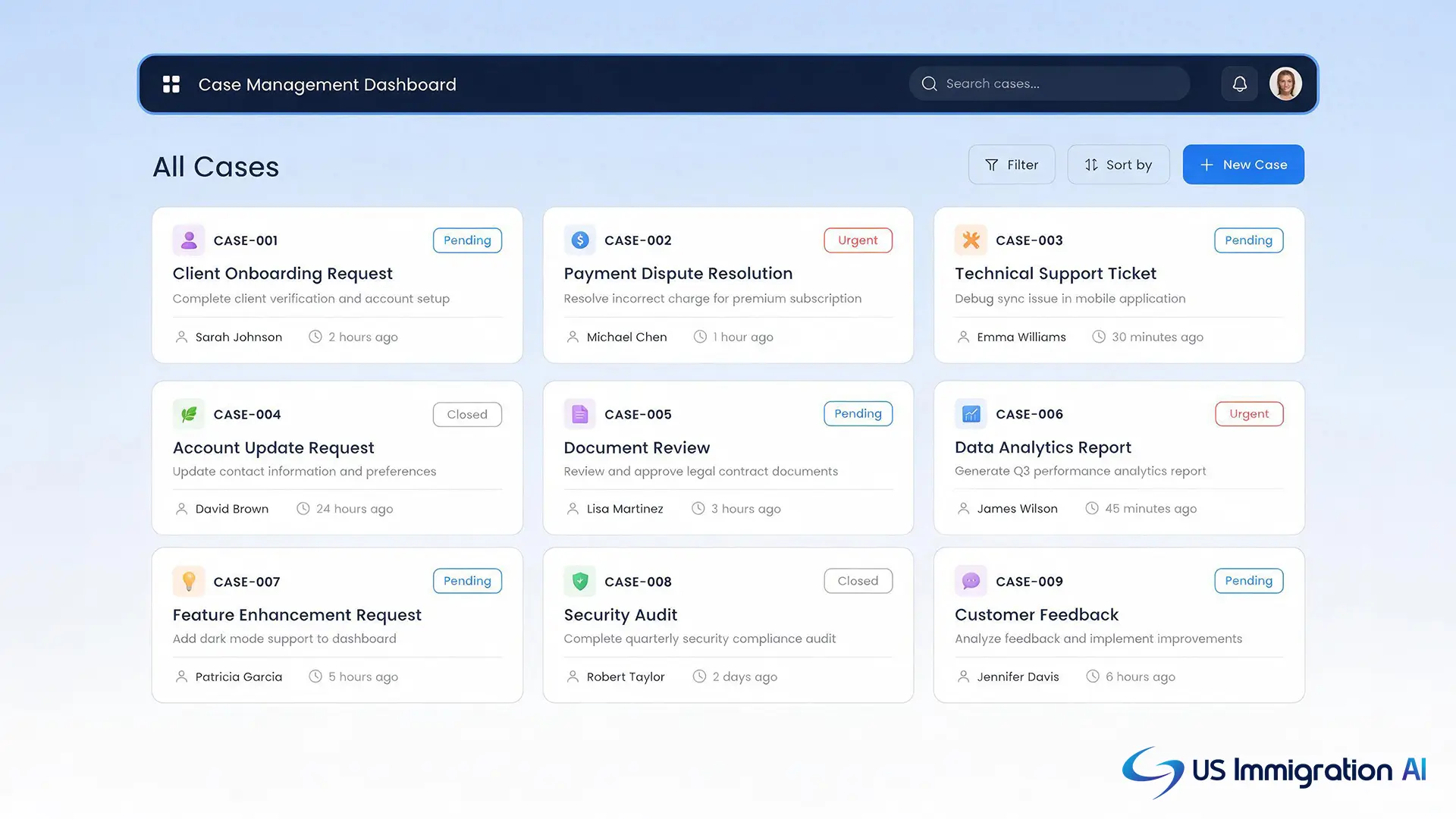
Audit files need to be retained for at least five years, and reconstructing recruitment records after an audit notice arrives is far harder than keeping them organized as recruitment happens. Multiply that across a full PERM caseload and the administrative load grows faster than the attorney hours available to manage it.
AI Case Assembly organizes documents and flags gaps as they come in, so a case is ready to hand to an attorney rather than reconstructed under deadline pressure. Firms running higher PERM volume without proportionally adding staff usually get there by structuring this tracking early, not by managing it manually as caseloads grow.
Planning Around a Timeline You Cannot Control
None of the sections above change DOL's queue, whether a firm is tracking one PERM case or fifty. What they add up to is a realistic baseline: current numbers instead of last year's, the risks that push past those numbers, a way to check where a case stands, and the H-1B and Visa Bulletin deadlines running alongside it.
The firms managing PERM well in 2026 are not the ones hoping for a faster queue. They are the ones with a system for tracking where each case sits, what deadline applies to it, and what still needs attention before the next status check.
Move PERM Cases Forward With US Immigration AI
US Immigration AI helps firms manage PERM and other employment-based cases from intake through final case assembly, all under attorney review. Book a consultation to see how it fits your firm's current caseload.