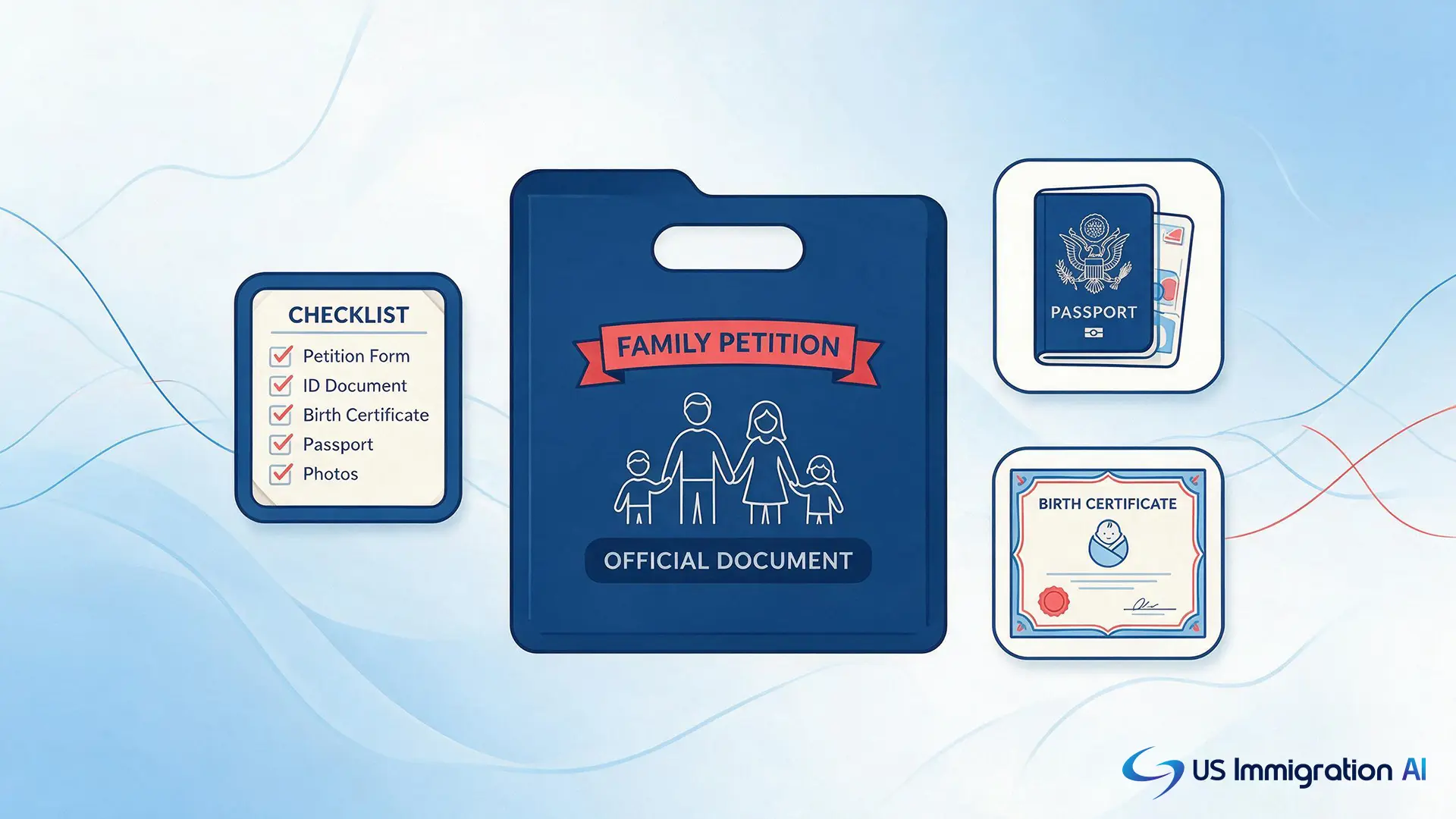

An I-130 documents checklist looks different depending on whether the beneficiary is a spouse, child, parent, or sibling. Form I-130, Petition for Alien Relative, is the first step in nearly every family-based immigration case. Getting the required evidence right the first time keeps a case moving instead of stalled on a Request for Evidence.
This guide breaks the checklist down by relationship, flags the documents petitioners commonly include by mistake, and covers fees, translations, and where to file.
Key Takeaways
- The I-130 documents checklist changes by relationship. Spouse, child, parent, and sibling petitions each require different proof of the qualifying relationship.
- A marriage certificate alone rarely satisfies USCIS for a spouse petition. Officers look for evidence across several categories, not a single document.
- The Affidavit of Support (Form I-864) and financial evidence do not belong with the I-130. They come later, at the adjustment of status or National Visa Center stage.
- The I-130 filing fee is not waivable for most petitioners. Only VAWA self-petitioners and certain T and U nonimmigrant categories qualify for a fee waiver.
- Certified translations need a specific certification statement, not just a translated document, or USCIS treats the submission as incomplete.
What Every I-130 Petition Needs
Every I-130 documents checklist starts with the same three building blocks, no matter the relationship. After that, the checklist splits based on who the beneficiary is.
Every petition needs proof of the petitioner's status, proof of the qualifying relationship, and the correct filing fee. Form I-130 is the foundation of most family-based immigration cases, so a clean initial filing sets the pace for everything that follows.
Proof of Petitioner Status
A U.S. citizen petitioner submits a copy of a U.S. passport biographical page, a birth certificate, or a certificate of naturalization or citizenship. A lawful permanent resident submits both sides of their Green Card. Lawful permanent residents can only petition for a spouse or an unmarried child. They cannot petition for a parent or a sibling.
Proof of the Qualifying Relationship
This is where the checklist branches by relationship type. The sections below cover spouse, child, parent, and sibling petitions separately, since each one calls for different evidence.
The Correct Filing Fee
A petition filed with the wrong fee gets rejected and returned outright. The exact current amount, and who actually qualifies for a waiver, is covered later in this guide.
I-130 Documents Checklist for a Spouse
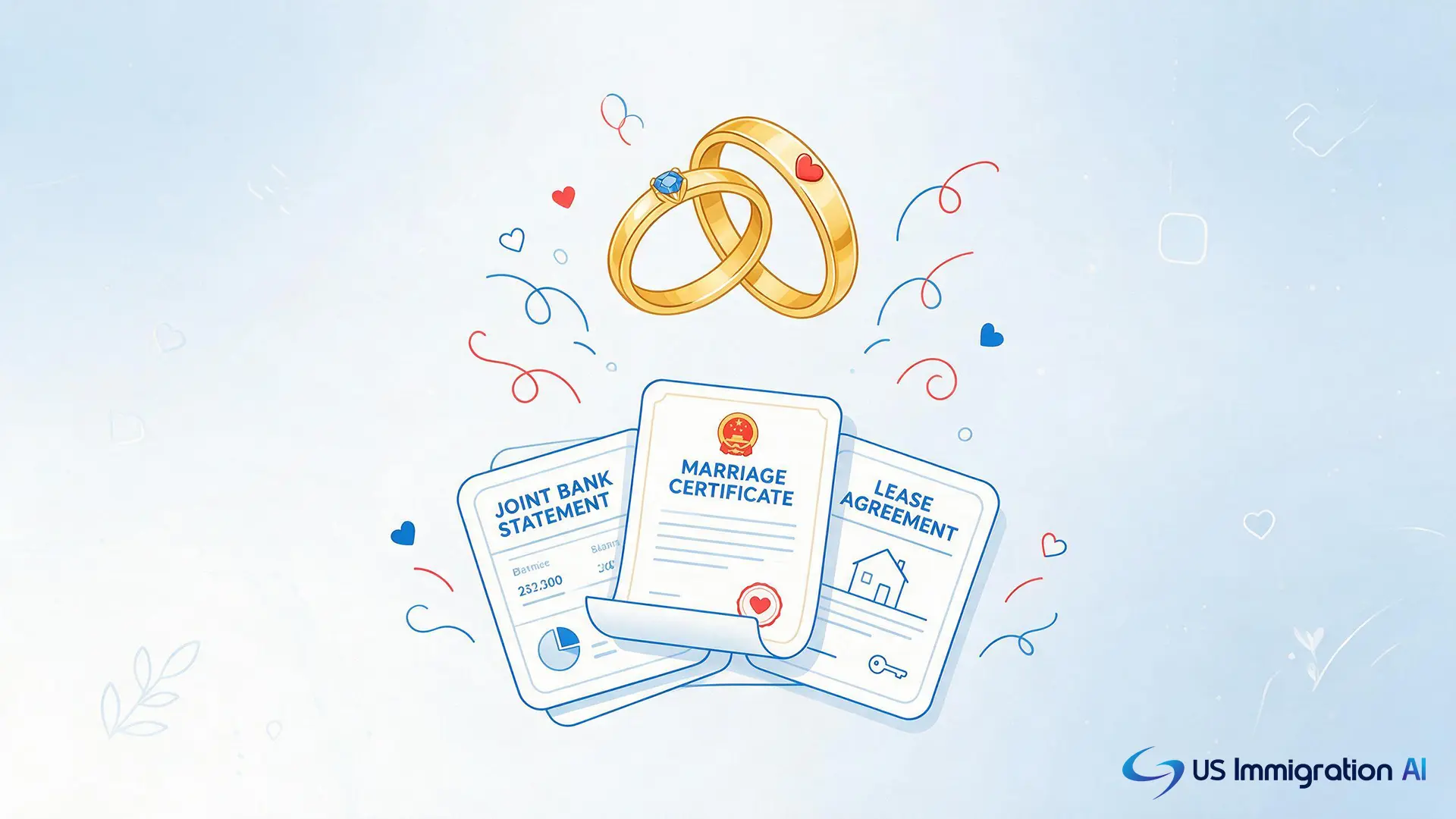
Start with the relationship most petitions involve: a spouse. This one needs the marriage certificate plus evidence that the marriage is genuine. USCIS calls this a bona fide marriage, meaning both spouses entered the marriage to build a life together, not to obtain an immigration benefit, under the standard set out in the USCIS Policy Manual, Volume 6, Part B, Chapter 6.
A marriage certificate proves the legal act of marriage. It does not, by itself, prove the relationship is real. USCIS officers weigh evidence across categories rather than counting documents:
- Financial ties. Joint bank statements, joint tax returns, or a jointly held lease or mortgage.
- Shared life. Insurance policies naming each other as beneficiaries, utility bills at a shared address, and photographs together across different dates and settings.
- Family connections. Birth certificates of children born to the marriage, if any.
- Prior marriages. Divorce decrees, annulment decrees, or death certificates showing that every prior marriage for either spouse legally ended before this one began.
A spouse petition also requires Form I-130A, Supplemental Information for Spouse Beneficiary, filed together with Form I-130. Forgetting this form is one of the more common reasons a spouse petition gets rejected outright rather than approved.
Submit evidence from more than one category. A single joint account opened right before filing raises more questions than it answers. A jointly titled home purchased well before filing, with both names on the mortgage, is stronger evidence.
I-130 Documents Checklist for a Child
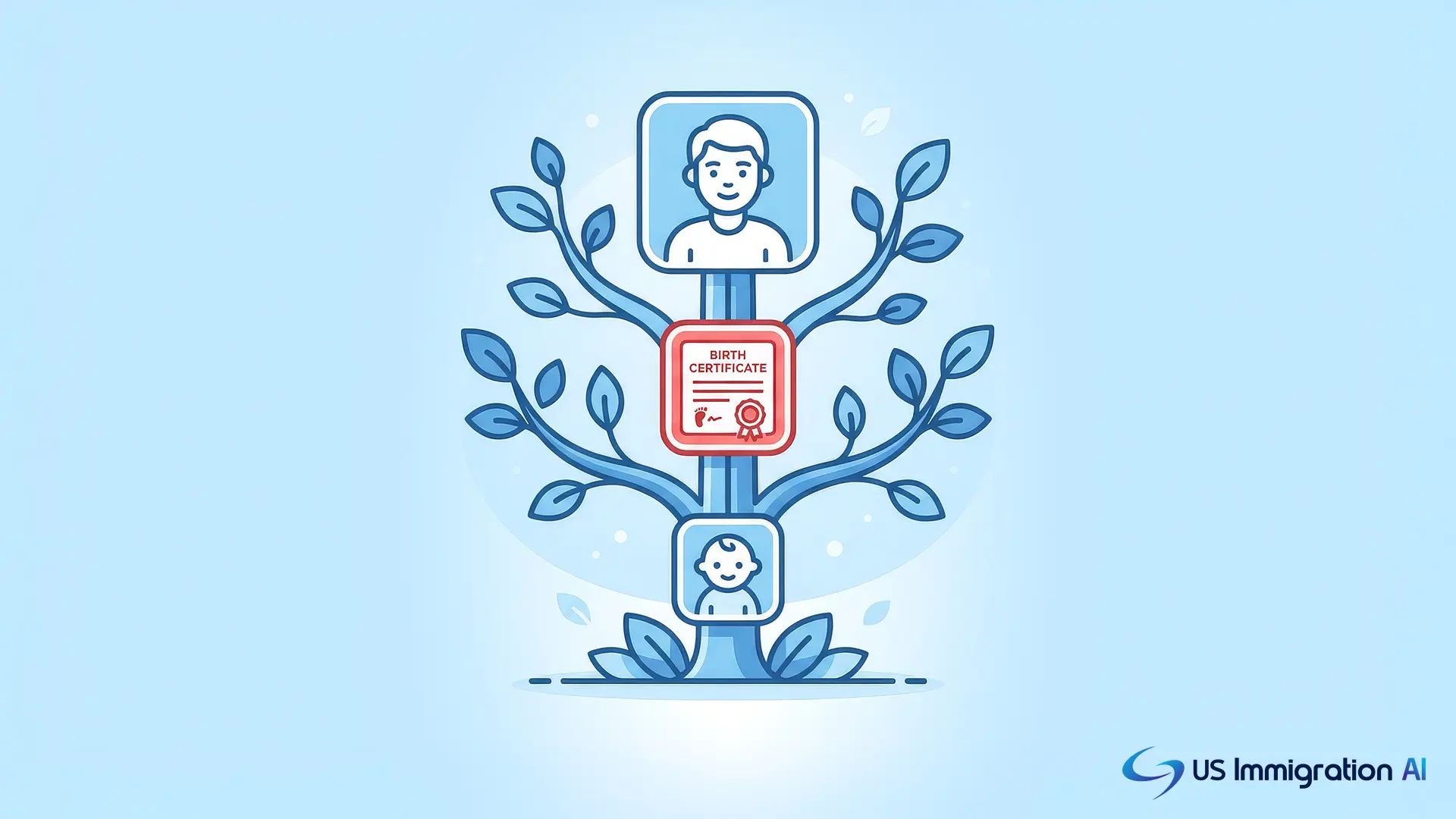
Marriage is not the only qualifying relationship, and the evidence changes again for a child. The required documents depend on whether the child is biological, a stepchild, or adopted. Each category has its own evidence rule under the Form I-130 instructions.
Biological Child, Parents Married at Birth
A copy of the child's birth certificate listing both parents is typically enough.
Biological Child, Parents Not Married at Birth
The petitioning parent must show one of three things: the parents married before the child turned 18, the child was legitimated under local law before turning 18, or a bona fide parent-child relationship existed before the child turned 21. Evidence for this last option includes proof of financial support, shared residence, or an ongoing parental role in the child's life.
Stepchild
The marriage between the biological parent and the stepparent must have taken place before the child's 18th birthday. Submit the marriage certificate, both parents' birth certificates, and proof any prior marriages were legally terminated.
Adopted Child
Submit the final adoption decree. USCIS also requires evidence of two years of legal custody and two years of physical residence with the adopting parent, documented separately from the decree itself.
An unmarried child under 21 counts as an immediate relative. A married child, or one 21 or older, moves into a slower preference category instead, covered in the comparison further down.
I-130 Documents Checklist for a Parent
Parents follow a similar branching logic to children, but a narrower group of petitioners can use this category at all. Only a U.S. citizen petitioner who is at least 21 years old can file for a parent. Lawful permanent residents cannot petition for a parent under any circumstance.
USCIS recognizes several parent-child relationships for this category, each with its own required evidence under the Form I-130 instructions:
- Biological mother. A certified birth certificate showing the mother's name is usually sufficient on its own.
- Biological father, parents married at the petitioner's birth. Birth certificate plus the parents' marriage certificate, plus documentation that any prior marriages ended.
- Stepparent. The marriage between the biological parent and stepparent must have occurred before the petitioner turned 18, documented with marriage and birth certificates.
- Adoptive parent. A final adoption decree issued before the petitioner turned 16 (or 18 for a sibling adopted by the same parent), along with evidence of two years of legal custody and two years of residence together.
Parents of U.S. citizens are immediate relatives, which makes this one of the faster-moving categories once the qualifying relationship is documented correctly. The comparison further down explains exactly what that means in practice.
I-130 Documents Checklist for a Sibling

The last relationship category is also the most restrictive one. Only a U.S. citizen petitioner 21 or older can file for a sibling, and sibling petitions fall under the Family Fourth Preference (F4) category, the slowest-moving category in the comparison below.
The core evidence, per the Form I-130 instructions, is simpler than a spouse or parent petition:
- The petitioner's and sibling's birth certificates showing at least one shared parent.
- For half-siblings, documentation clarifying the shared parent, since the birth certificates alone may not make this clear.
- For a stepsibling, the marriage certificate showing the parents' marriage took place before both children turned 18.
- For an adopted sibling, the adoption decree.
One detail worth knowing: a sibling beneficiary's spouse and unmarried children under 21 are automatically included as derivative beneficiaries. No separate I-130 petition is needed for them.
Documents That Do Not Belong With Form I-130
With relationship-specific evidence covered for all four categories, a well-organized I-130 documents checklist also means knowing what to leave out. Two mistakes show up often enough to call out directly.
The Affidavit of Support (Form I-864)
Financial sponsorship documents, including Form I-864 and tax returns, are not part of the I-130 filing. They come later, at the adjustment of status stage for beneficiaries in the U.S., or at the National Visa Center stage for beneficiaries applying through consular processing. Including financial documents with the I-130 does not speed up the petition and can add unnecessary bulk to the initial filing.
Uncertified or Partial Translations
Any document not in English needs a full English translation. Under 8 CFR 103.2(b)(3), the translator must certify that the translation is complete and accurate, and that the translator is competent to translate from the original language into English. A translation without this exact certification statement is treated as incomplete, even if the translated text itself is accurate. USCIS does not require a professional or licensed translator. Any competent bilingual person can translate and sign the certification.
Firms that centralize document intake through a single client portal tend to catch missing translations and incomplete certifications before a case reaches an attorney for review, rather than after USCIS flags them.
How to Avoid a Request for Evidence
Leaving the wrong documents out is one way to trigger a Request for Evidence, or RFE. It is not the only one. An RFE pauses adjudication and asks for specific missing or unclear documentation, which can add months to a case. Most I-130 RFEs trace back to a short, avoidable list:
- Thin bona fide marriage evidence, covered above, remains the most common trigger for spouse petitions.
- A missing termination document for any prior marriage, for either the petitioner or the beneficiary, even when every other marriage in the family history is properly documented.
- An incomplete translation certification that leaves out either the completeness statement or the competence statement covered above.
- An outdated form edition. USCIS rejects petitions filed on an expired edition of Form I-130. Confirm the current edition date on the official form page before filing.
Catching these before they reach USCIS is often a drafting-process fix. AI legal document drafting flags empty fields, mismatched dates, and missing signatures before a packet reaches an attorney, cutting down on the back-and-forth an RFE creates.
I-130 Filing Fees and Fee Waivers
The filing fee mentioned earlier as one of the three building blocks every I-130 needs is worth getting exactly right, since the wrong amount sends the whole packet back. The I-130 filing fee is $625 online or $675 by mail, unchanged since USCIS last updated the fee schedule in April 2024. Confirm the current figure on the G-1055 Fee Schedule before filing, since fees can change.
For most petitioners, the I-130 fee cannot be waived. Under 8 CFR 106.3(a)(3)(iii), the fee waiver exception applies only to VAWA self-petitioners and certain T and U nonimmigrant categories. A standard family petitioner, whether petitioning for a spouse, child, parent, or sibling, pays the full fee regardless of income. Form I-912 is not an option for a standard I-130 filing.
Where and How to File Form I-130
Paying the right fee only helps if the petition also reaches the right office. Form I-130 can be filed online through a USCIS online account or by mail to a lockbox facility. The correct mailing address depends on the petitioner's state of residence and whether the I-130 is filed alone or together with Form I-485.
Lockbox routing changes periodically. Always confirm the current mailing address on the official Direct Filing Addresses for Form I-130 page before mailing a paper petition, rather than relying on a static address from an older guide. Filing online avoids this risk entirely and saves $50 on the fee.
Immediate Relative vs. Family Preference Category
Each relationship section above pointed to this distinction, which is worth seeing side by side. Not every I-130 relationship moves at the same pace once approved, and the table below shows the practical difference.
Processing times for I-130 vary by service center, relationship category, and current caseload, and they shift from month to month. Check the live USCIS Processing Times tool for the current estimate on any specific case rather than relying on a fixed number.
Getting Your I-130 Packet Filing-Ready
With the evidence, fees, and filing details all covered, the last piece is remembering that none of it is one-size-fits-all. A complete I-130 documents checklist is specific to the relationship being petitioned. Spouse petitions live or die on bona fide marriage evidence. Parent and sibling petitions live or die on clear, well-documented proof of the shared family relationship. Every category shares the same two blind spots: financial documents filed too early, and translations missing the required certification.
Standardizing this checklist by relationship type, the way high-volume firms already do, lets paralegals gather the right evidence the first time instead of learning the gaps from an RFE months later.
Grow Your Caseload With US Immigration AI
Family-based petitions move faster when intake, document collection, and drafting run on one connected workflow instead of scattered emails and folders. See how US Immigration AI supports your firm's I-130 caseload end to end.