
How to start an immigration law practice comes down to nine practical decisions, from licensing to staffing to marketing. Many new solo attorneys focus on the legal work and treat the business side as an afterthought. That is where a new practice loses time and money in the first year.
The rest of this guide walks through those nine decisions in the order a new practice actually meets them, starting with which cases you'll take. Each one gets more room than a typical checklist gives it, since these are the areas where new practices lose time and money.
Key Takeaways
- You do not need a separate immigration law license. Any attorney in good standing with a state bar can practice, but you still register with EOIR and USCIS on a per-case basis.
- Set up trust accounting and start budgeting for quarterly estimated taxes before you take your first retainer, not after.
- Pick your business entity and buy malpractice insurance before you sign a lease or bring on staff.
- Build your filing and document-tracking systems from day one. USCIS and EOIR both expect electronic filing for most cases now.
- Referrals convert better than ads, but accurate, ethical marketing under ABA Model Rule 7.1 fills the gap while your referral network is still growing.
1. Choose Your Immigration Law Niche Before You Open
Match Your Niche to Your Background and Network
Pick one or two immigration case types tied to your own experience and existing referral sources before you open your doors. Immigration law spans family-based petitions, employment visas, asylum and removal defense, and business immigration. Trying to serve all of it on day one spreads a new practice too thin.
A focused niche also simplifies your intake process. Your document checklists and deadlines repeat across similar cases instead of resetting for every new case type.
Weigh Complexity and Deadlines Before You Commit
Different case types carry very different workloads. Asylum cases, for example, run on a strict one-year filing deadline from the client's arrival date under 8 U.S.C. § 1158(a)(2)(B). That raises the stakes on every intake call.
Employment-based cases like H-1B and PERM depend on an employer's timeline and paperwork, not just your client's. Family-based petitions are generally more predictable, which is one reason many solo attorneys start there.
2. Confirm Your Bar Admission and EOIR Registration
Once you know which cases you want, confirm you can actually take them on. Immigration law is federal, so licensing works differently from most other practice areas.
Who Can Practice Immigration Law
Any attorney in good standing with a state, D.C., or U.S. territory bar can represent clients before both an immigration court and USCIS. There is no separate immigration-specific license to earn. The underlying rules sit in parallel federal regulations: 8 C.F.R. § 1292.1(a)(1) for immigration court and 8 C.F.R. § 292.1(a)(1) for USCIS.
This holds even if you open across state lines, because federal law controls here, not the state bar where your office sits. The U.S. Supreme Court settled this in Sperry v. Florida Bar, 373 U.S. 379 (1963). ABA Model Rule 5.5(d)(2) confirms it for lawyers generally: practice that's authorized by federal law isn't blocked by a state's own licensing rules.
Register for Each Case You Take
Bar admission gets you in the door, but you still register on a case-by-case basis with the agency you are appearing before. Start by creating an account through EOIR's eRegistry, then verify your identity in person at an immigration court or BIA clerk's office to activate it. Once you're registered, file the matching form for each case:
Confirm both requirements before your first client meeting. If you're opening in a state where you aren't admitted, add a short disclosure to your marketing and letterhead. A line like "Admitted in [state] only; practice limited to U.S. immigration law" works well, but confirm your state bar's exact wording requirements.

3. Set Up Bookkeeping and Trust Accounting Before Your First Case
With licensing settled, the next front is money. Client funds and firm funds follow different rules, and mixing them is the fastest way to draw a bar complaint.
Keep Client Funds in a Separate Trust Account
Line up an accountant or bookkeeper before you take a retainer, not after tax season. ABA Model Rule 1.15 (Safekeeping Property) requires that client funds sit in a trust account kept apart from your operating funds. Build these habits before your first deposit:
- Open a dedicated trust account. Keep it entirely separate from your operating account, at the same bank if that simplifies transfers.
- Set up a chart of accounts. Separate earned fees from unearned retainers so you can see, at a glance, what you can actually spend.
- Reconcile monthly. A standing monthly reconciliation catches a shortfall or a bookkeeping error long before it becomes a bar complaint.
Treat Flat Fees as Client Funds Until Earned
Many immigration firms charge flat fees, and it's tempting to label them "nonrefundable" and deposit them straight into your operating account. ABA Formal Opinion 505 (2023) says that label doesn't change anything: an advance fee, flat or otherwise, must sit in trust until you've earned it.
A few states break from this. Louisiana, for example, lets attorneys deposit flat fees directly into an operating account. Confirm your own state's rule before you decide where a flat fee lands.
One practical fix is to divide the flat fee into earned milestones in your engagement letter. A typical split might look like this:
- Intake and strategy. Earned once you take the case and set the plan.
- Drafting and filing. Earned once the application goes out.
- Completion. Earned once the matter closes.
Move each piece out of trust only as the milestone behind it is done. That way, if a case ends early, you only owe back the portion tied to work you haven't done yet.
Track and Pay Quarterly Estimated Taxes
Once your trust account is set up, turn to your own tax bill. The IRS requires quarterly estimated payments once you expect to owe $1,000 or more in tax for the year. This catches many attorneys off guard the first year they leave a salaried job.
4. Choose a Business Structure and Get the Right Insurance
With your books in order, decide how the practice itself is organized and protected. Two decisions do most of the work here: how you're formed, and how you're insured if something goes wrong.
Pick the Right Business Structure
Many states require attorneys to form a professional entity, like a professional corporation, instead of a standard LLC. Confirm your state's exact rule with your state bar before filing formation paperwork.
California is a clear example. Attorneys there can't form a standard LLC at all; they must register a professional law corporation with the State Bar (Cal. Corp. Code § 17375).
Get the Right Insurance Coverage
Legal malpractice insurance, often called errors and omissions coverage, should be your first purchase. Add general liability and cyber liability coverage once you have an office and start storing client data digitally.
Most malpractice policies are "claims-made," meaning they only cover claims filed while the policy is active or during an extended reporting period after it ends. If you ever switch carriers or close the practice, ask about "tail" coverage so past work stays protected.
5. Build Your Case Management and Filing System From Day One
With structure and insurance settled, turn to the system that will actually run your cases. Both major agencies you file with now expect electronic filing for most matters.
Track Deadlines and Filings Electronically
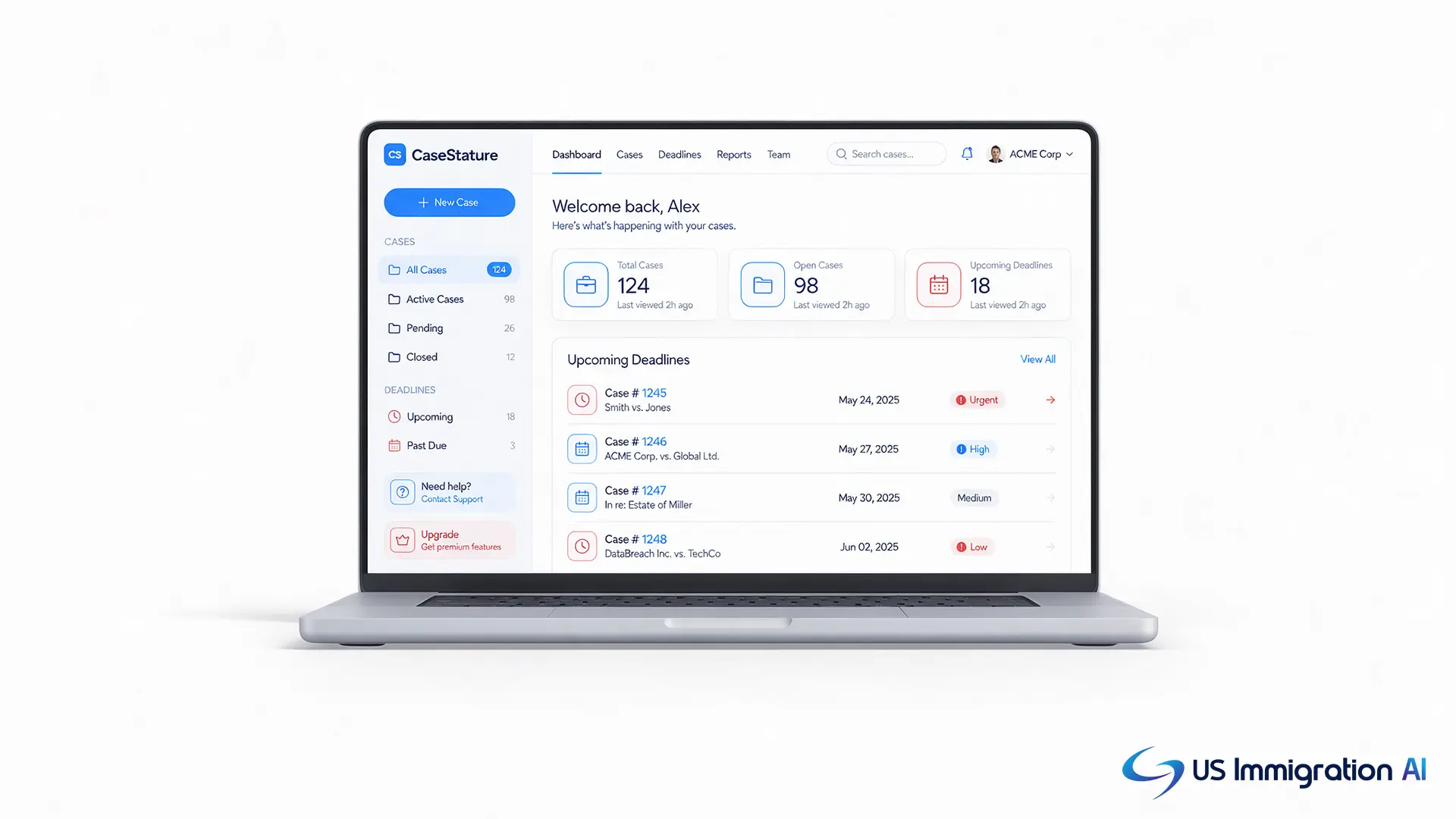
Pick a system for tracking USCIS receipt numbers, deadlines, and client documents before your first client, not after a missed one. A simple spreadsheet works at first, but a dedicated system pays off once your caseload grows.
- USCIS accepts most forms through its online filing system.
- EOIR requires electronic filing through its Courts & Appeals System, ECAS, for eligible cases.
Your internal tracking should mirror both, since a missed deadline in either system carries the same consequences for your client. Note the deadline in both places the moment a case opens, not after the first notice arrives.
Centralize Client Documents in One Portal
A client portal that centralizes documents and deadlines reduces the risk of a missed filing window. This matters most in the first months, while you are still building your own routines.
6. Plan Your Staffing Before You Need It
Once your case system is running, staffing becomes the next bottleneck, usually sooner than expected. Filling that gap usually means a mix of supervised help and automation, not a full-time hire on day one.
Bring on a Supervised Intern
Contact a local paralegal certificate program about interns before you need full-time staff. Many new solo attorneys wait too long to bring on help, then hire under pressure once the caseload is already too heavy. Some programs place students for a trial period at no cost, so this is worth exploring before your caseload forces the issue.

Set Clear Limits for Non-Lawyer Staff and Translators
Paralegals, interns, and translators can fill in a form with information the client gives you, but they can't exercise legal judgment or give legal advice. Keep every non-lawyer's work under direct attorney review before it reaches a client or an agency.
Let AI Handle Routine Intake
Set clear expectations upfront on reliability and confidentiality, since immigration clients share sensitive documents that require careful handling. AI-assisted intake can also absorb repetitive data entry, so you are not forced to hire ahead of revenue just to keep up.
7. Negotiate Your Lease With an Immigration Practice in Mind
With a staffing plan in hand, turn to where you'll actually work from, since location affects your caseload more than most new attorneys expect. Three decisions shape this: where you sit, how long you commit, and whether you need a physical office at all.
Pick a Location That Brings You Clients
Firms located near a consulate or within a community with a large immigrant population often get walk-in referrals that other locations simply do not see. Look at commute patterns and parking too, since clients juggling work and childcare will pick the office that's easiest to reach.
Negotiate Flexible Lease Terms
Negotiate a shorter lease term and a shorter notice-to-quit period than the landlord's standard offer. A new practice's caseload can shift quickly in its first year. A long lease locks you into overhead before you know your real growth rate.
Consider Whether You Need a Traditional Office at All
Most filing now happens online, and immigration judges can let attorneys appear at many hearings by video or phone instead of in person. A GAO review and EOIR's policy both confirm video and phone appearances are common, though the judge decides case by case whether to allow one.
A smaller office, a shared coworking space, or a home office with a professional mailing address can work for a new solo practice. Just check your state bar's rules on maintaining a business address first.
8. Build Referral Relationships Before You Need Them
With a lease signed, shift your attention to where clients actually come from. For most new immigration practices, that is other attorneys, not advertising.
Join a Professional Association
Join a professional association, such as the American Immigration Lawyers Association, to meet other practitioners who handle case types outside your own niche. Local and state bar immigration sections work the same way, often with less competition for attention than a national conference.
Reconnect With Your Existing Network
Reconnect with law school classmates and former colleagues directly, and tell them you are now accepting immigration cases. A warm introduction from someone who already knows your work converts better than any ad.
Build Ties Outside the Bar
Referrals don't only come from other attorneys. Counselors, doctors, faith leaders, and chamber of commerce members regularly meet people who need an immigration lawyer. Building a relationship with a handful of them pays off over time.
Host Know Your Rights Workshops
Free community presentations on immigrants' rights build visibility and goodwill in the community you serve. Make clear at the start that the session is general information, not legal representation, so attendees don't mistake the workshop for a consultation.
9. Market Your Practice Ethically to the Clients You Serve
Referral relationships take time to build, so marketing fills the gap while your network grows, and it has its own rules. Two things matter most: what you say has to be true, and it has to reach the people who need it.
Keep Every Communication Truthful
Every communication about your services must be truthful under ABA Model Rule 7.1, which bars false or misleading statements about a lawyer's services. That covers guarantees of a specific outcome, like promising a visa will be approved, not just outright lies.
Serve Your Language Community Well
Immigration clients often come from specific language communities, so your marketing needs to reach them accurately and respectfully. Two changes cover most of that:
- Invest in a properly translated website if you serve a non-English-speaking community.
- Hire or train a staff member who communicates fluently in that language.
A simple, accurate website matters more for credibility in your first year than a large marketing budget. Clients who find a page in their own language remember that long after they've forgotten which firm ran the flashier ad.
Grow Your Caseload With US Immigration AI
Once your practice is open, the next challenge is handling more cases without adding headcount you cannot yet afford. US Immigration AI automates intake, document collection, and form drafting so your team spends its time on judgment calls, not data entry. Schedule a walkthrough to see how it fits a growing practice.