
The N-400 Workload
Keep Every N-400 Record in One Client File
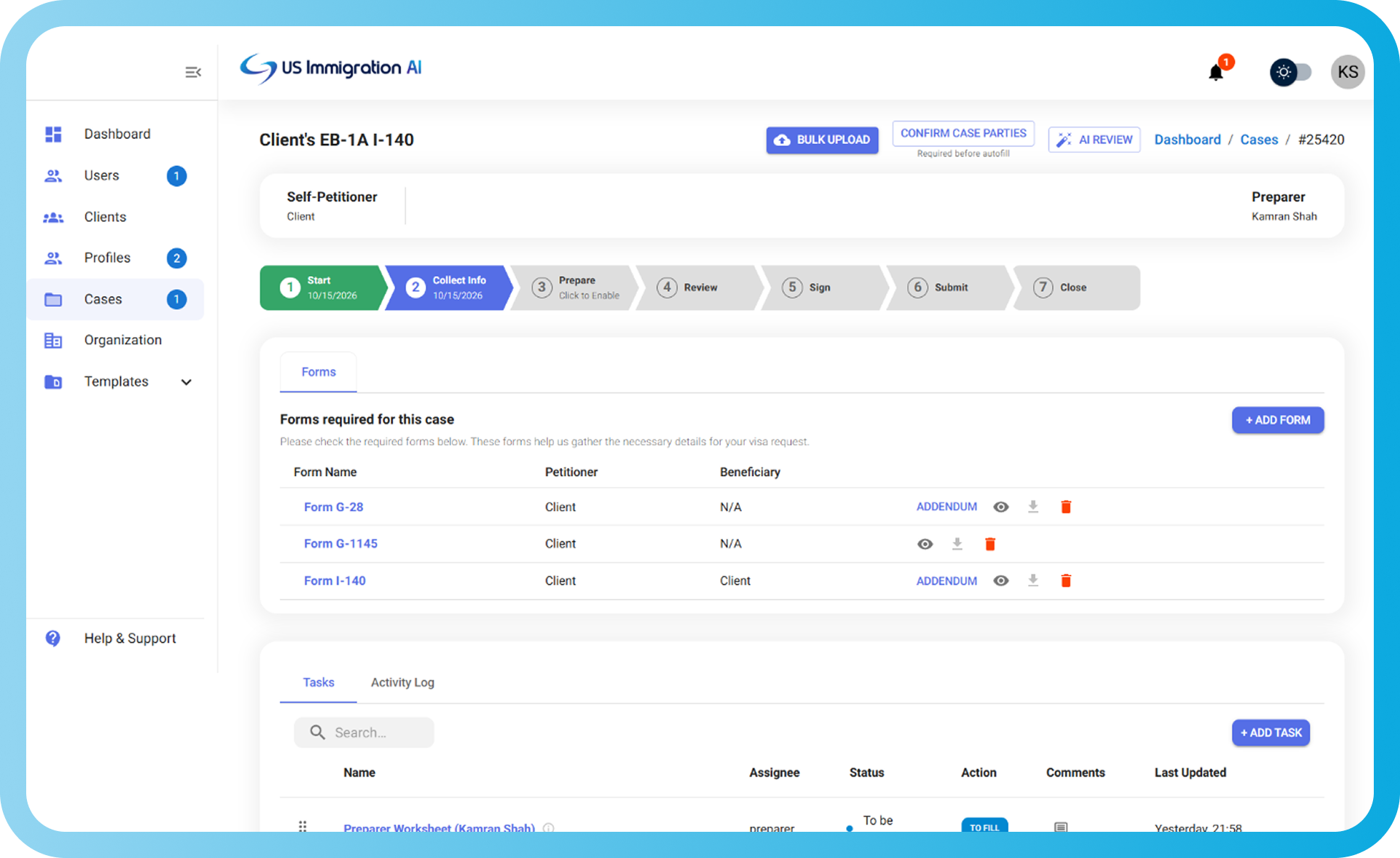
An N-400 asks for years of travel, address, employment, and court history, and every answer has to hold up when USCIS checks it against its own records. US Immigration AI keeps that history in one client file, collected once and carried into the form.
The N-400 Record
Five Records That Have to Agree Before You File
Most N-400 problems come from a client's history not lining up, not from the form itself. These are the five records where a mismatch shows up first, and how each one stays organized in the file.
- Travel History
- Residence and Address History
- Employment History
- Criminal and Court Records
- Tax Records

Naturalization Filings
Give Your Attorney a Naturalization Packet Without the Rework
Collect the history once, draft the N-400 from it, and send your attorney a packet that is ready to review. See how that works on your own caseload.
Side by Side
Manual N-400 Prep vs. US Immigration AI
Naturalization prep is repetitive work built on details that have to match. Compare how a file comes together by hand and with the platform.
Client histories retyped from emails and notes
Passports, tax records, and court documents chased by email
Date conflicts found late, during interview prep
Form fields typed in one at a time
Packets compiled by hand
Without US Immigration AI
With US Immigration AI
Histories collected once at intake and reused
One checklist with automatic reminders
Conflicting dates flagged in the draft
Form N-400 filled from intake data
Assembled packet with cover sheets and exhibit index
Side by Side
Why US Immigration AI for N-400 Cases
Built for Immigration Law
The platform is built around USCIS filings, not adapted from a general practice tool. Its drafting and assembly follow the structure immigration packets require.
One System, Lower Overhead
Intake, documents, drafting, and assembly run in one platform, so client data carries from first contact to the finished packet. That replaces the separate tools and repeat data entry that raise your costs.
Security Built for Client Files
Naturalization files hold passports, tax records, and court documents, so access has to be controlled, not just backed up. Every file carries an audit trail of who viewed or changed it, and the certifications behind that are covered in the FAQ below.