
Turn Scattered Marriage Evidence Into One Organized Case File
Proving a marriage is bona fide means pulling financial, residential, and personal evidence from two people's lives, not filling out one form. US Immigration AI collects that evidence from both spouses in one client portal and keeps it tied to the case from filing through the interview.
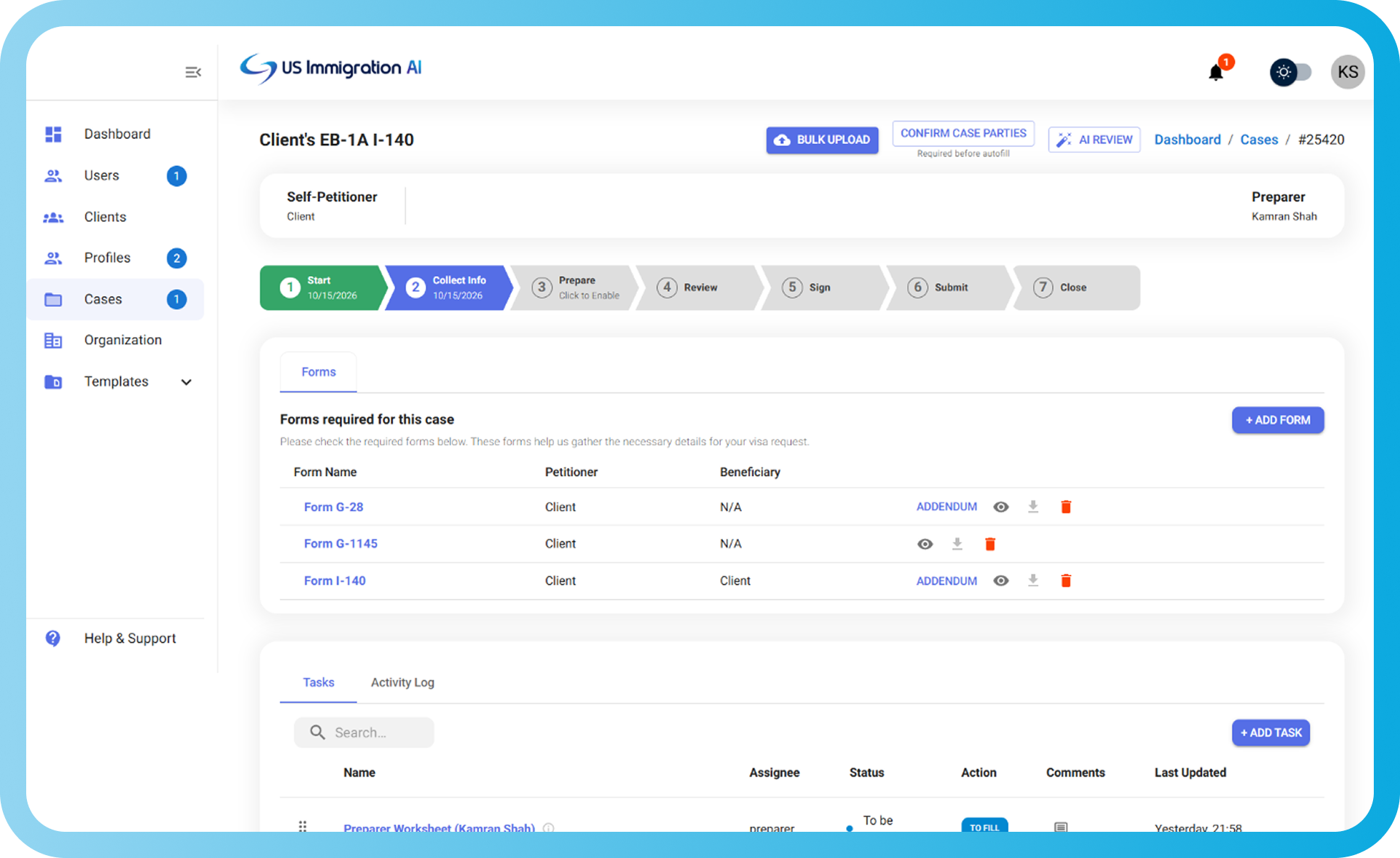
From I-130 Filing to Removal of Conditions

Petition and Adjustment
Form I-130 and Form I-485 draft together from the same intake data, whether the case is filing concurrently in the US or heading to the National Visa Center for consular processing.

Evidence and Interview Prep
Evidence already sitting in the portal gets pulled together ahead of the biometrics appointment and USCIS interview, instead of being assembled at the last minute.

Conditional Residence
If the marriage is under two years old at approval, the case moves into conditional residence status inside the same file, with the two-year expiration tracked automatically.

Removal of Conditions
The platform flags the ninety-day window to file Form I-751 and carries forward the same joint-evidence categories the case already built, so the couple is not starting evidence collection over from scratch.
Stop Losing Marriage Cases to Missing Evidence
An RFE over bona fide marriage evidence can add months to a case your client has already waited on. US Immigration AI catches thin evidence categories while there is still time to fix them.
What the Platform Handles for Marriage Green Card Cases
- Intake and Pathway Screening
- Joint Evidence Collection
- Form Drafting
- Missing-Evidence Flags
- Case Assembly

Managing Marriage Green Card Cases Without US Immigration AI
Evidence from two spouses scattered across emails and folders
The same marriage and client details retyped into I-130, I-485, and I-864
Weak evidence categories go unnoticed until an RFE arrives
The I-751 filing window tracked on someone's calendar, or missed
Case packets assembled by hand, page by page
Without US Immigration AI
With US Immigration AI
One shared portal collects joint evidence from both spouses
Client data entered once flows into every form the case needs
Missing-evidence gaps flagged before filing, not after
Conditional residence and I-751 deadlines tracked inside the case
Indexed, submission-ready packets assembled in one step
Stop Losing Marriage Cases to Missing Evidence
An RFE over bona fide marriage evidence can add months to a case your client has already waited on. US Immigration AI catches thin evidence categories while there is still time to fix them.
Why US Immigration AI
Built for Immigration Filings, Not Generic Case Work
The platform organizes evidence by the categories USCIS actually evaluates, instead of forcing a marriage case into a generic document-management tool.
Attorney Review at the Last Step
Every form and every evidence packet waits for a licensed attorney's review before it reaches a client or USCIS.
One File From Petition to Removal of Conditions
The case stays in a single file through conditional residence and I-751, so the evidence your firm already built does not need to be rebuilt two years later.