
Keep Every EAD Filing Basis and Card Date in One Client File
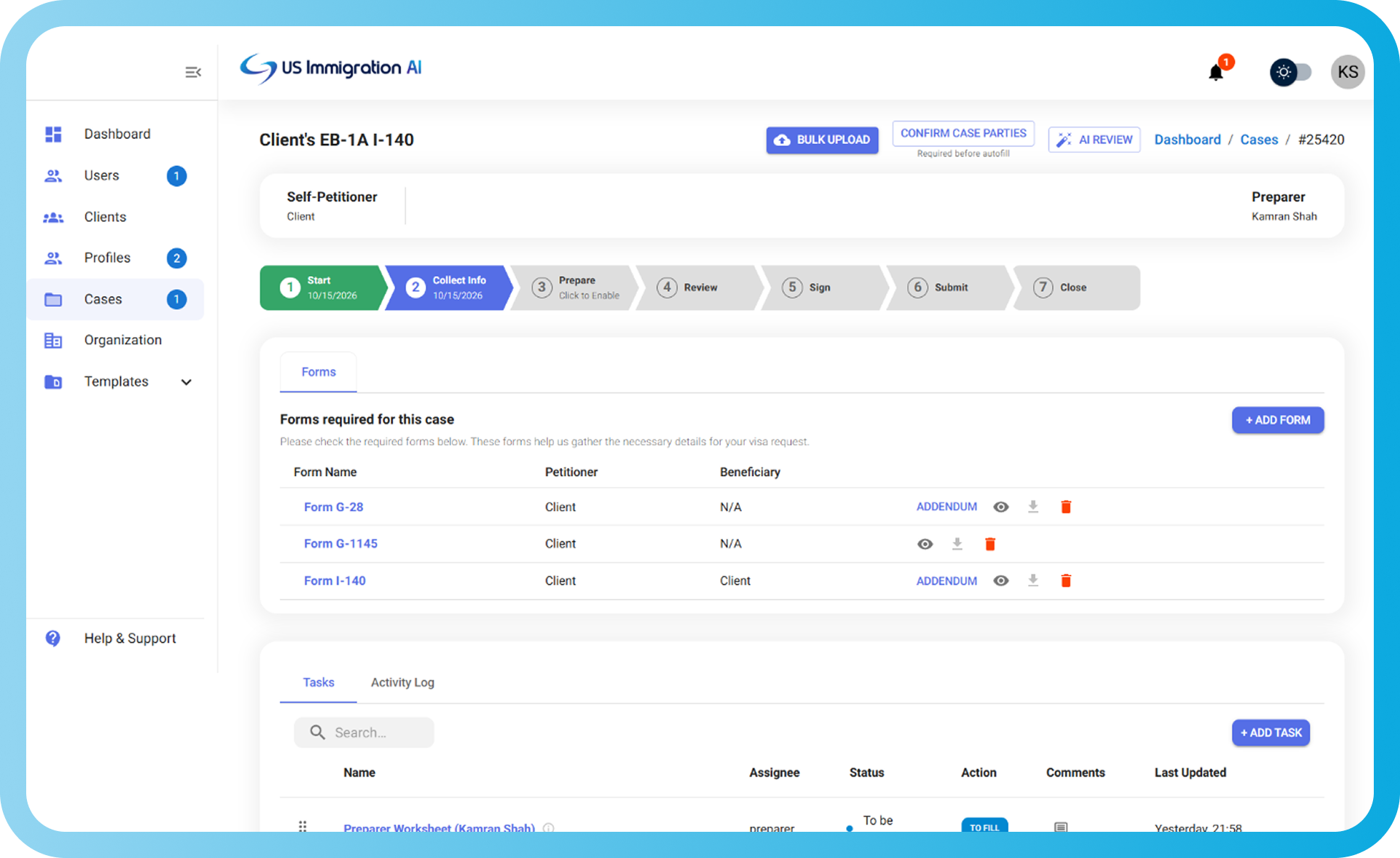
Every EAD case runs on its own filing basis, and since automatic extensions ended, a late renewal now means a real work gap. US Immigration AI keeps the basis, card dates, and underlying case together in one file, so your team builds every packet from the same record.
One Application, a Different Document Set for Every Filing Basis

Pending Adjustment of Status (c)(9)
Collect the receipt notice for the underlying green card application, passport and I-94 records, photos, and any prior card. Keep the EAD request in the same client file as the adjustment packet.

Pending Asylum (c)(8)
Collect the asylum filing receipt, identity documents, and copies of any earlier cards. Missing items are flagged before your attorney reviews the file.

H-4 Spouse and F-1 Student Categories
Collect I-94 records, approval notices, and the school or employer documents each category relies on. H-4 spouses file under (c)(26); F-1 OPT students file under a different code, and each client sees only the requests that match theirs.

Renewals
Collect a copy of the expiring card, earlier receipt notices, and updated identity documents. Reminders keep going out until every file is uploaded, so the packet is ready while the 180-day filing window is open.
What the Platform Handles for EAD Cases
- Application Pre-Fill
- Intake Records the Filing Basis
- Consistency Flags
- Combined Packet Assembly
- Add-On Matters Under One Client
- Attorney Review Before Filing

Have Every EAD Packet Ready Before the Card Expires
A work permit that arrives late means a client who cannot work. Give your team a process that gets each packet to attorney review early.
Managing EAD Cases Without US Immigration AI
Checklists rebuilt from memory for each filing basis
Renewal documents chased by phone and email
Client details retyped into the form and every letter
Date conflicts and blank fields found at the last minute
EAD packets built by hand beside the green card filing
Without US Immigration AI
With US Immigration AI
Requests matched to the filing basis and editable by your attorney
Reminders go out until every file is in
Intake data fills the application and supporting letters
Issues flagged before the packet reaches your attorney
Packets assembled side by side from one client file
Why Firms Handle EAD Cases on US Immigration AI
Built for Immigration Filings
The platform is built around USCIS filings rather than adapted from a general case tool. Its intake, drafting, and assembly steps follow the way immigration packets are actually prepared.
Attorney Review on Every File
The platform prepares and flags each packet. The judgment call always stays with a licensed attorney at your firm, built into how the system works rather than added as a policy note.
Certified Security for Sensitive Records
EAD files hold passports, I-94 records, and identity documents. The platform maintains SOC 2 Type II and ISO 27001 certifications, with role-based access and audit logs.
See how we protect client data.