
Track Every Consular Processing Case From Petition to Interview
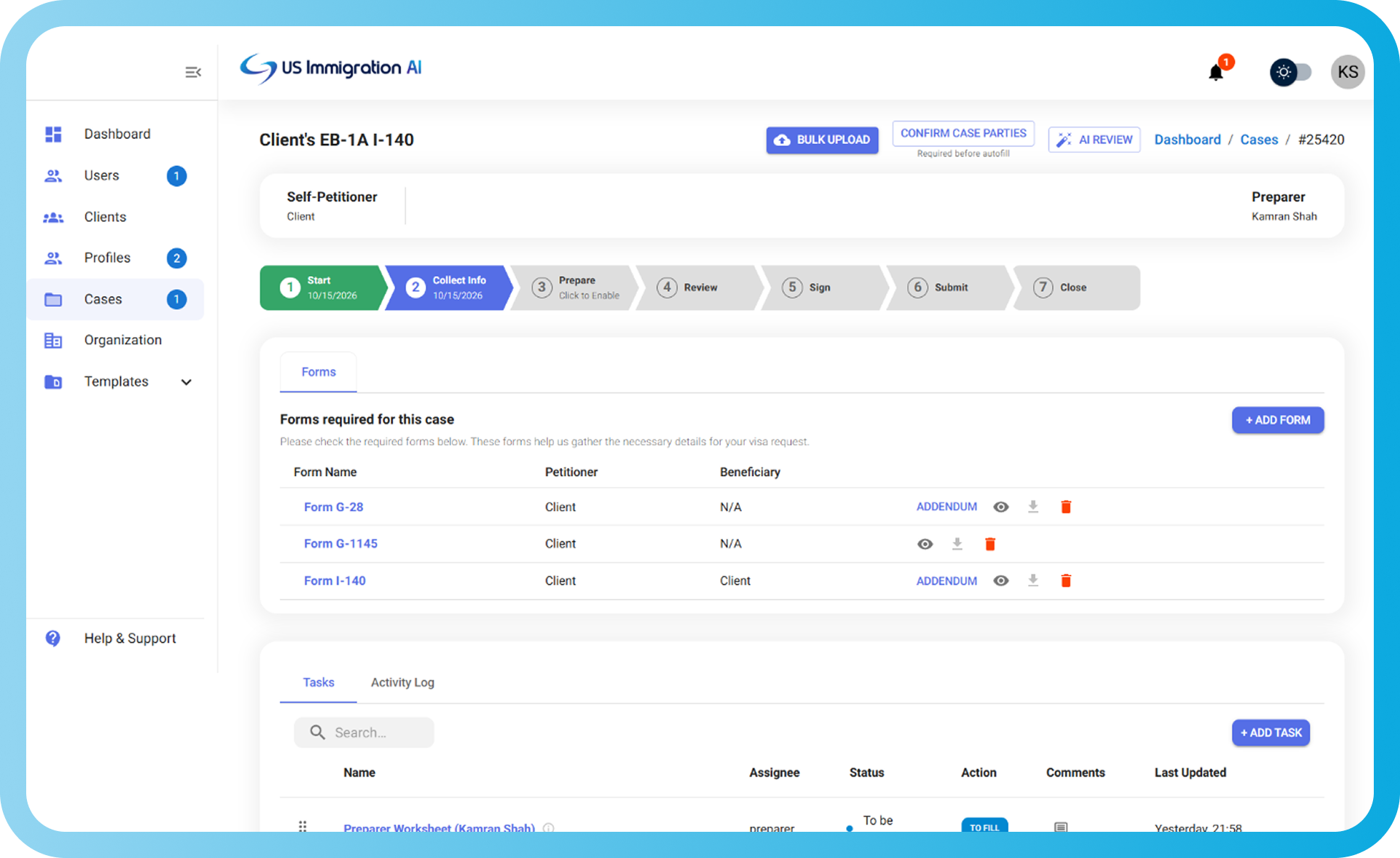
A consular processing case moves through USCIS, the National Visa Center, and a U.S. embassy, each with its own login and document rules. US Immigration AI keeps case status, documents, and payments together in one file your whole team can see.
What the Platform Handles for Consular Processing Cases
- Case Status Tracking
- Overseas Document Collection
- Multi-Applicant Case Files
- International Fee Collection
- Drafting Support for Consular Filings
- Attorney Review Checkpoints

Keep Every Consular Case Moving, Even When the Client Is Overseas
A case does not stall just because your team goes home for the night and the client is twelve time zones away.
Two Paths Through Consular Processing: DS-260 and DS-160
DS-260 — Immigrant Visa Cases (Green Card Path)
This is the track for family-based and employment-based green card cases finalized abroad instead of through Adjustment of Status.

- USCIS approves the underlying petition, such as Form I-130 or Form I-140, and forwards the case to the National Visa Center.
- The applicant pays the National Visa Center's Immigrant Visa fee and, for family-based cases, the Affidavit of Support fee.
- The applicant completes and submits Form DS-260 through CEAC, and civil documents are uploaded.
- The applicant completes and submits Form DS-260 through CEAC, and civil documents are uploaded.
- The applicant completes a medical exam and attends the interview at the embassy or consulate.
DS-160 — Nonimmigrant Visa Cases (Temporary Visa Path)
This is the track for temporary visa categories, including work visas such as H-1B, L-1, and O-1, that require a consular interview abroad.
- USCIS approves the underlying petition where one is required, such as Form I-129 for a work visa category.
- The applicant completes Form DS-160 online through CEAC ahead of the interview.
- The applicant schedules an interview appointment directly with the embassy or consulate handling the case.
- The applicant attends the interview, and the consular officer decides on the visa.

Managing Consular Processing Without US Immigration AI vs. With US Immigration AI
Case status scattered across USCIS notices, NVC emails, and CEAC logins
Staff chase overseas clients for civil documents one email at a time
Client payments stall over unfamiliar international wire transfers
Family members' documents mixed across separate files
Client data retyped into prep sheets for each form
Without US Immigration AI
With US Immigration AI
One case file tracks status from petition approval to interview
Portal requests, tracks, and flags missing civil documents automatically
Overseas clients pay through local payment methods
Every derivative applicant stays organized in one client record
Intake data carries into drafting and case assembly work
Why Immigration Firms Choose US Immigration AI for Consular Processing
Built for Immigration Law, Not Generic Case Tools
Consular processing follows USCIS petition rules and State Department procedure under the Foreign Affairs Manual. The platform is built around how these cases actually move between agencies.
Attorney-Controlled at Every Stage
Your firm sets filing strategy and signs off on every step before it reaches a client or an agency. The platform surfaces the work; the decisions stay with your attorneys.
Built for Clients Outside the U.S.
Overseas clients get a document portal and payment options that work from anywhere. Your staff is not stuck adapting a domestic-only tool to a cross-border case.