Intake to Insight

AI Case Summary for Every Immigration Intake

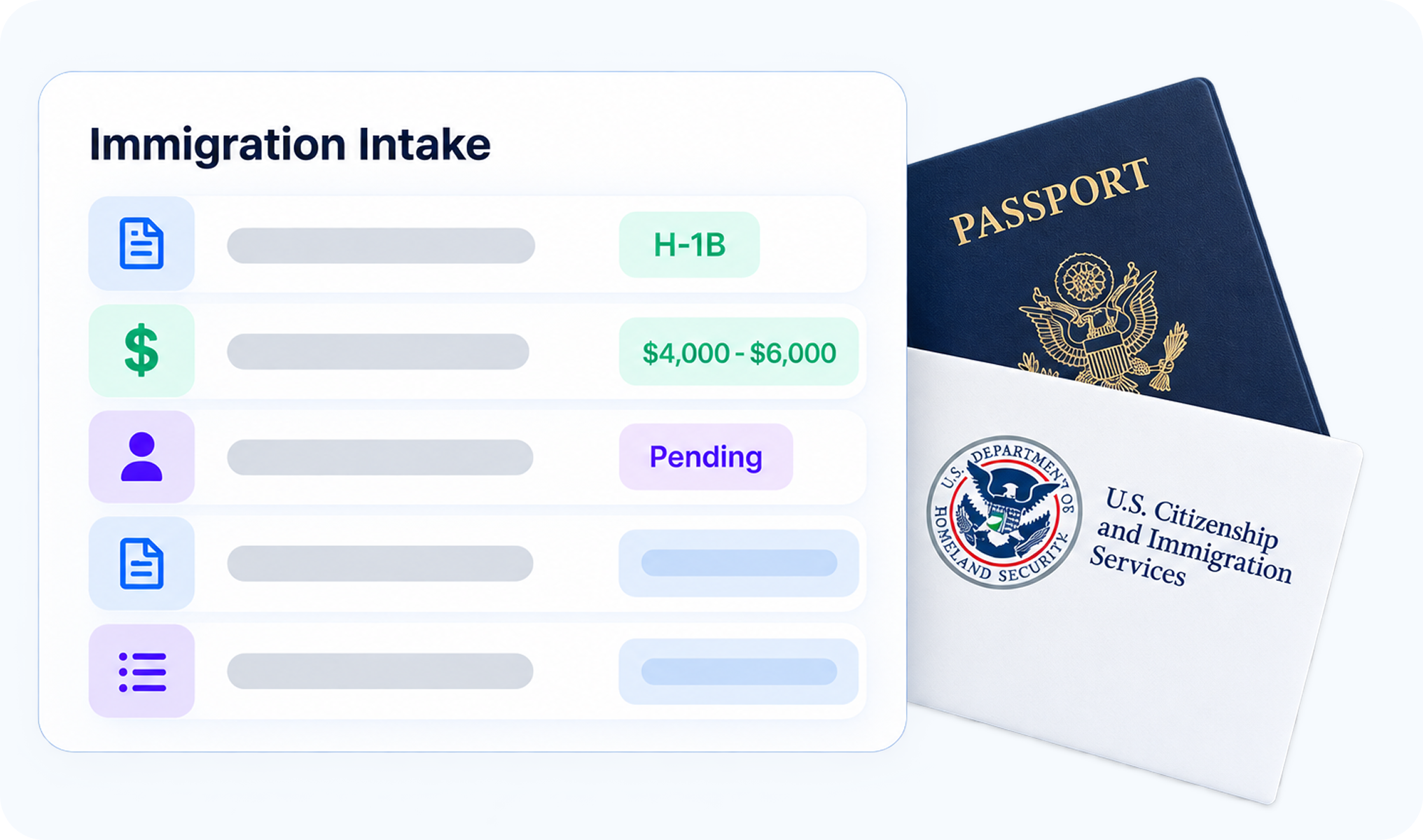
US Immigration AI turns every intake conversation into a structured case summary, complete with case type and eligibility flags, so your attorneys open a decision-ready file instead of raw notes.

From Conversation to File

The Case Summary Loop

A case summary runs on a loop that repeats with every new lead: capture the conversation, structure it, hand it to an attorney, and let the case move once it's reviewed. The next lead starts the loop again.

Conversation Capture

The AI agent talks with a prospect in real time across chat, web form, SMS, or email, and captures their immigration goals, status, and background.

Structured Summary

Every answer is stored in the same consistent format, with a likely case type and fee range attached using your firm's own rules.

Attorney Review

A licensed attorney reads the finished summary, confirms or corrects the case type and any eligibility flags, and decides what happens next.

Case Moves Forward

Once approved, the case flows into retainer, document collection, and drafting, no re-entry required.

Summary Contents

What's Inside Every Case Summary

Step two in that loop, the structured summary, is where the real work happens. Here is everything it pulls together every time a lead finishes intake.

Structured Intake Capture

Case Type Identification

Eligibility Pathway Flags

Fee Range Qualification

Follow-Up Status

Attorney Reviewed by Design

See a Case Summary Before You Build One
Book a consultation and walk through a sample summary for your firm's most common case type.

Not a Generic Summarizer

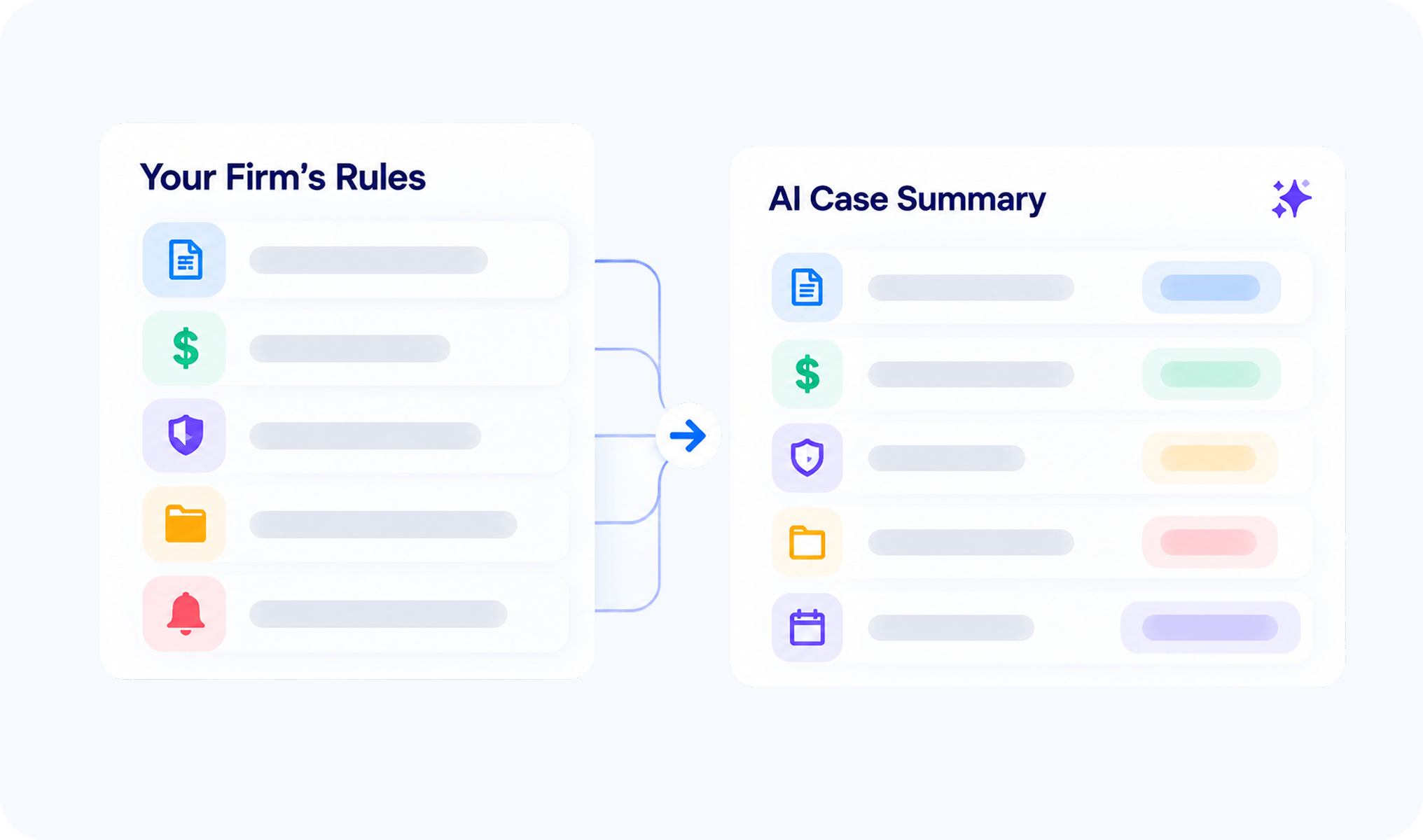
Built From Your Firm's Rules, Not a Pasted Transcript

That structure is also what separates a case summary from pasting a call transcript into a general AI chatbot. A chatbot hands back a paragraph. It doesn't know your firm's case-type criteria, your fee structure, or what happens to that lead next.

Your Rules, Not a Generic Template

Case-type flags and fee ranges come from your firm's own screening criteria, not a one-size-fits-all model. The summary reflects how your firm actually qualifies a case.

Built for Immigration Intake

The structure is built around visa pathways, fee-range qualification, and attorney review, the specific shape of an immigration intake conversation, not a general-purpose notes app.
Real Intake Scenarios

Case Summaries in Practice

That same structure looks the same on paper for every lead, but it plays out a little differently depending on what the client is filing for. Here is how a summary comes together across three case types firms see most.

Family-Based Sponsorship Inquiry

A prospect describes a marriage-based green card interest through chat. The summary arrives with the relationship pathway flagged, a fee range attached, and the client's basic biographic answers structured and ready for the attorney's first read.


Employment-Based Visa Inquiry

A candidate reaches out about an employer-sponsored petition. The summary separates the sponsoring company's details from the candidate's own background, with the likely visa category flagged for review.

Humanitarian Case Inquiry

A prospect submits a web form describing a sensitive personal situation. The summary keeps those details structured and confidential, with the potential pathway marked informational until an attorney reviews it.

What Your Firm Gets Back

Fewer Wasted Reviews, Faster First Read

Once that structure is running on every lead, this is what changes on your attorneys' side of the desk.

Faster Attorney Review

Less Manual Assembly

Consistent Reads Every Time

Attorney Judgment Preserved

Stop Reading Transcripts Cold
See how a structured summary changes the first five minutes of every case review.

Before You Roll It Out

A Little Setup Makes Every Summary Sharper

Getting those outcomes depends on how the rules behind the summary are set up. Three things are worth getting right before you turn it on for the whole firm.
01

Set Your Case-Type Rules Once

Build your firm's screening criteria into the system a single time. Every summary after that reflects how your firm actually qualifies a case, not a generic default.
02

Keep Fee Ranges Current

Update your pricing rules when they change. A stale fee range in a summary sends your team into a consultation with the wrong number in their head.
03

Treat Review as a Real Checkpoint

Build your firm's screening criteria into the system a single time. Every summary after that reflects how your firm actually qualifies a case, not a generic default.

Frequently Asked Questions (FAQ)

What Firms Ask About AI Case Summaries

Can we customize what shows up in the summary?

What does an AI case summary include?

How fast is a summary ready after intake finishes?

Does the AI decide which case type or pathway applies?

Does the summary replace attorney review of the case?

Are the eligibility notes in the summary legal advice?

Is client data in the summary secure?

One Summary, Every Intake
Get an Attorney-Ready Summary From Every Lead
Stop handing attorneys a transcript to sort through. Every intake conversation becomes a structured, attorney-ready case summary the moment it finishes, with your lawyers still making every call.